So I’m in the middle of thesis and that doesn’t leave much time for in depth book reviews. Instead, I’m going to just list what I’ve read this year that hasn’t yet received a full review and give some brief thoughts.
(in order of when I read it, oldest to most recent)
Edgedancer by Brandon Sanderson

I’m 99% certain a portion of Edgedancer appeared in a short story collection, because I know I’ve read the first section before. But that was maybe a quarter of this text. The rest read like typical Sanderson, and that’s definitely not a bad thing. I like Lift’s character: she’s fun, funny, and most of the time her thoughts and speech are appropriate to her age. The only criticism I’ve ever had of Sanderson involves his portrayal of young voices, and a few times that stuck out in Edgedancer. But still a very fun read, and integral to the events on Roshar and the greater Cosmere.
Black Canary: Breaking Silence by Alexandra Monir

This is one of those stories that relies on the reader to blindly accept the state of the world. The Court of Owls has taken over Gotham, oppressed women, and the rest of the country and world didn’t care? Really? Assuming I buy into this (which I have to if I want to keep reading), it was an interesting exploration of what would happen to the next generation of superheroes, how and why they make the decision to resist. As with many YA books, I felt the social/moral lessons lacked any semblance of subtlety, treating the reader almost like an idiot. Not a fan of that part. I was going through each of these DC YA books, but I think I’ll take a break after this one for a bit.
Killing Floor by Lee Child
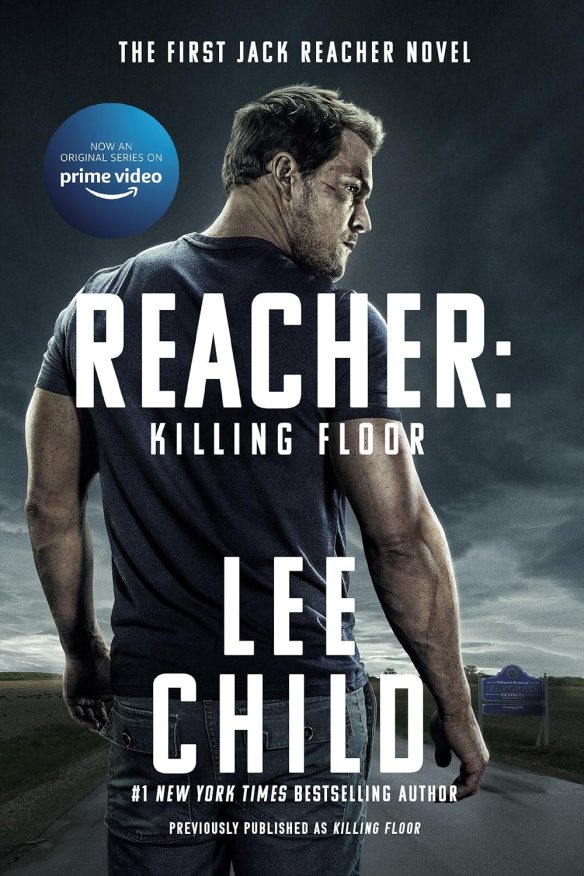
The most interesting aspect of this read was that I’d recently watched the TV show, and the first season is based on this novel. It’s the first Jack Reacher story, so while the reader is meeting this character for the first time, I’d already met him on screen. And I knew what was going to happen. Luckily, enough creative liberty was taken in the show that the book was still surprising and entertaining. I was also trying to pay attention to the craft of the book, how the mystery was put together. I heard after the fact that Lee Child doesn’t outline, and that makes a certain amount of sense. It’s a good thing I liked it, because Goodwill has filled my shelf with almost all of the others in the series.
The Mime Order by Samantha Shannon
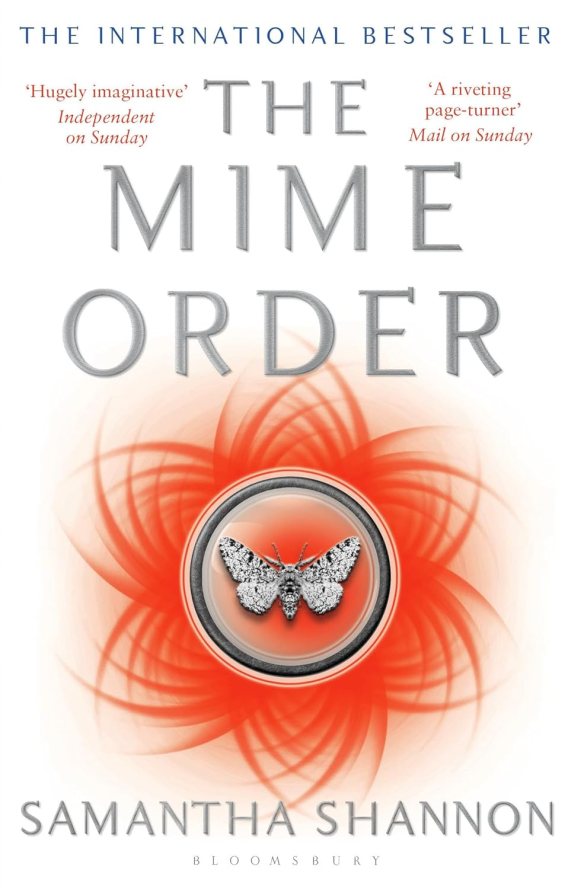
The Mime Order is a worthy successor to The Bone Season, though it’s an entirely different type of book. The Bone Season was a survival story, leading into rebellion, and The Mime Order is a political story fueled by the desire for that rebellion. Samantha Shannon does a marvelous job with world-building and thinking out how her story decisions would actually impact the people and society. Also, she sure knows how to set up rivalry and animosity. Makes any comeuppance incredibly satisfying.
The Darkness Outside Us by Eliot Schrefer
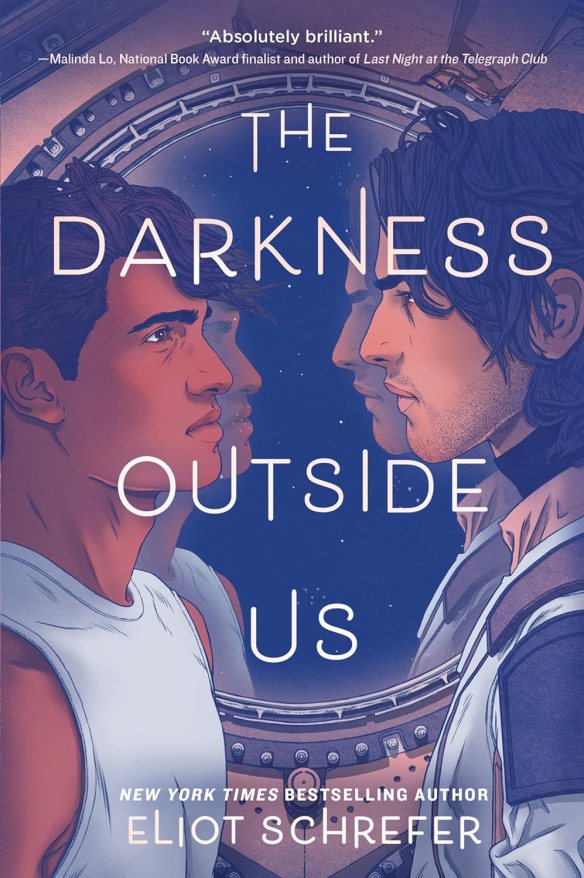
I’m pretty good at sussing out clues and figuring out where a story is going to go. While I did guess the general thrust of what was happening in the story, as the specifics unfolded I was continually dropping my jaw. Multiple “oh shit” moments. And as much as I enjoy a good science-based sci-fi story, this really was a love story that happened to be in space. And that worked wonderfully.
The Talisman by Stephen King and Peter Straub
I’ve been reading through The Dark Tower series and all its related writings. I’m assuming the Territories are where Roland comes from, or perhaps where he’s from is affected by them. I’ll probably find out in The Waste Lands. On its own, The Talisman reads more like a magical realism story than horror, even though my copy’s cover hyped up the horror aspect a ton. It had a really slow start to it, though I find that tends to be true with most Stephen King that I’ve read. In order to care what happens to the character, you have to care for the character, and he certainly gives you all the background with which to start caring. The prose was engaging the whole way through, and my only real criticism was that I felt that the story lacked purpose at the end. Yes, Jack learned truths about himself and his family, but so what? Why is that important? It was entertaining, but not fulfilling.
The Name of All Things by Jenn Lyons

The sequel to The Ruin of Kings, The Name of All Things picks up immediately where the last book left off. And also it doesn’t. Like the first book, the narrative structure of the story is told largely in people’s accounts of past events. So for the first 80% of the book there are brief sections in present day, but everything else is people talking about what they’ve been doing for the last handful of years. This isn’t a bad thing, and I’m actually rather curious as to how this continues into the next books. Are we finally going to get Thurvishar’s story? It was fun seeing how the events of the two books crossed paths both in the past and how they met in the present. And I can’t overstate how much the world and magic are integrated into the people and the story itself. Fantastic. This is probably my favorite book on this list.
A Court of Wings and Ruin by Sarah J Maas
This third book in the Court of Thorns and Roses series was the strongest of the three by a healthy margin. Why? Character growth. Character agency. Stakes that weren’t relying on spectacle. Crazy monsters and epic battles (yes, I know this has both) are fun, but they aren’t the reason we read a book. I feel like there were hints of this stronger storytelling in the earlier books, but Maas has really started to figure everything out in A Court of Wings and Ruin. Though I still think the fairy tale allusions would work better with a lighter touch. I wasn’t expecting to come across the swan princess in this read, and even now that’s how I remember that character.
Doomsday Clock by Geoff Johns, Gary Frank, and Brad Anderson
My only exposure to The Watchmen prior to reading this were the Zack Snyder film and the HBO series. Both of which I really enjoyed. I very much enjoyed how they poked at the idiocy of the politics in this country, in particular a certain long-tied leader. But I also enjoyed how they brought Watchmen into the greater DC world. I do get tired of the “OMG Superman is the best hero ever and always will be” shtick, but I was glad that he didn’t just show up and win. I enjoyed the Rorschach storyline the most, followed by Dr. Manhattan’s origins. Those photographs were fun ways to show just how tormented he’s been.
Eruption by Michael Crichton and James Patterson
I was asked the other day which writer had influenced my writing the most, and my answer was MIchael Crichton. I remember reading Jurassic Park, and shortly after that, Timeline, and being in awe of how he could take real science, make one little leap, and have a whole engaging story unfold based on the 99% truth of that scientific foundation. Much of what I write now has science integration, and I credit that 100% to Crichton. Now, since he passed many years ago, it’s been a while since I’ve read one of his novels. I don’t remember the chapters being as short as they were in Eruption. I’m going to go ahead and attribute this to Patterson. I don’t think this was a bad choice, just a different choice. I like Patterson, both his Alex Cross and Maximum Ride stuff, and I think he was a great choice to get the feel of Crichton, even if I could tell there was a difference pretty quick. I was expecting crazier at the end, and yet there were still surprises in the specifics. And Mac really needs to get laid.
The Black Book by Edward W Robertson

I finished this one yesterday at my kid’s soccer practice… audiobooks are super convenient. It’d been a while since I read one of Robertson’s books. I started a long time ago when the first three were available as a free Audible download. This is the second book in a prequel series, and while it was entertaining—Robertson always does fun banter with his characters—I don’t feel it was particularly unique in his world, especially after reading soooo many of them. Cally read a bit like Dante, but the other characters were their own people. Do I regret reading this? No. It had fun moments and has set up for some craziness in the next book. Do I think it deserved a bit more attention to pacing and realization of stakes? Yes.
There were some non-fiction books in there as well that I won’t review because they’re writing aids and if that’s what you’re looking for, you’ll have already found it. The three I read were How to Write a Mystery, edited by Lee Child, Writing Picture Books by Ann Whitford Paul, and Save the Cat! Writes a Young Adult Novel by Jessica Brody.
The short and sweet: How to Write a Mystery was not helpful. Save the Cat! Writes a Young Adult Novel had some good tidbits. Writing Picture Books had a fair amount of good advice. Though I did have to question everything Whitford Paul said for a while after she said chicken could be better than hamburgers. No. Just, no.
That’s all for now. I started The 7 1/2 Deaths of Evelyn Hardcastle just as soccer practice was getting over. Hopefully I’ll have enough time to give it a proper review.
 Eric Taveren