Exciting news all… today my short fiction piece Checkmate has been published by The Bookends Review!
What happens when a collective loses all of its members but one? Find out at http://thebookendsreview.com.
Exciting news all… today my short fiction piece Checkmate has been published by The Bookends Review!
What happens when a collective loses all of its members but one? Find out at http://thebookendsreview.com.
So I’m in the middle of thesis and that doesn’t leave much time for in depth book reviews. Instead, I’m going to just list what I’ve read this year that hasn’t yet received a full review and give some brief thoughts.
(in order of when I read it, oldest to most recent)
Edgedancer by Brandon Sanderson

I’m 99% certain a portion of Edgedancer appeared in a short story collection, because I know I’ve read the first section before. But that was maybe a quarter of this text. The rest read like typical Sanderson, and that’s definitely not a bad thing. I like Lift’s character: she’s fun, funny, and most of the time her thoughts and speech are appropriate to her age. The only criticism I’ve ever had of Sanderson involves his portrayal of young voices, and a few times that stuck out in Edgedancer. But still a very fun read, and integral to the events on Roshar and the greater Cosmere.
Black Canary: Breaking Silence by Alexandra Monir

This is one of those stories that relies on the reader to blindly accept the state of the world. The Court of Owls has taken over Gotham, oppressed women, and the rest of the country and world didn’t care? Really? Assuming I buy into this (which I have to if I want to keep reading), it was an interesting exploration of what would happen to the next generation of superheroes, how and why they make the decision to resist. As with many YA books, I felt the social/moral lessons lacked any semblance of subtlety, treating the reader almost like an idiot. Not a fan of that part. I was going through each of these DC YA books, but I think I’ll take a break after this one for a bit.
Killing Floor by Lee Child
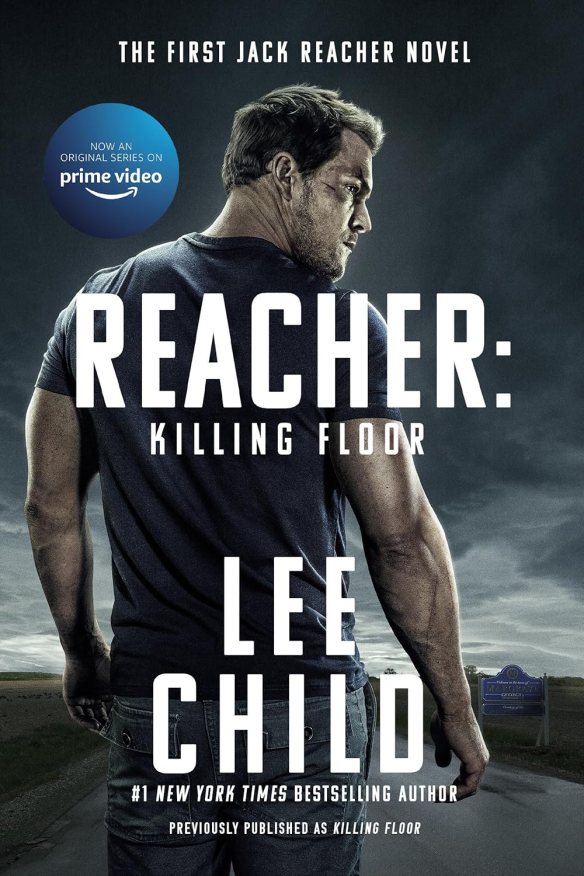
The most interesting aspect of this read was that I’d recently watched the TV show, and the first season is based on this novel. It’s the first Jack Reacher story, so while the reader is meeting this character for the first time, I’d already met him on screen. And I knew what was going to happen. Luckily, enough creative liberty was taken in the show that the book was still surprising and entertaining. I was also trying to pay attention to the craft of the book, how the mystery was put together. I heard after the fact that Lee Child doesn’t outline, and that makes a certain amount of sense. It’s a good thing I liked it, because Goodwill has filled my shelf with almost all of the others in the series.
The Mime Order by Samantha Shannon
The Mime Order is a worthy successor to The Bone Season, though it’s an entirely different type of book. The Bone Season was a survival story, leading into rebellion, and The Mime Order is a political story fueled by the desire for that rebellion. Samantha Shannon does a marvelous job with world-building and thinking out how her story decisions would actually impact the people and society. Also, she sure knows how to set up rivalry and animosity. Makes any comeuppance incredibly satisfying.
The Darkness Outside Us by Eliot Schrefer
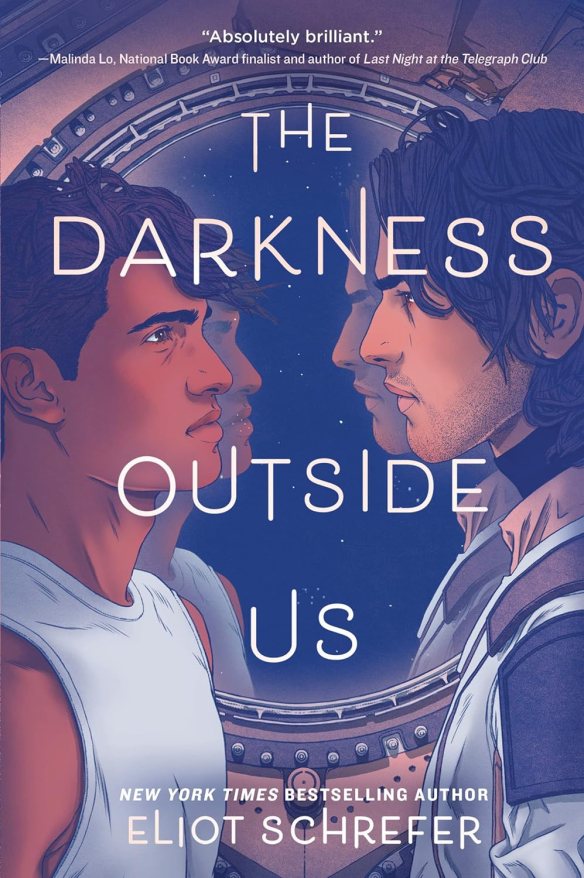
I’m pretty good at sussing out clues and figuring out where a story is going to go. While I did guess the general thrust of what was happening in the story, as the specifics unfolded I was continually dropping my jaw. Multiple “oh shit” moments. And as much as I enjoy a good science-based sci-fi story, this really was a love story that happened to be in space. And that worked wonderfully.
The Talisman by Stephen King and Peter Straub
I’ve been reading through The Dark Tower series and all its related writings. I’m assuming the Territories are where Roland comes from, or perhaps where he’s from is affected by them. I’ll probably find out in The Waste Lands. On its own, The Talisman reads more like a magical realism story than horror, even though my copy’s cover hyped up the horror aspect a ton. It had a really slow start to it, though I find that tends to be true with most Stephen King that I’ve read. In order to care what happens to the character, you have to care for the character, and he certainly gives you all the background with which to start caring. The prose was engaging the whole way through, and my only real criticism was that I felt that the story lacked purpose at the end. Yes, Jack learned truths about himself and his family, but so what? Why is that important? It was entertaining, but not fulfilling.
The Name of All Things by Jenn Lyons

The sequel to The Ruin of Kings, The Name of All Things picks up immediately where the last book left off. And also it doesn’t. Like the first book, the narrative structure of the story is told largely in people’s accounts of past events. So for the first 80% of the book there are brief sections in present day, but everything else is people talking about what they’ve been doing for the last handful of years. This isn’t a bad thing, and I’m actually rather curious as to how this continues into the next books. Are we finally going to get Thurvishar’s story? It was fun seeing how the events of the two books crossed paths both in the past and how they met in the present. And I can’t overstate how much the world and magic are integrated into the people and the story itself. Fantastic. This is probably my favorite book on this list.
A Court of Wings and Ruin by Sarah J Maas
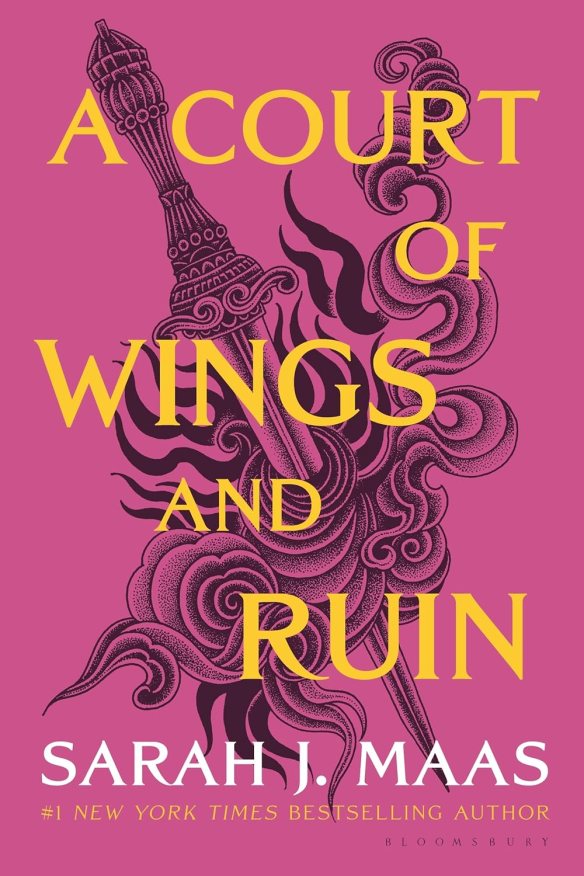
This third book in the Court of Thorns and Roses series was the strongest of the three by a healthy margin. Why? Character growth. Character agency. Stakes that weren’t relying on spectacle. Crazy monsters and epic battles (yes, I know this has both) are fun, but they aren’t the reason we read a book. I feel like there were hints of this stronger storytelling in the earlier books, but Maas has really started to figure everything out in A Court of Wings and Ruin. Though I still think the fairy tale allusions would work better with a lighter touch. I wasn’t expecting to come across the swan princess in this read, and even now that’s how I remember that character.
Doomsday Clock by Geoff Johns, Gary Frank, and Brad Anderson
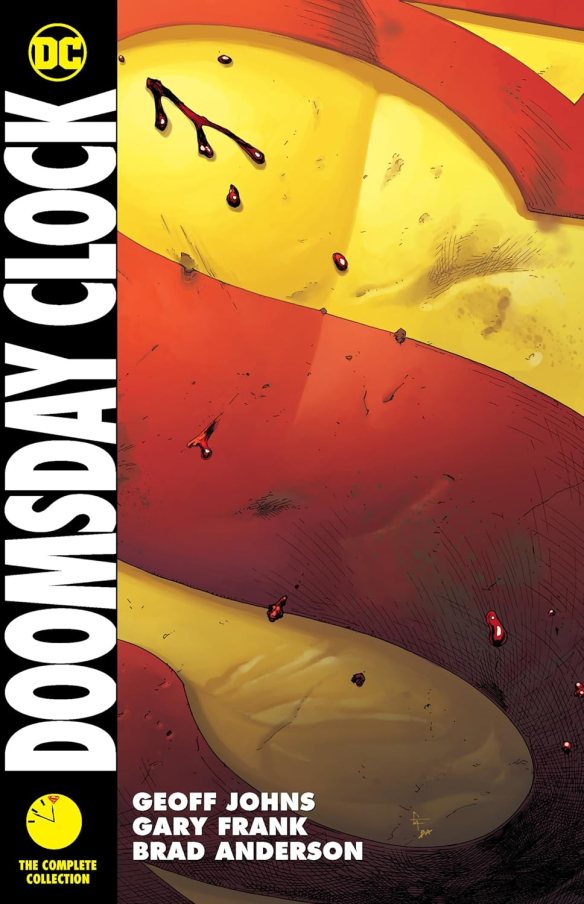
My only exposure to The Watchmen prior to reading this were the Zack Snyder film and the HBO series. Both of which I really enjoyed. I very much enjoyed how they poked at the idiocy of the politics in this country, in particular a certain long-tied leader. But I also enjoyed how they brought Watchmen into the greater DC world. I do get tired of the “OMG Superman is the best hero ever and always will be” shtick, but I was glad that he didn’t just show up and win. I enjoyed the Rorschach storyline the most, followed by Dr. Manhattan’s origins. Those photographs were fun ways to show just how tormented he’s been.
Eruption by Michael Crichton and James Patterson
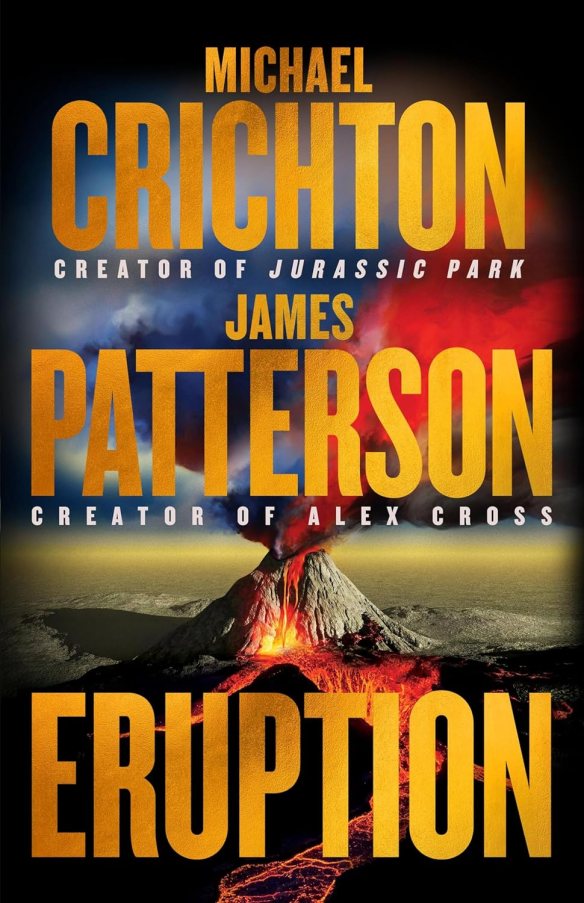
I was asked the other day which writer had influenced my writing the most, and my answer was MIchael Crichton. I remember reading Jurassic Park, and shortly after that, Timeline, and being in awe of how he could take real science, make one little leap, and have a whole engaging story unfold based on the 99% truth of that scientific foundation. Much of what I write now has science integration, and I credit that 100% to Crichton. Now, since he passed many years ago, it’s been a while since I’ve read one of his novels. I don’t remember the chapters being as short as they were in Eruption. I’m going to go ahead and attribute this to Patterson. I don’t think this was a bad choice, just a different choice. I like Patterson, both his Alex Cross and Maximum Ride stuff, and I think he was a great choice to get the feel of Crichton, even if I could tell there was a difference pretty quick. I was expecting crazier at the end, and yet there were still surprises in the specifics. And Mac really needs to get laid.
The Black Book by Edward W Robertson

I finished this one yesterday at my kid’s soccer practice… audiobooks are super convenient. It’d been a while since I read one of Robertson’s books. I started a long time ago when the first three were available as a free Audible download. This is the second book in a prequel series, and while it was entertaining—Robertson always does fun banter with his characters—I don’t feel it was particularly unique in his world, especially after reading soooo many of them. Cally read a bit like Dante, but the other characters were their own people. Do I regret reading this? No. It had fun moments and has set up for some craziness in the next book. Do I think it deserved a bit more attention to pacing and realization of stakes? Yes.
There were some non-fiction books in there as well that I won’t review because they’re writing aids and if that’s what you’re looking for, you’ll have already found it. The three I read were How to Write a Mystery, edited by Lee Child, Writing Picture Books by Ann Whitford Paul, and Save the Cat! Writes a Young Adult Novel by Jessica Brody.
The short and sweet: How to Write a Mystery was not helpful. Save the Cat! Writes a Young Adult Novel had some good tidbits. Writing Picture Books had a fair amount of good advice. Though I did have to question everything Whitford Paul said for a while after she said chicken could be better than hamburgers. No. Just, no.
That’s all for now. I started The 7 1/2 Deaths of Evelyn Hardcastle just as soccer practice was getting over. Hopefully I’ll have enough time to give it a proper review.
Today I want to talk about sexism on the internet, specifically regarding AI. I don’t think AI is inherently evil. It is just dependent on users for source material as well as prompts. The more sexist we are, the more sexist results it’ll produce. It’s no secret that exploitative sexist content runs wild on the internet, to the detriment of many. I try to avoid giving clicks to content I come across, but as you’ll see below, that content has a way of making itself known.
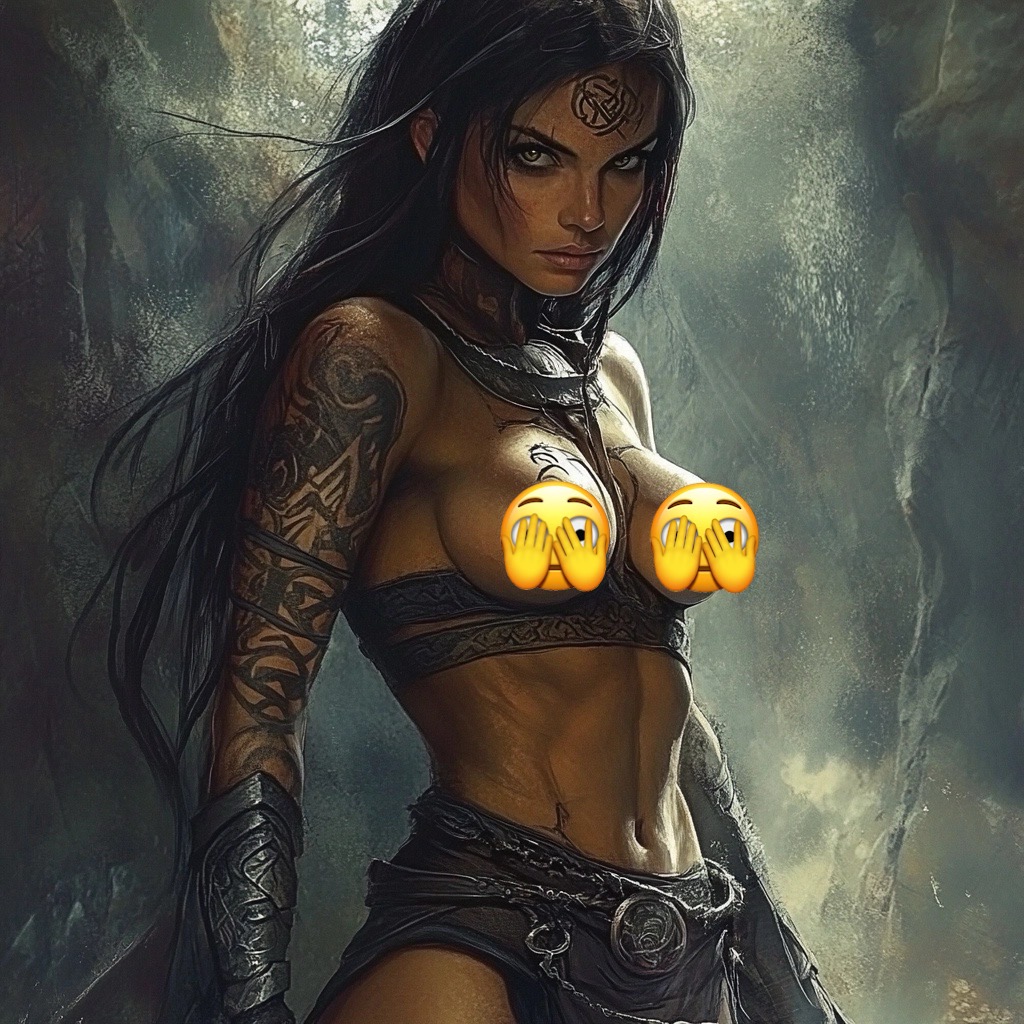
A few nights ago I was playing around on Midjourney, trying to come up with some character images for the novel I’m working on. I had an idea for a group of magical warriors who imbued runes on their bodies like tattoos, and when activated would provide armor, weapons, etc. I did my search first with male pronouns. All four generated images were close approximations to each other. Then I did the search with female pronouns. They were generally close, with one outlier. And that outlier had two *ahem* outliers.


I did the search again with gender neutral pronouns and the result was fairly close to the original prompt, with three of the four clearly being ripped dudes, and the fourth sported a hood that obscured his face, though the body was the same as the others.
This was my prompt: A magical warrior whose body is covered with runes. They are incredibly fit and wear no armor. The runes are all the protection they need.
I’m assuming the AI defaulted to a male when given the gender neutral pronouns because I used the word “warrior.” Clearly, there can be female warriors. But the AI algorithms are based on content that exists on the internet. It should come as no surprise that it’d assume the warriors would be dudes. I’m conflicted on the lack of clothes on all the pics. I did say the runes covered their entire body, but I’m pretty sure that could be conveyed with less skin showing for all of them. In fact I know it can, as you’ll see further down.
I do want to do a quick aside here and explain my usage of Midjourney. Many people hate generative AI, especially image generators. There are talented artists out there who are having their styles and ideas stolen to train the AI, and those same artists have less work as AI is being utilized instead of hiring them.
None of the images I generate are for any use beyond my own creative process. I don’t pass them off as my own, or use them to make money. My reason for using generated images is due to a somewhat rare mental handicap I have. I’ve been fairly candid about my experiences with aphantasia and how it makes writing very tricky. A quick definition is that I can’t picture images in my head. As you can imagine, that might make writing difficult.
One of the main struggles I have is coming up with a character’s appearance, and then keeping that appearance consistent throughout the story. I can’t just think up their image for reference. In the past, before AI, I’d base all my characters’ physical appearances on people I knew or on celebrities. One of my last projects included John Krasinski, Alexandra Daddario, Joaquin Phoenix, Victoria Beckham, and Jeremy Irons, among others.
To a certain extent, that limited what I could work with. Also, there aren’t a ton of well known actors who aren’t very attractive. Not everyone in a story should be a knockout, so that was limiting as well. But with generative AI, I can enter my description once, the way I want a character to be, and then it’ll make a picture of my character that I can reference as I write.
Here are some examples from my current project.
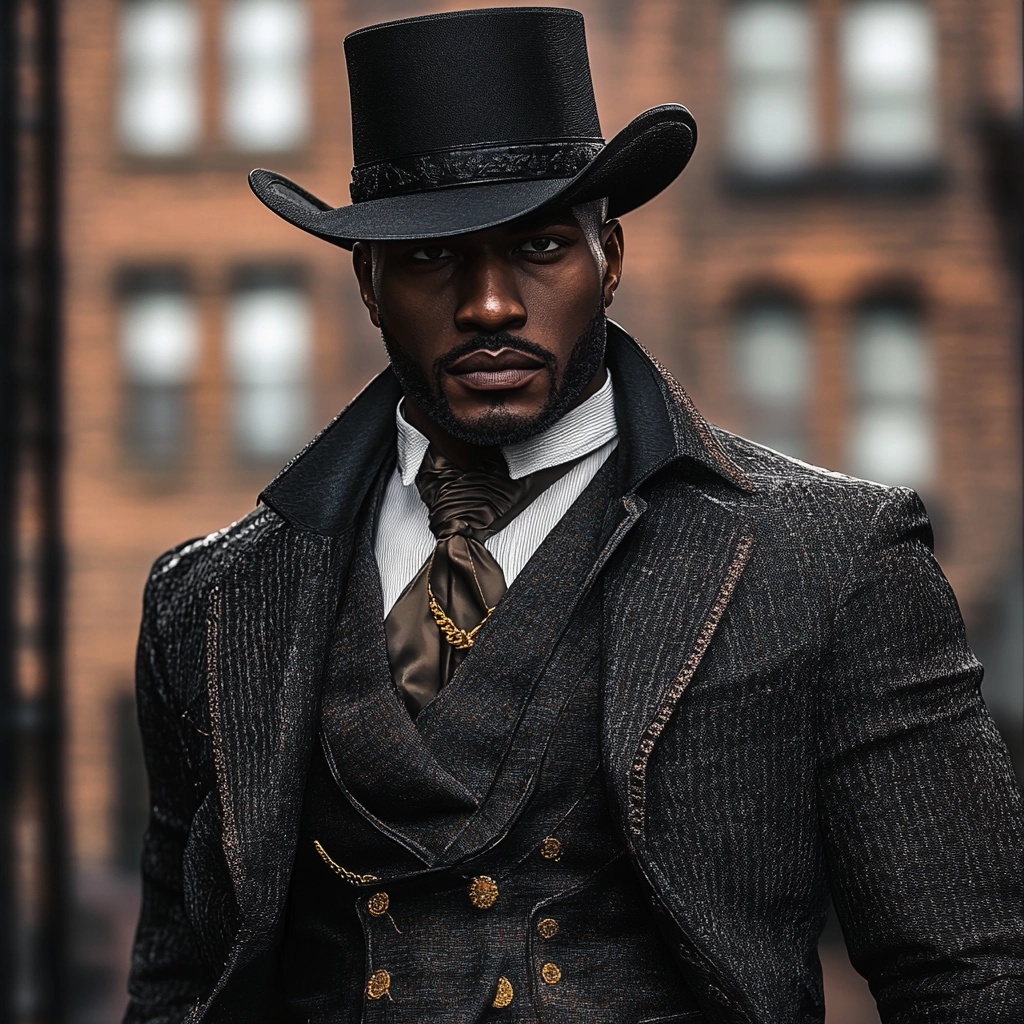



The first thing you might notice is that these people are all fairly attractive as well. Midjourney is really good at making beautiful people, and really good at making ugly people. Anything in the middle is difficult. Why? Because people on the internet obsess over anything really beautiful and really ugly. Like a sunrise and a train wreck, or a rainforest and People of Walmart. AI is only as good as the content we give it.
I’ll come back to these images in a moment, but I’m guessing you’re wanting to hear more about the post’s title (that’s why you clicked it). To boob, or not to boob. The answer: it ain’t up to me. Mostly.
The image I shared above of that runed warrior woman was not intended to produce uncovered breasts. Was I expecting a fit, attractive woman? Yes. That’s what the algorithm always gives me unless I explicitly say they’re obese or scarred or something. Here’s one of the other images generated from that same prompt.
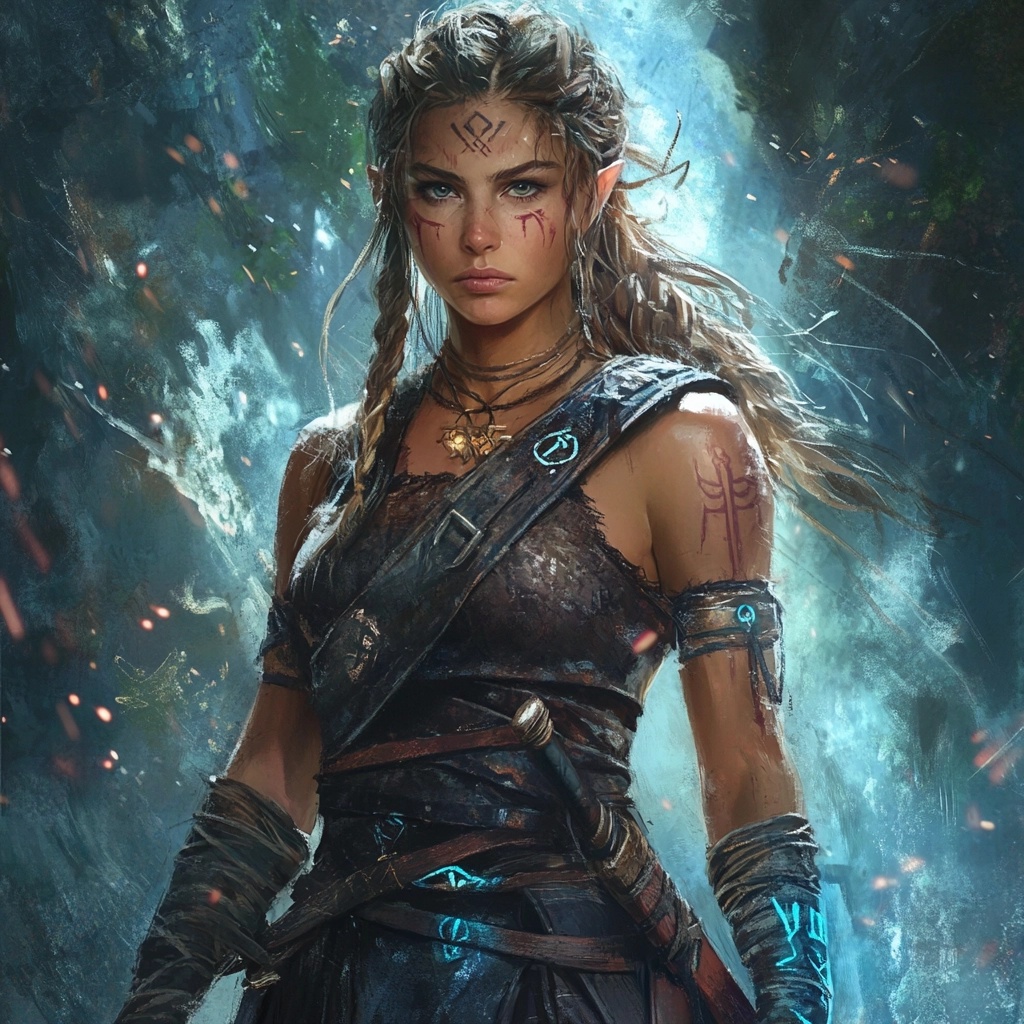
Much less boobage and skin in general. She seems more model than warrior though; a distinct lack of fierceness, but that’s something that can be played with or simply described when I write. This is more of what I was expecting.
Most of the time, I don’t want the images of my characters to ooze sex and just let it all hang out. But there are some characters where that is essential to who they are. Emma Frost of the X-Men comes to mind. Or Ava Lord from Sin City 2. Or Ianthe from A Court of Thorns and Roses. For some female characters, their physical attributes are another tool in their toolbox.
So what happens when I try to have MidJourney generate an image with that type of character in mind?
“Sorry. Please try a different prompt. We’re not sure this one meets our community guidelines. Hover to tap to review the guidelines.”
This was the prompt I used specifically to get flagged: Incredibly attractive woman dressed scantily in order to sway political opponents with her overt sexuality.
Now, I shouldn’t be too surprised here. I imagine “dressed scantily” and “overt sexuality” are red flags. But what if I toned it down, still trying to find an image that will convey the character I’m unable to visualize?
“Incredibly attractive woman wearing a snug corset in order to sway political opponents with her striking aesthetics.” Same result.
“Incredibly attractive woman wearing a courtesan’s outfit in order to sway political opponents with her striking aesthetics.” This one actually worked and produced this series of images:
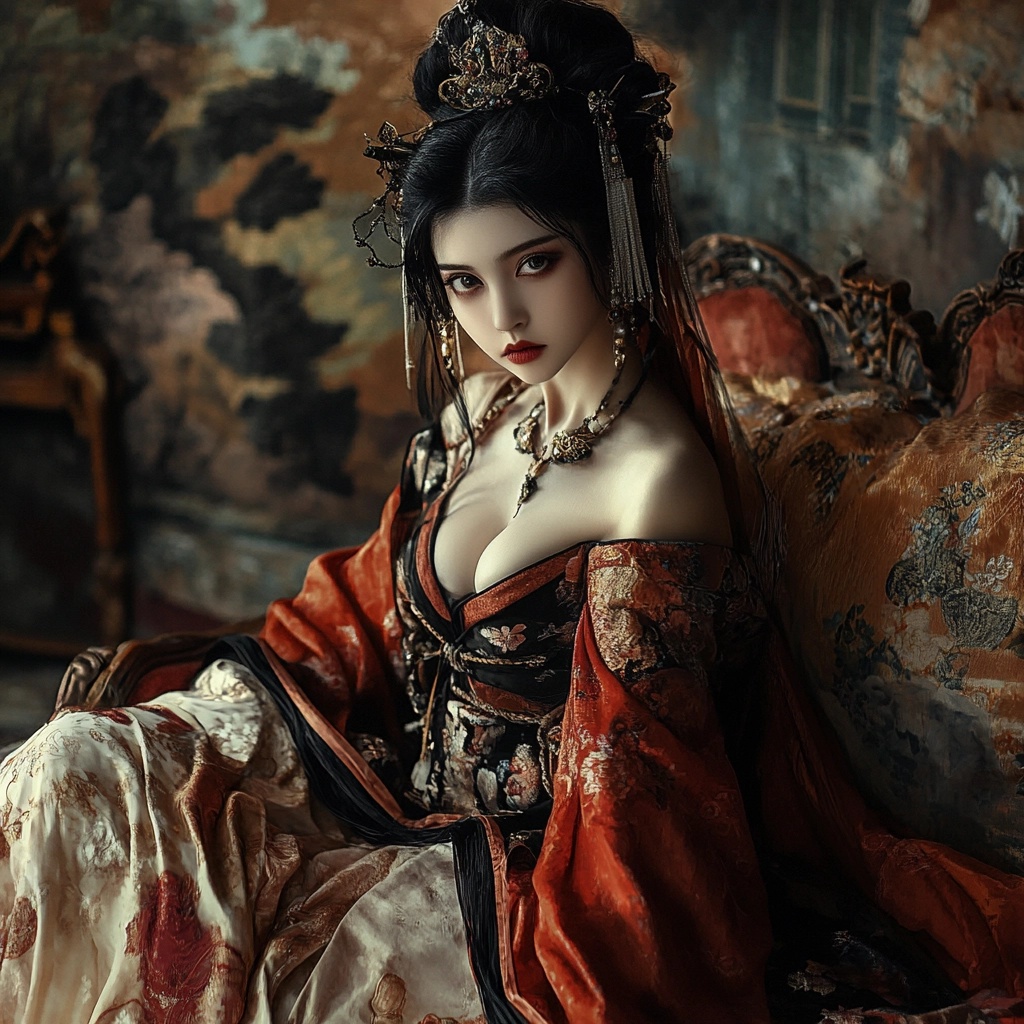
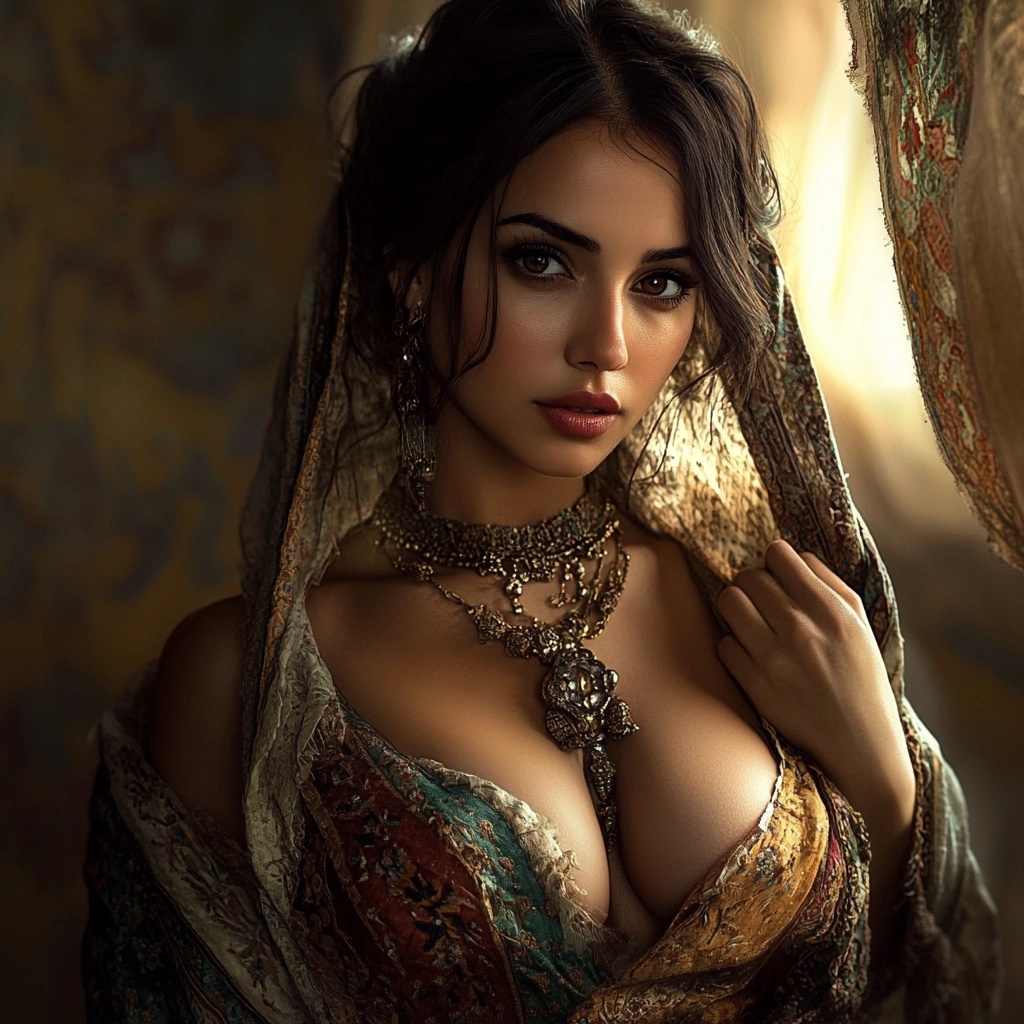
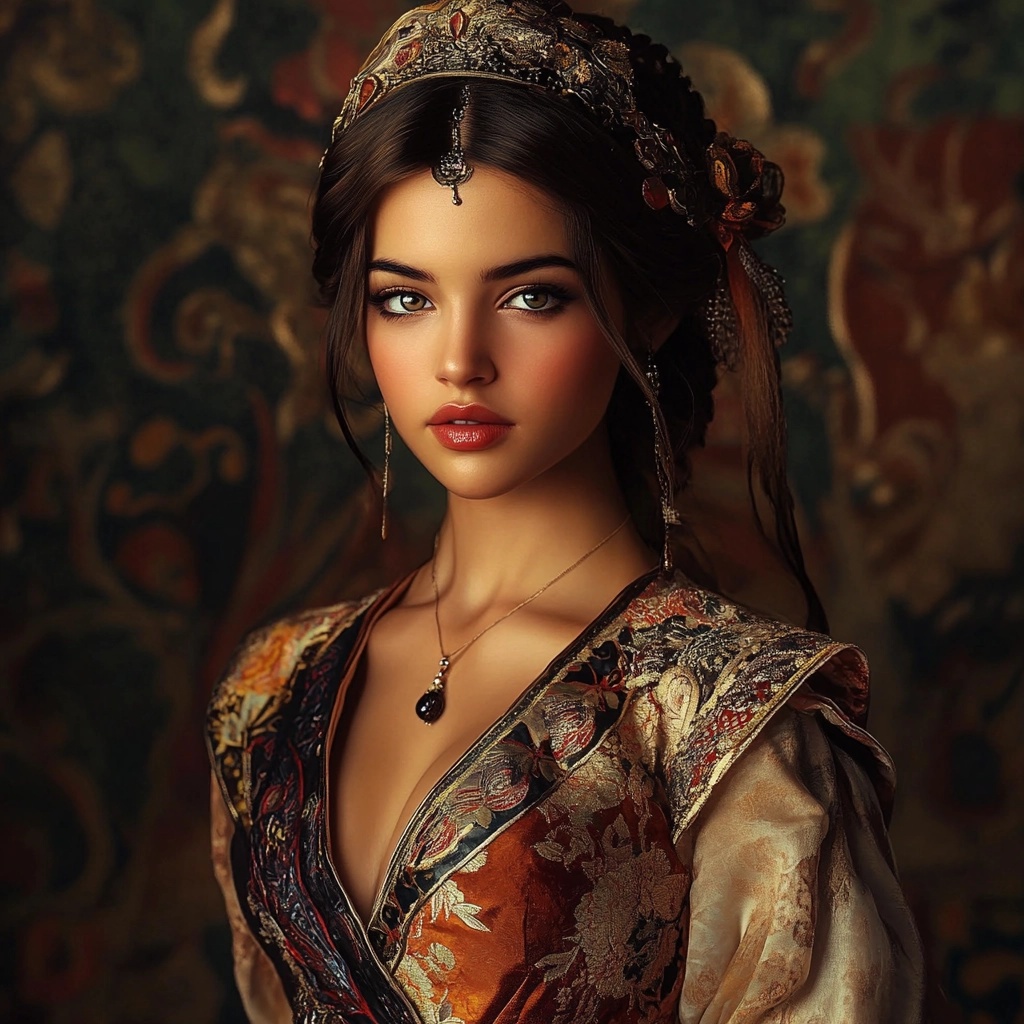

A byproduct of the phrasing I had to resort to resulted in an Asian depiction of the character, I’m assuming because of the term “courtesan.” Do some of them fit the character I was looking for? Sort of. Was it tricky to generate these? Yup. Are they anywhere close to as revealing as that first image I shared? Not at all.
Aside from the racial decisions the AI has made, which can be its own whole thing, what I’m trying to figure out is when it decides to super sexualize the images and when it decides not to. Obviously, this last set was intended to be more sexualized. But what if that’s not the goal? Take for example one of my characters from above.
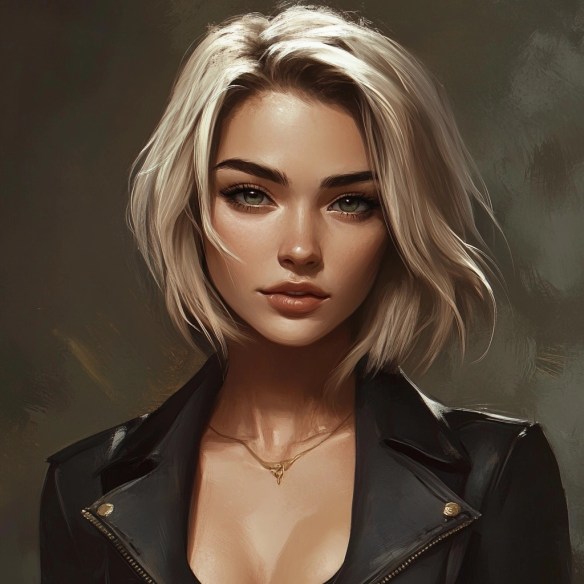
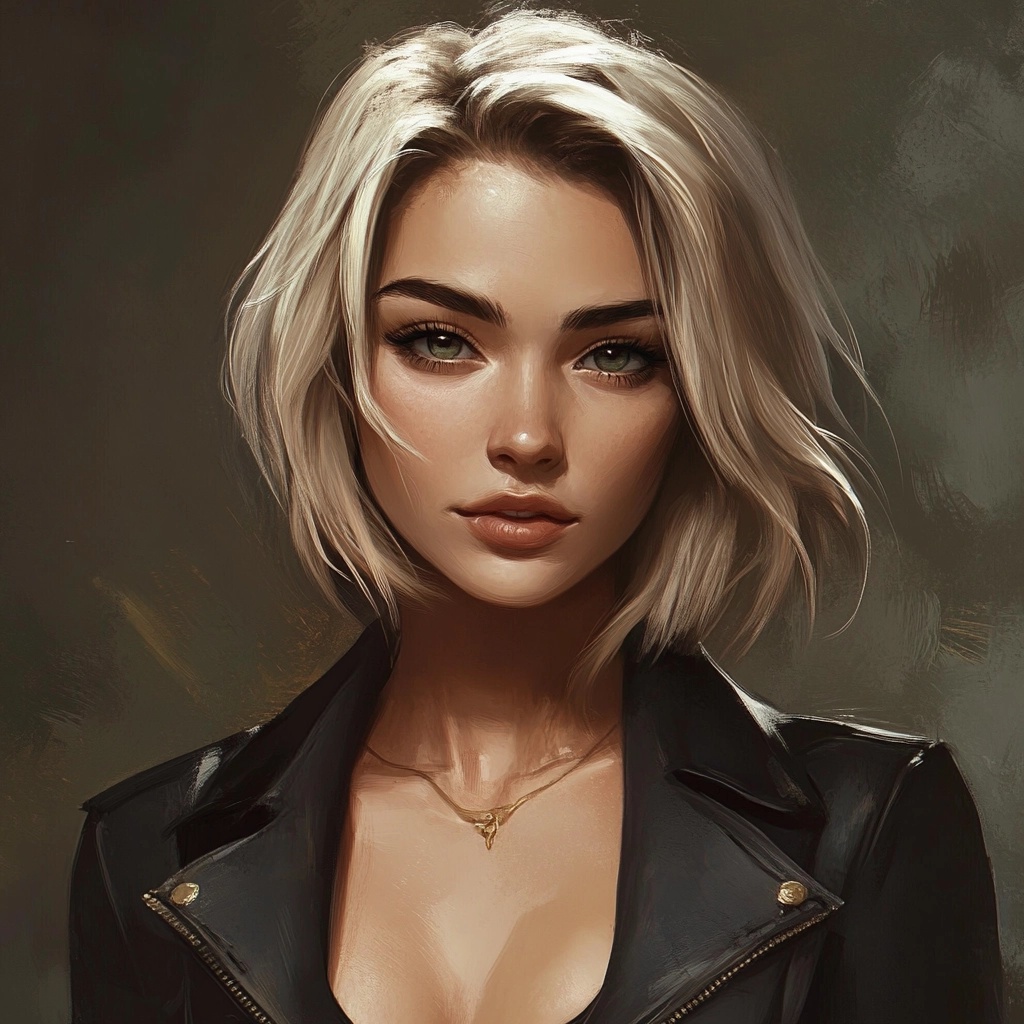
This character will be a future love interest of one of the main characters. She’ll appear once in the first book as an unknown burglar, and then won’t appear again until book two. But given her future prominence, I wanted to get a good idea of her right away.
The prompt I used was: Late 20s human female with shoulder-length blonde hair. She is attractive and fit. She is a professional thief who uses gadgets, magic, and charisma to do her job. Feisty.
Now, attractive can mean all sorts of things. Most often than not though, for Midjourney that translates to cleavage. Of the four images it presented, I was drawn to this one because of her hair and expression. But, being unable to visualize images in my mind, I wanted more of a full body image. So I told it to zoom out. This is what happened.
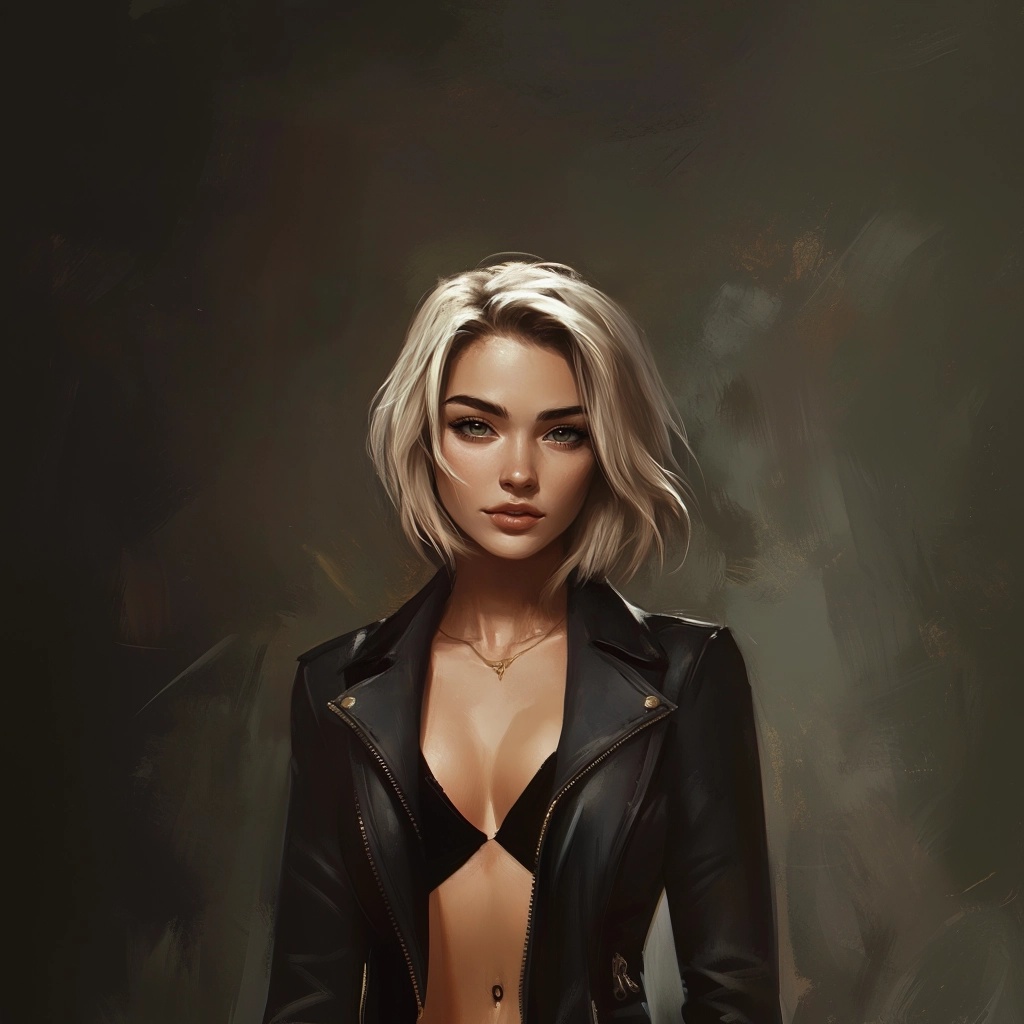
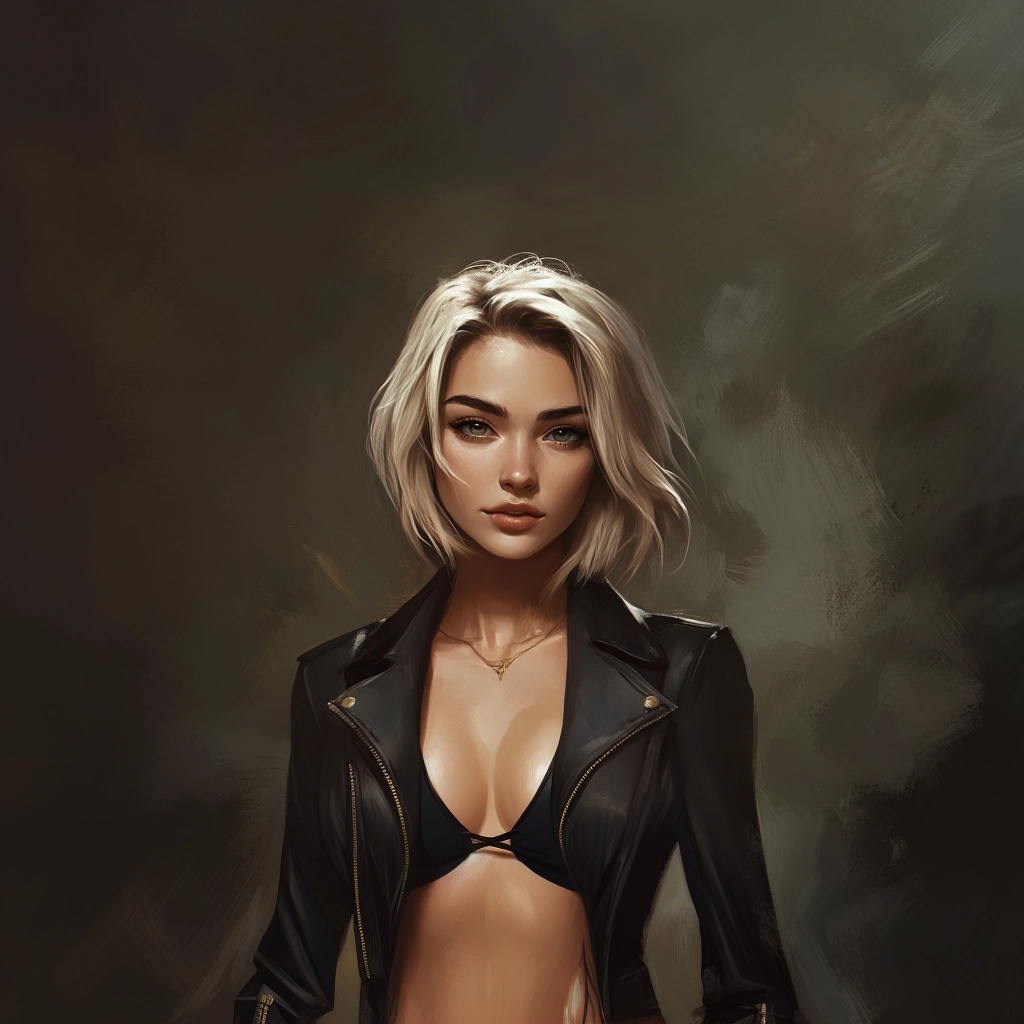


Notice anything? This was not the look I wanted nor was going for. So I asked it to try again. And again. And again. My fifth try gave me this, which I figured would be the best I was going to get:

Couldn’t get away from the cleavage, but at least it didn’t look like she was wearing a leather jacket over a bikini. I mean she’s not, right? Right? Guess what happened when I asked it to zoom out again?

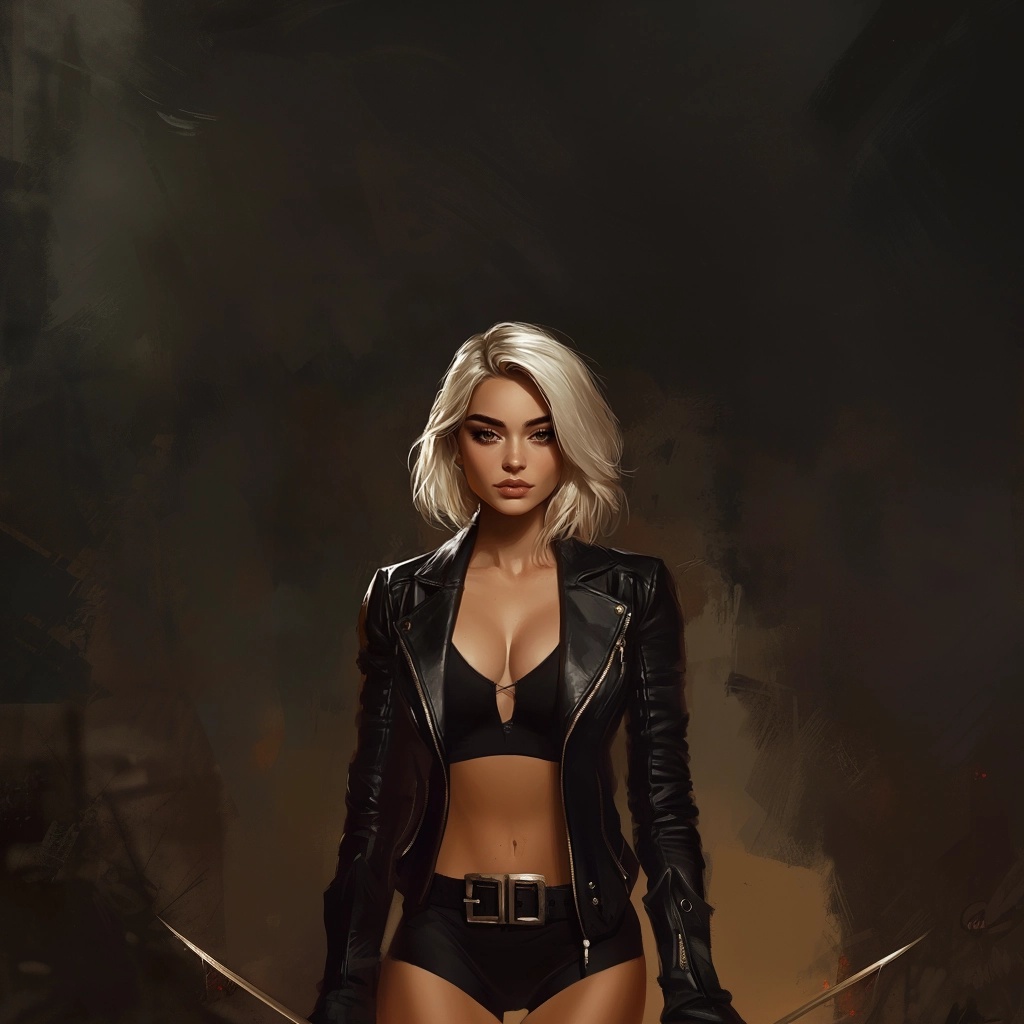

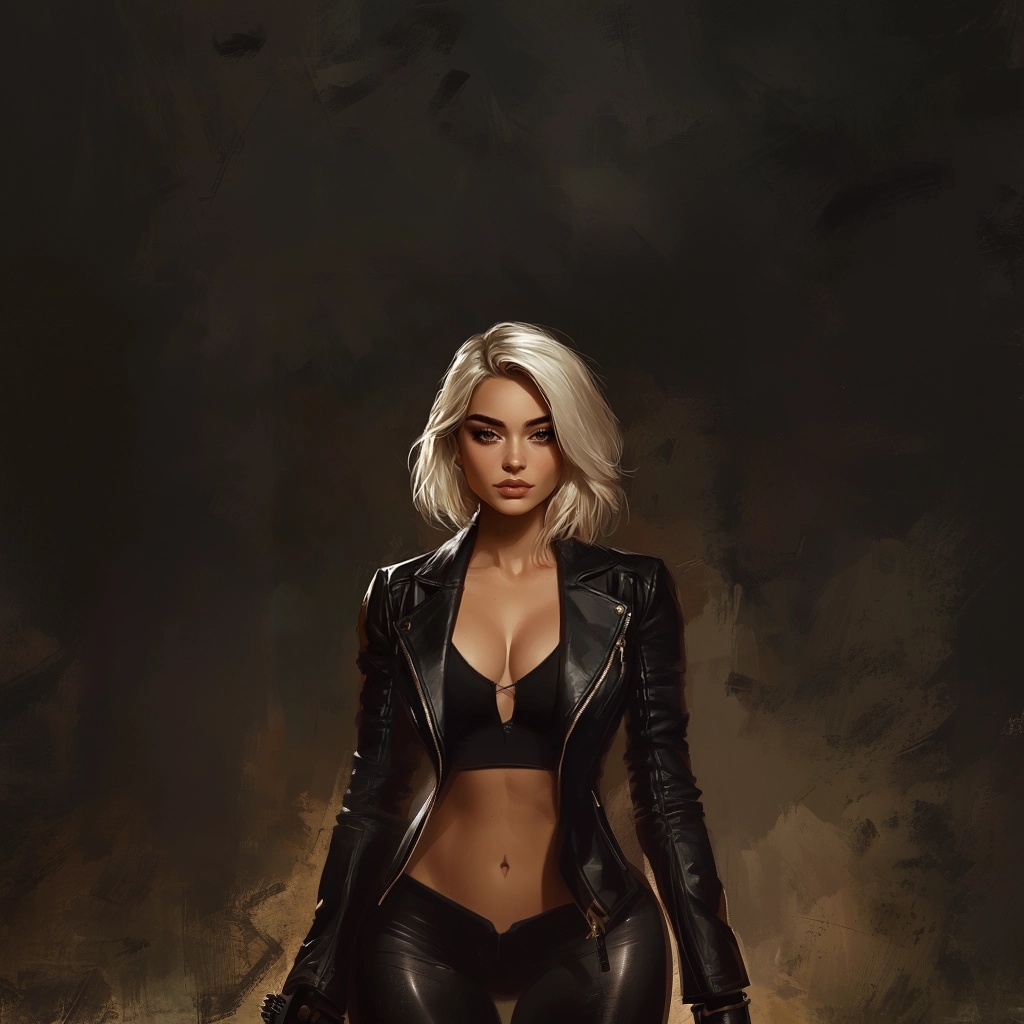
I had it try again six more times, hoping for an outfit that said thief, not leather pool party. The images did not get better, and some were even more ridiculous.
Clearly, Midjourney’s interpretation of my request really wanted her to dress this way. I tried to figure out what in my prompt signified this result, but nothing stood out. Before I move on, I do want to say that these images of her seem way more in line with the “aesthetics as a tool/weapon” than when I tried for that result.
But the gender biases in AI aren’t limited to women. Let’s look at one of the other characters.

This is one of the main characters, the one who’ll fall in love with the woman above. He’s a claims investigator who spends most of his days at a desk. He used to play sports in college, but isn’t exceptionally active now.
Once of the challenges with AI, especially something like MidJourney where there’s only so much info you can convey, is giving it the right input. So I went with: Early 30s human male. Forensic investigator. Relatively fit. Short, dark hair. Dresses practically.


When I was younger, I was relatively fit. I did not look like this guy. This is stern Henry Cavill. Also, this dude is way more put together than I’d wanted. I guess dressing practically involves ties and vests. So I changed “dresses practically” to “rugged attire.”


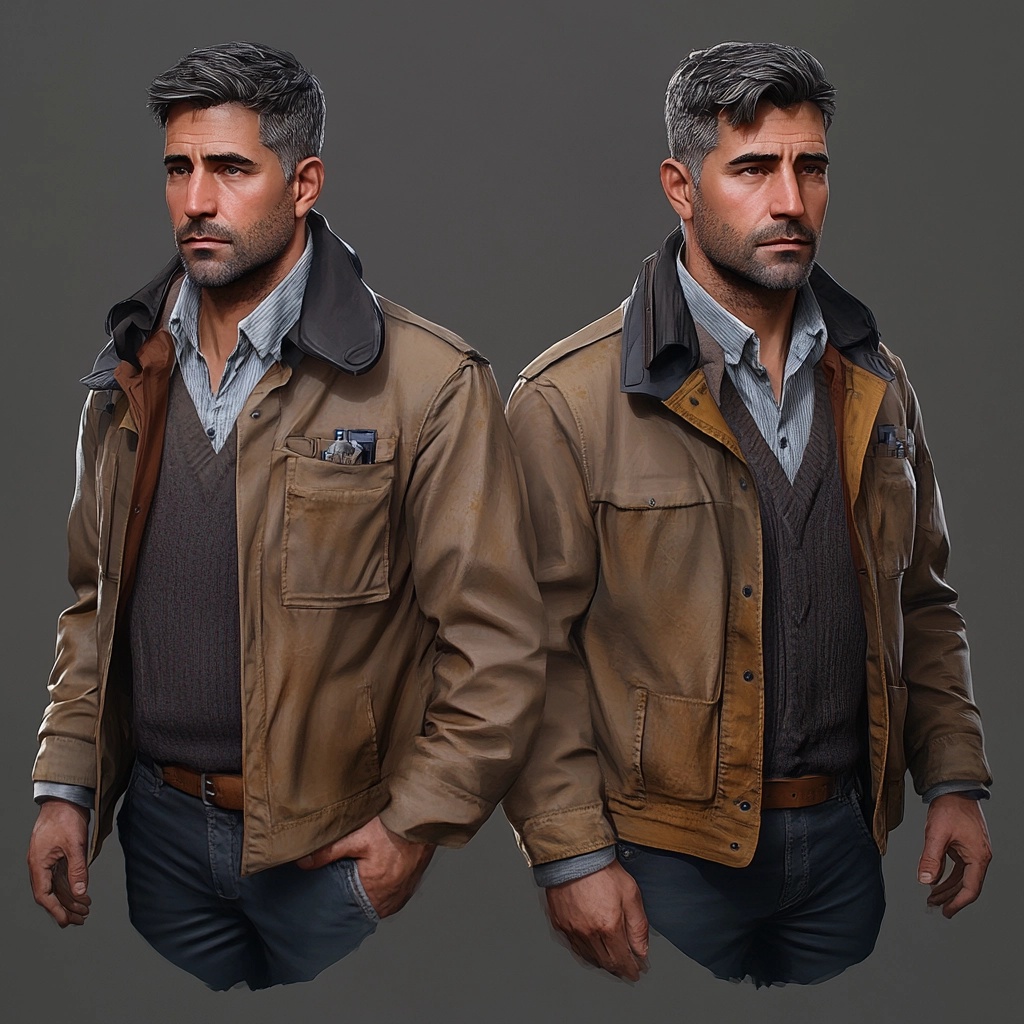
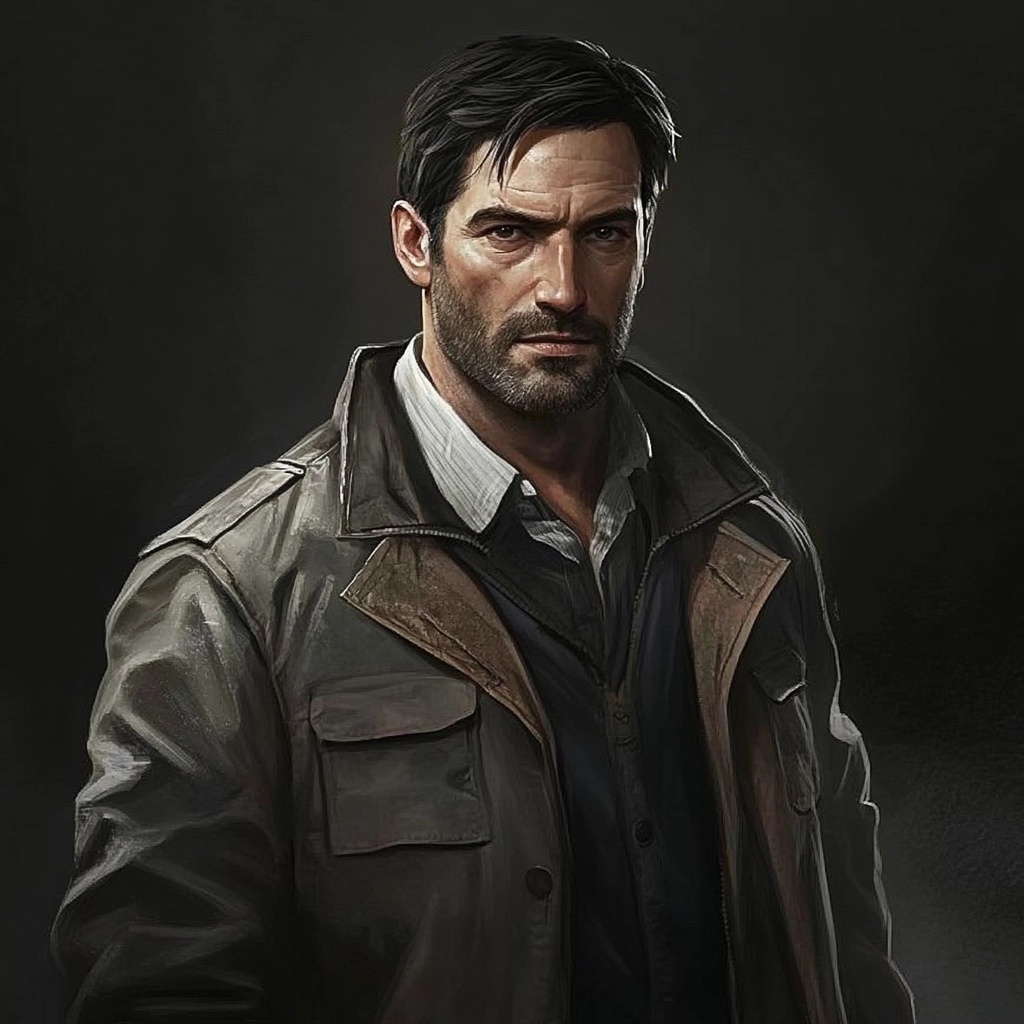
Dude got older. Grey hair and/or stubble in each picture. And I’d still said early 30s. Based on my experience with the other pics, both in this project and in priors, I grabbed that first pic and called it good, because, as I said earlier, making a normal looking person is tricky. This guy was normal enough that I could run with it.
But like with the women, Midjourney had an idea of what my dude should be. Broad shoulders, chiseled jaw, large biceps. Of the character pics above, the most normal looking dude is the young man with the wavy dark hair, and for that prompt I’d said lanky with a slight build. And even then I’d got muscly results on my first go round.

So what is it with AI and these overly gendered results? It’s like Midjourney lives on either end of a bell curve. Is it because of our obsession with the beautiful or ugly? Is it learned behavior as people give it more and more prompts, looking for that sexy woman or that ripped man? Probably both. At times I fell guilty with some of my prompts, knowing they’ll likely perpetuate these problems.
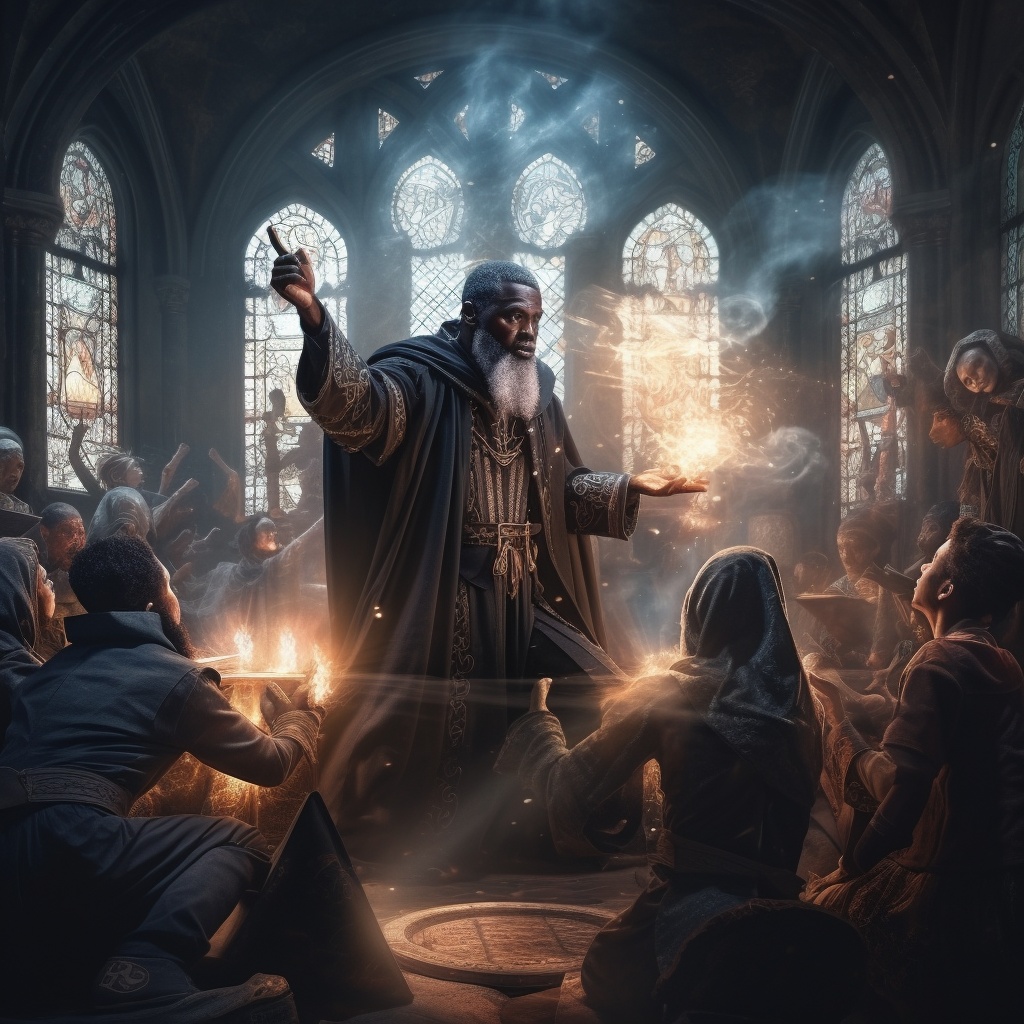
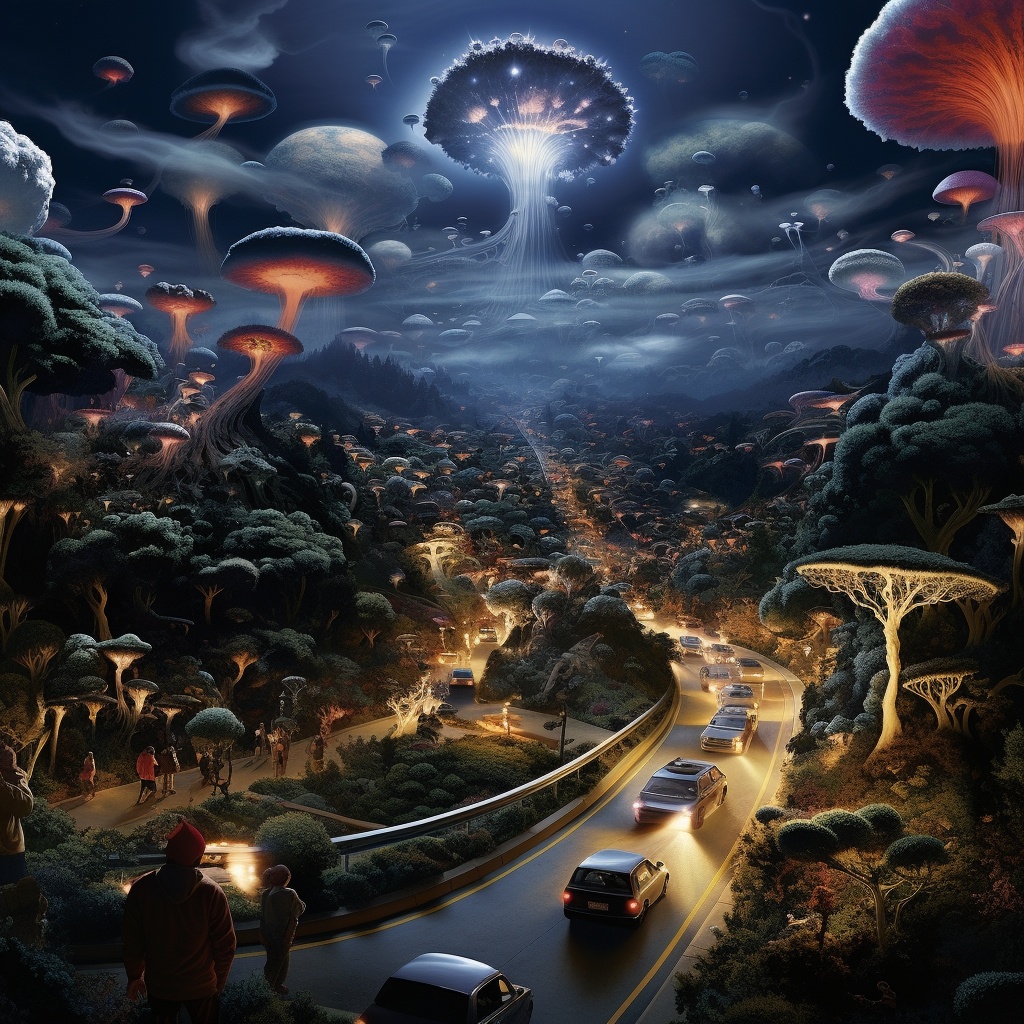
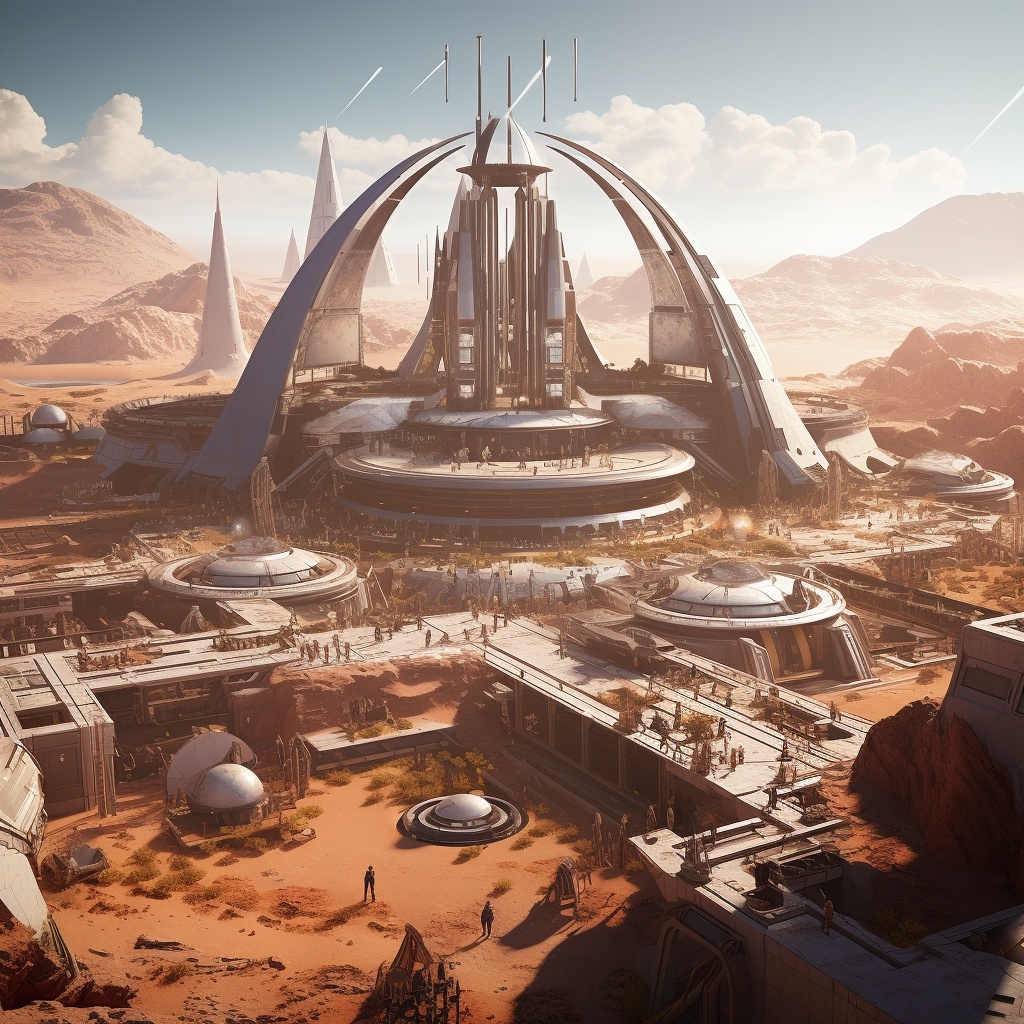
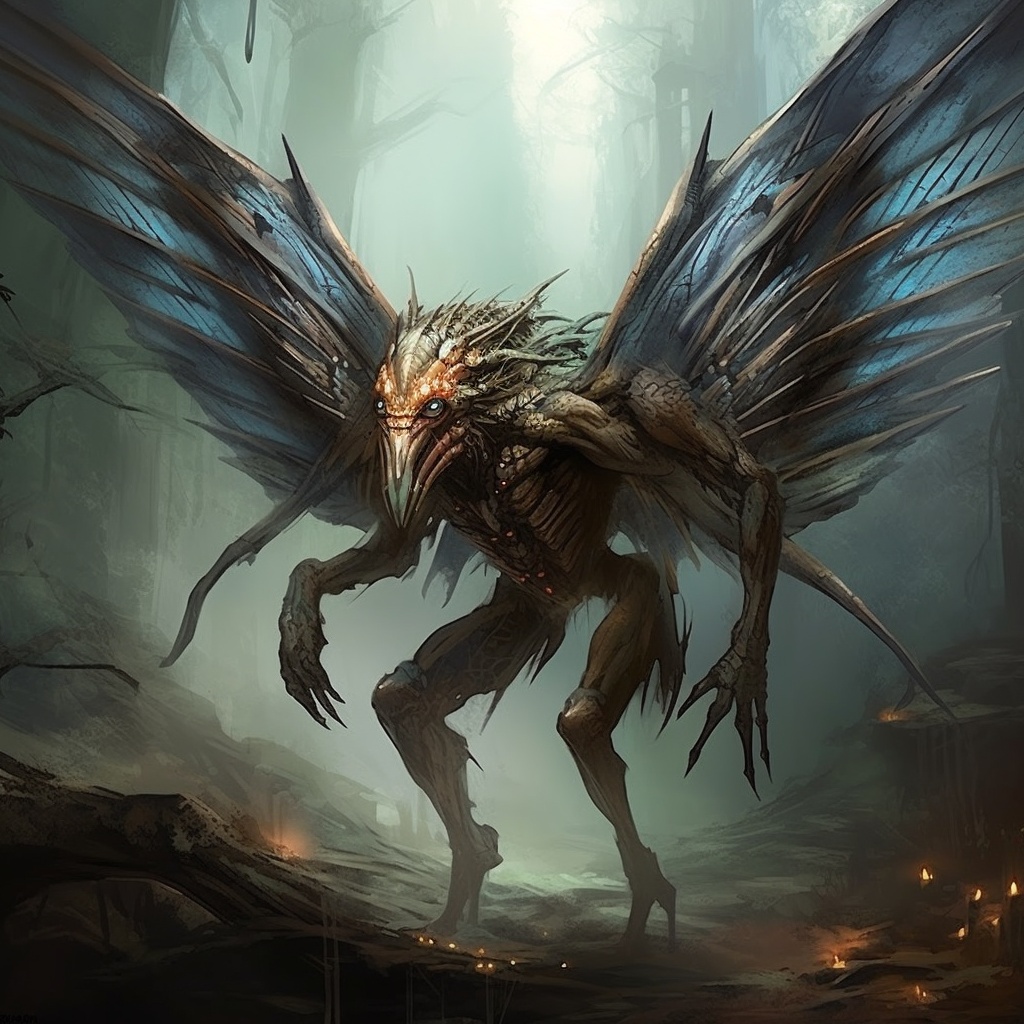
I do want to say, that as stereotype prone as Midjourney is, there have been extremely helpful results it’s given me, especially when it comes to setting and non-human beings. Here are some examples, all what I would consider faithful representations of my prompts.
I wish I had some sort of best practice or ethical rationale, but that’s what everyone’s debating right now. Do I think AI is the devil and should be stricken from everything? Of course not. AI is a tool, and like any tool, its efficacy is dependent on the user. And I don’t mean efficacy strictly in the quality of content, but also in its usage.
As tricky as AI is to figure out, especially given how frequently it changes and updates, it does have its uses. For some people, it speeds up mundane tasks. For others, it provides inspiration. For me, it helps me see the ideas that flood my brain. Yeah, sometimes it’s a little liberal with the boobs and deltoids, but it’s learning. It’s up to us to not only teach AI how to function, but to teach ourselves the right time to use it.
For anyone who has had more than two conversations with me, it’s no secret that I’m a huge Borderlands fan. This is the game that got me into first person shooters. Borderlands 2 is only the second game that has made me walk away because of emotional storyline choices (FFVII popped that cherry in high school. Damn you Sephiroth). Borderlands has also provided my best multiplayer story experience (sorry Mario Kart and Smash Bros, you don’t really have a story).
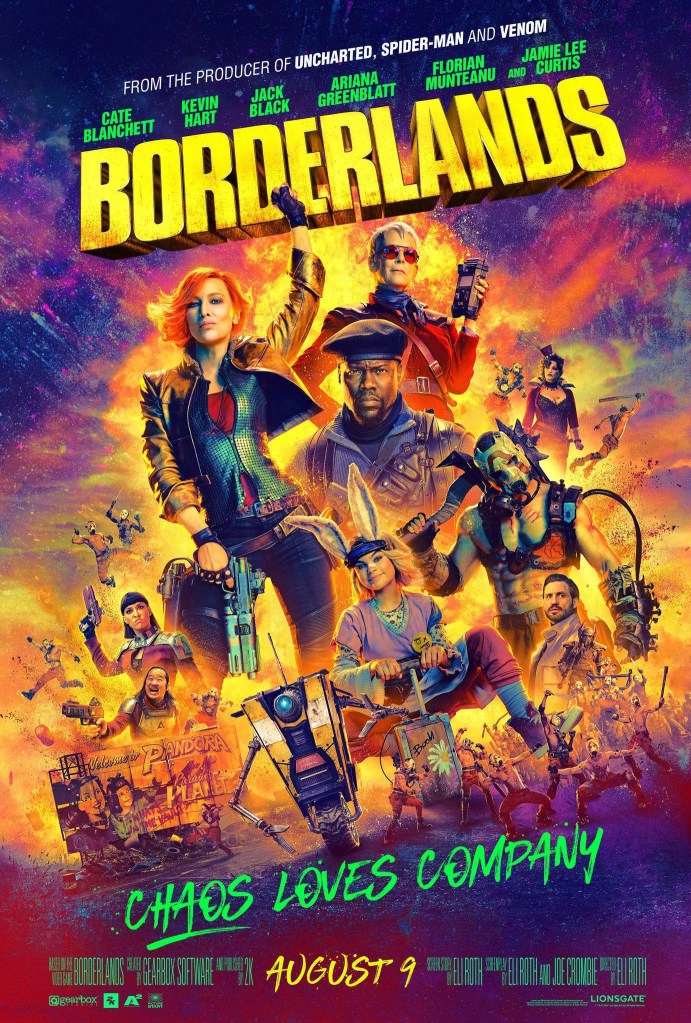
So when this movie was announced years ago, I was excited. Very excited. Then the casting began. Jack Black. Cate Blanchett. Jamie Lee Curtis. Kevin Hart. Yes. This was going be amazing. Was I a little concerned about Cate Blanchett’s age in regards to Lilith? Yes. Did Kevin Hart’s height seem surprising given the massive physical presence Roland had? Of course. But having seen Cloud Atlas become a movie and Wheel of Time become a show, I was open to interpretation.
As well all know, the movie has been utterly destroyed by critics. Disheartening. On pace for one of the worst movie releases ever. Dream-shattering. But that created the perfect silver lining. If I went into it thinking it would be an abomination, then I was likely to enjoy it more than if I’d super-hyped it up. Right? Right?!
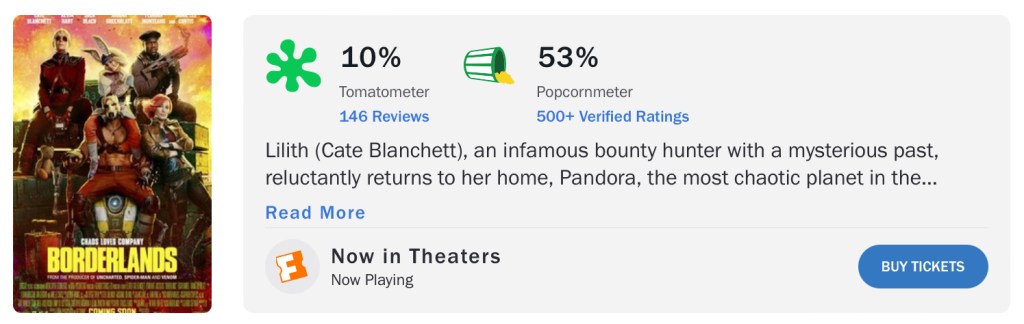
Borderlands was not a good movie. It wasn’t a terrible movie either. It was just a bad movie. The beginning was particularly bad, though it did get better as it went along. Why? I’ll point out very specific reasons that someone in the writing or editing process should have picked up on.
Warning! Spoilers are coming. I’ll try to only hint at big reveals in case you haven’t seen it, but I won’t be able to talk about this spoiler-free.
Problem One: Pacing.

This movie did not know what it wanted to be. Comedy/action? Straight action? Potty humor? Now, I’m not privy to exactly which parts were involved in the reshoots, but I’d wager a healthy sum it was focused on the beginning. It started out with Cate Blanchett exposition regarding Eridians and the Vault and for someone knowing nothing about the world of Borderlands, that would be very helpful. Part of me thinks they were trying to replicate her intro narration in LOTR. It didn’t work out.
The problem with narration is it slows everything down. Borderlands is a first person shooter. The most effective parts of this movie were when they leaned into that freneticism (something I’m assuming attracted them to director Eli Roth). The second problem with narration in film is that it’s often the sign of bad/lazy writing.
There are three moments of narration. The very beginning, a random bit maybe fifteen minutes later when Lilith gets to Pandora, and then a bit at the end. The middle narration was completely unnecessary. She tells us something happened, then we watch it happen. Then she tells us something happened, then we watch it happen. There’s that problematic writing axiom, show don’t tell. Regardless of how you feel about that, you definitely don’t do both at the same time.

The end narration was one of those contrived, moral of the story bits. No, it didn’t have a moral, but it told you how you were supposed to feel about what happened and where things were going. Audiences (arguably) aren’t dumb. We can form our own opinions. Don’t belittle us with that garbage.
The middle and ending narration were bad and shouldn’t have been there. That leaves the beginning narration. Can you have just the one segment of narration. Yes. Will the film be stronger without it? Probably. The reason I don’t like narration and find that it’s lazy, is most of the time that information can be conveyed during the action of the movie. We heard plenty of times that the Eridians were no longer there, that they left tech behind, and Vault Hunters sought the missing vault on Pandora. That takes out the entire opening narration right there.
The one other pacing thing I’ll mention, not even talking about the actual cutting and editing of the sequence of events, is as it relates to the tension of a scene or moment. Very serious, awe-inspiring Lilith flying around with fire wings? Probably a good time to throw Krieg in there with a 1.5 second gag line. Then back to the seriousness. What? Really? Who thought that was a good idea?
Problem Number Two: Continuity.

I imagine (or hope) much of the blame for this lies in the need for reshoots. Basically, there were several payoff moments toward the end of the movie that called back to earlier scenes in the film. The one that stands out the most was when Tannis offered Tina some tea. You could definitely tell this intimate moment was set up earlier. Except it wasn’t. I’m sure at some point there was a scene or set of lines involving Tannis and Tina and tea, but those lines didn’t make it into the final cut. The problem is that the emotional impact of the lines we did see was non-existent. Instead of an “awwww” derived from character growth, we just wonder why the celebration scene is being interrupted with tea? Every second of screen time is important. Why waste ten seconds on that line when it doesn’t mean anything to the audience.

Also, and this stemmed from an in-game joke, when they got to Sanctuary they all had to go up some stairs. I asked my friend at the theater, “how’d Claptrap get up the stairs?” And we both chuckled. Then later on there were stairs again and Claptrap started to do his “oh no, stairs” bit, and Krieg grabbed him and carried him. So they addressed the question/problem, but not when the question/problem first arose. Take the Sanctuary stairs out… perfect. Or have Krieg carry him in Santaury… works great. Ignore the stairs entirely and then do the stairs joke? Continuity problems. Things happen in an order for a reason. Understand those reasons.
Problem Number Three: Appropriate Level of Fan Service.
I admit this is a broad topic. In adaptations, anything and everything can be considered fan service. For the sake of this, I’ll break it down to three aspects: locations, dialogue, and characters.
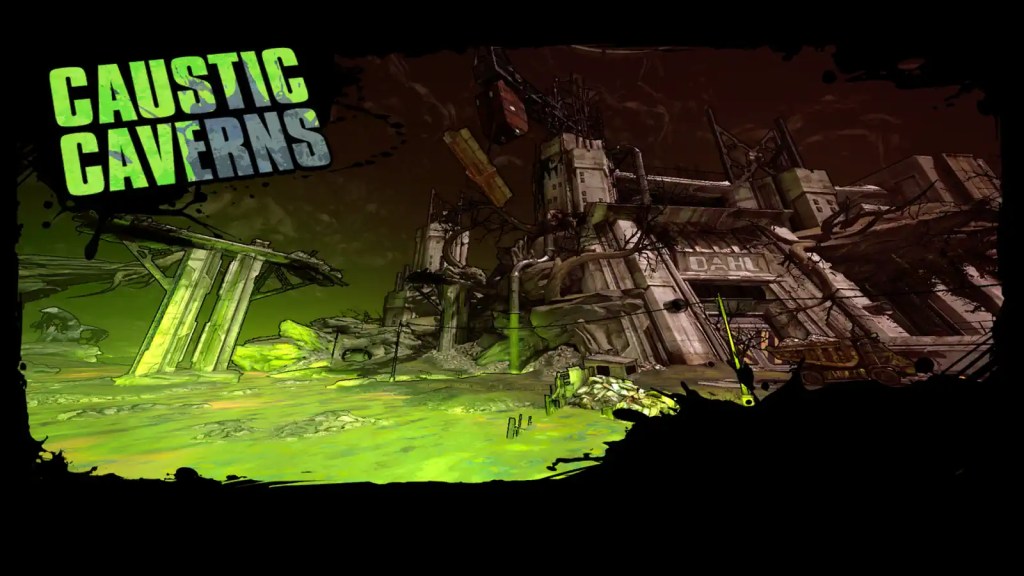
I’ll start with the least offensive: locations. I actually quite enjoyed seeing the world of Pandora and everything that was included. From named locations like Fyrestone and Sanctuary, to the exact placement of bones where that one badass skag always comes from, or the fact that they jumped over Piss Wash Gully, those visual treats were subtle and hit the fandom just right. Now, did it make sense for them to brave the Caustic Caverns only to stumble across a bandit stronghold whose denizens clearly didn’t use the caverns to get there? Not one bit.
Next: dialogue. Knowing first-hand how hard acting is, I don’t want any of this to seem a judgment on the actors. I’ve said for a long time that the greatest struggle for independent films is good writing, followed by good audio, but that’s another issue. That being said, were there times when Eli Roth should have said, “Okay, let’s try that one again?” Yes. Beyond that, there were moments when Easter eggs were thrown into dialogue at the expense of the quality of the dialogue.
For example, there’s the moment when Lilith realizes she needs a vehicle, so she says she’s gotta “catch a ride.” That’s straight from the game, but it sounds utterly ridiculous in the moment. Another time, Tina asks Lilith to grab her badonkadonk. Another reference straight from the game. With the right setup, it might have worked. But it didn’t. Even knowing what that meant, the execution was terrible. Fans like having those moments appear in film and TV, but it has to be organically integrated, not shoved in half-assed. We want to experience the world. We don’t want you to wink at us every time you think you’re clever.

And speaking of Tina, though off topic, let her blow stuff up! That’s what Tina does. Sure she throws some grenades at the end, but she gave Bob to Roland, and the few explosions when we meet her seem situational, not character driven. Tina is bat-shit. Let us see that.
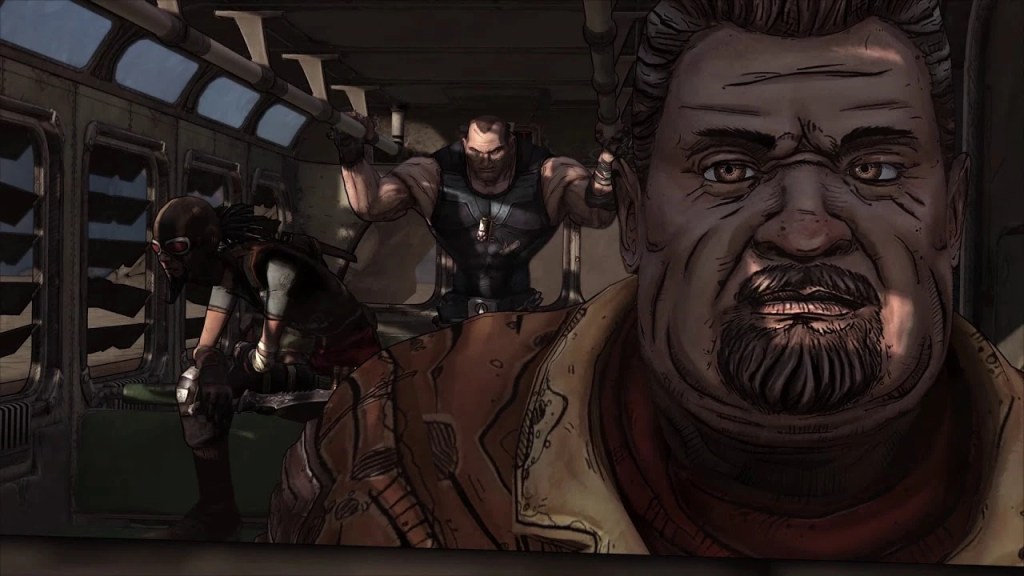
That leaves us with characters. I’m going to point out two poor choices, and two good choices. The poor choices (and there were more than just two) are Marcus and Krieg. It’s tricky, adapting a world with so many characters that so many people love. I understand wanting to satisfy everyone, but it can’t be at the expense of the story. Marcus had two real scenes. The first was picking up Lilith on the Vault Hunter bus. That is a classic callback to the first Borderlands game, and technically it served as a vehicle *ahem* to learn about Lilith’s feelings about Vault Hunters. But it ate up a lot of time and added nothing new to the story. We knew Lilith thought Vault Hunters were dumb. It played as an awkward scene shoved in for the sake of seeing the bus. His second scene was trying to barter with the Crimson Lance. That’s a perfect use for Marcus. Give him three lines (not just a split second visual like with Ellie). Show the audience that the people of Sanctuary stand together against the Lance. Advance the plot as our heroes try to escape. For people who know Marcus it’s “hey, it Marcus!” For those who don’t, it doesn’t matter. Because it adds to the world in a way that advances world-building and story at the same time, without taking us out of the moment.

The second poor choice was Krieg. I understand wanting the big dumb brute as a foil for pretty much everyone else, though the main contrast is with Tina. The problem is this big dumb brute lacks a face, only shouts, and only speaks in caveman garble. Combine the garble with shouting, and half of what he says (and that’s generous) is unintelligible. Does unintelligible dialogue advance plot or character or anything? No. Does a primary character with zero facial expressions work? Almost always, no. But I do like the idea of pairing a sensitive brute with a small child. Luckily, Borderlands has just the person for that. Brick! He’s big, he’s dumb, and man is he protective of Tina. Not only would we have understood him, but we would have seen actual emotion. And he could have addressed why he was on that Atlas ship in the first place.
There were two good character inclusions in the movie. The first is obviously Lilith. As much as she was underwhelming in the first game, her role in the subsequent games can’t be overstated. And then there’s Roland. Remember when I mentioned Borderlands 2 was one of the two games that made me emotional enough to walk away? Roland. God damn you, Handsome Jack.
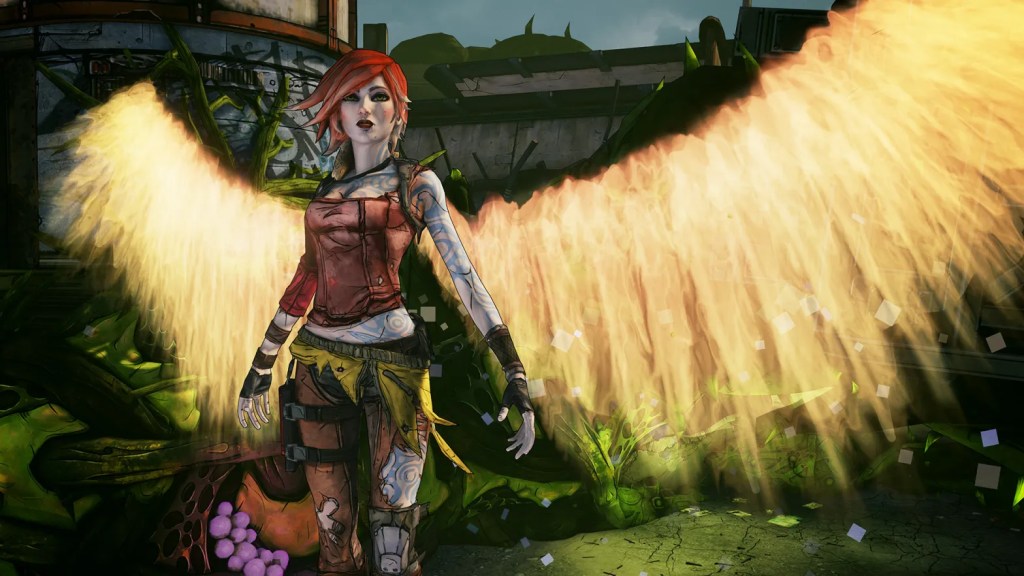
In Lilith we get a central character that is meaningful for the gamers, while also being a fairly well-realized cinema character. Adding her mother (completely wasting Haley Bennett) and showing her prior connections to Tannis and Moxxi worked very well and her character arc in the movie was one of the best parts. Also, when she goes full Firehawk… hits the nostalgia so hard.
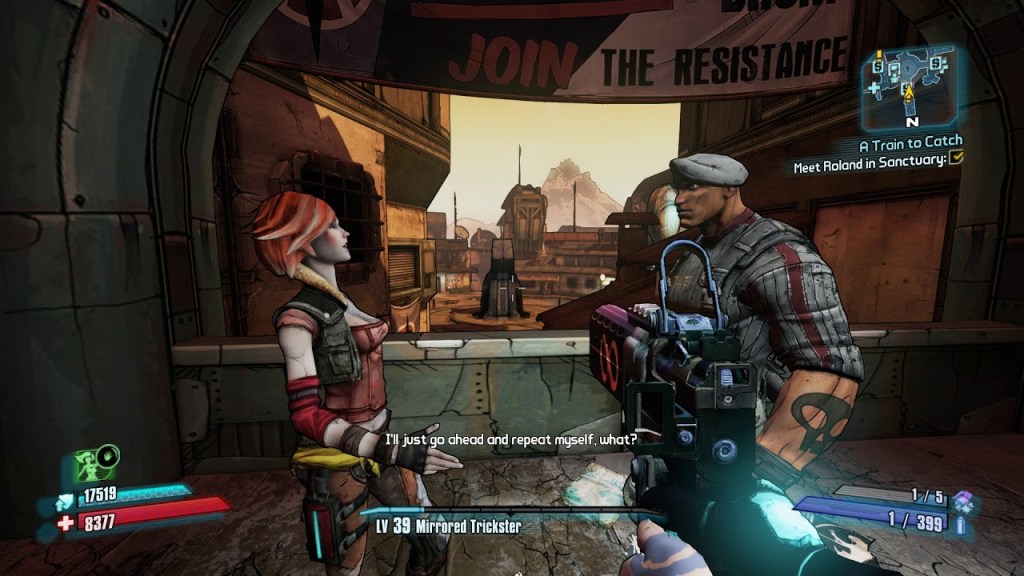
In Roland we get the jaded ex-corporate soldier. Roland’s character arc was lacking, likely due to the fact that he was intended as a supporting character to Lilith and Tina. But he was a great choice as a character to include. With better writing, we could have seen the corruption of the corporations (also negating the need for intro narration), and Roland’s setup as a Pandoran leader would have made sense on a practical and emotional level. There’s a reason his character was so pivotal in Borderlands 2. A sad note about him though… we never got to see him deploy hit turret. We see plenty of cool tech, and there are a couple of battles it would have been great in. Lilith got to phasewalk. Kreig almost always rampaged. But no turret for Roland. Missed opportunity.
These three problems I’ve addressed aren’t the only problems in the movie, they’re just three of the most obvious, and most easily fixed. The ease with which they could have been addressed is especially frustrating after waiting so long for this movie to exist. But it at least provides solace in knowing that a Borderlands movie won’t inherently be garbage. There is so much lore to pull from and so much opportunity for engaging storytelling, even if the movie doesn’t follow the game’s story.
TLDR: The movie was bad, especially beginning. Pacing, editing, and character usage were major problems.
I should say that the fights worked well, especially with the bandits in the tunnels and the main fight at the end. The chaos and unrelenting horde of meat fodder was very reminiscent of the game and very fun.
Would I watch it again? Maybe when my kid is old enough. Maybe just in the background so I can glance at nostalgic scenery. And, because I’m eight-years-old, watching Claptrap violently diarrhea bullets will never get old.
PS: When Roland breaks Tina out at the beginning, that was totally the perfect moment for a “little short for a Crimson Lance” joke. Right in line with Borderlands and much funnier than the short joke they put in later.
Some months back I found out I had a refund check owed to me by an old dentist. It wasn’t a ton of money, but I, my Lego obsession fully rekindled, joked with my wife that I should spend it on Lego. And not just any Lego, but the biggest one I could come up with on the spot. The Eiffel Tower.
For those who don’t know, the Lego Eiffel Tower set is a whopping 10001 pieces and stands about five feet tall. With a nearly two foot square base, it’s a massive set. And it comes with a massive price tag. Far more than my piddly refund check could cover, and far more than my wife would allow without looking up how to draft divorce papers.
But the joke had been made, and I’ve never been one to let a joke go, good or bad.
So when Christmas rolled around and we got some cash with which to buy ourselves presents, of course I had to champion the tower. My birthday was the following month. Eiffel Tower please. We got our tax return. Eiffel Tower! No such luck. Not that I was actually expecting it.
But then one fateful day, my wife got a promotion, and with it, a pay bump. I was out of town when the news came in, so I texted her “Eiffel Tower?!?!?!” Her response was immediate.
”Sure.”
Apparently she’d already decided that each of us should treat themselves (she got official Barbie roller blades and other paraphernalia), and was just waiting for me to ask.
As you can imagine, after much agonizing and debate, I ordered the Eiffel Tower.
I knew the box would be large. But I didn’t realize exactly how large. The giant cardboard box left at my doorstep could have fit a couple of small children, or one of those window AC units. Pretty sure my 100 pound German Shepherd would have been cozy inside. I opened the box to find… another box. Talk about building suspense, Lego.
Inside that box was the actual box. The big kahuna. I immediately took a pic and sent it to my family, who of course all knew the ongoing joke and that it was becoming a reality. I got several messages that for some reason had similar concerns.
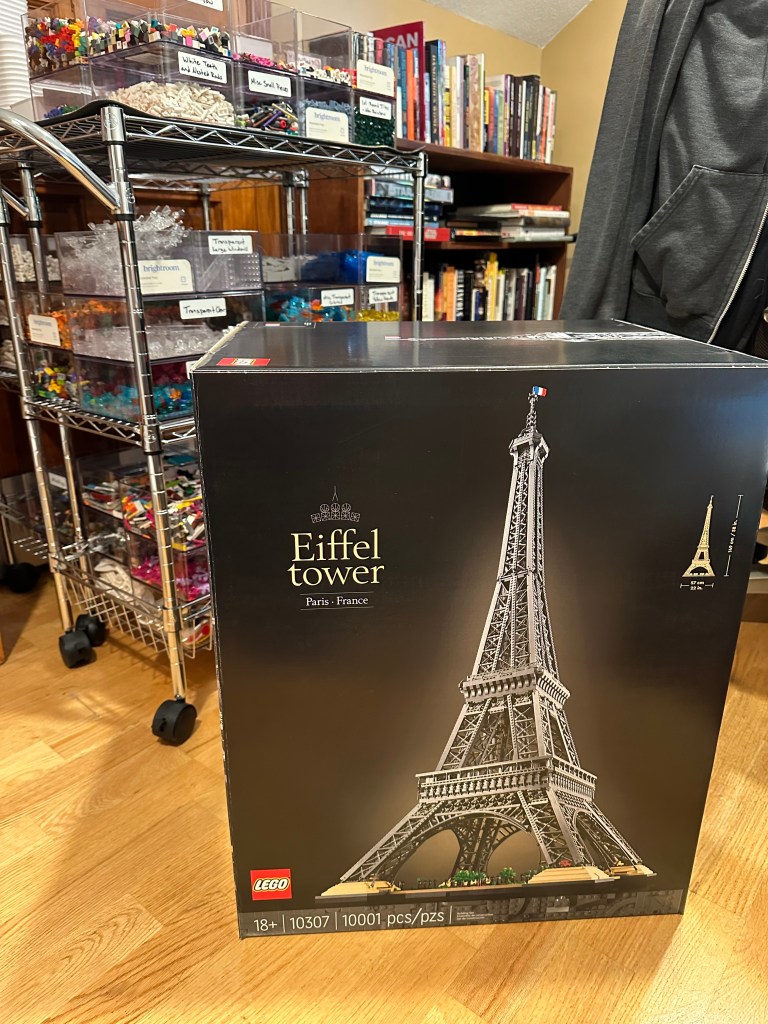
Don’t do it all in one day.
Well, considering it’d arrived in the afternoon, and there were baby bathes and kid bedtimes to handle and stuff like that, doing it that day was out of the question. Had I received The Eiffel Tower at 8am and before becoming a parent, it totally would have been a single-day build, blisters be damned.
Back to the box(es). I carried the shiny new box upstairs where The Eiffel Tower would stand when completed and opened it up. Only to find three more boxes. Sooooo much cardboard. Each of the three smaller boxes seemed larger than any other single Lego box I’ve ever had. My inherently faulty memory and in-the-moment elation may have influenced that assumption, but if it’s not true, it isn’t by much.
And now: time to build.
Normally I do builds on the dining room table. But that’s downstairs, and no way was I going to carry a five foot tall tower up the stairs and risk it falling or smacking into something. So I built it. On the floor. I’ll be 40 years old next year. Do you know what sitting on hardwood floors for hours on end does to a middle-aged body? Let’s just say I was more sore from one night of building on the floor than I was from doing the world’s largest bouncy house non-stop with my kid for three hours.

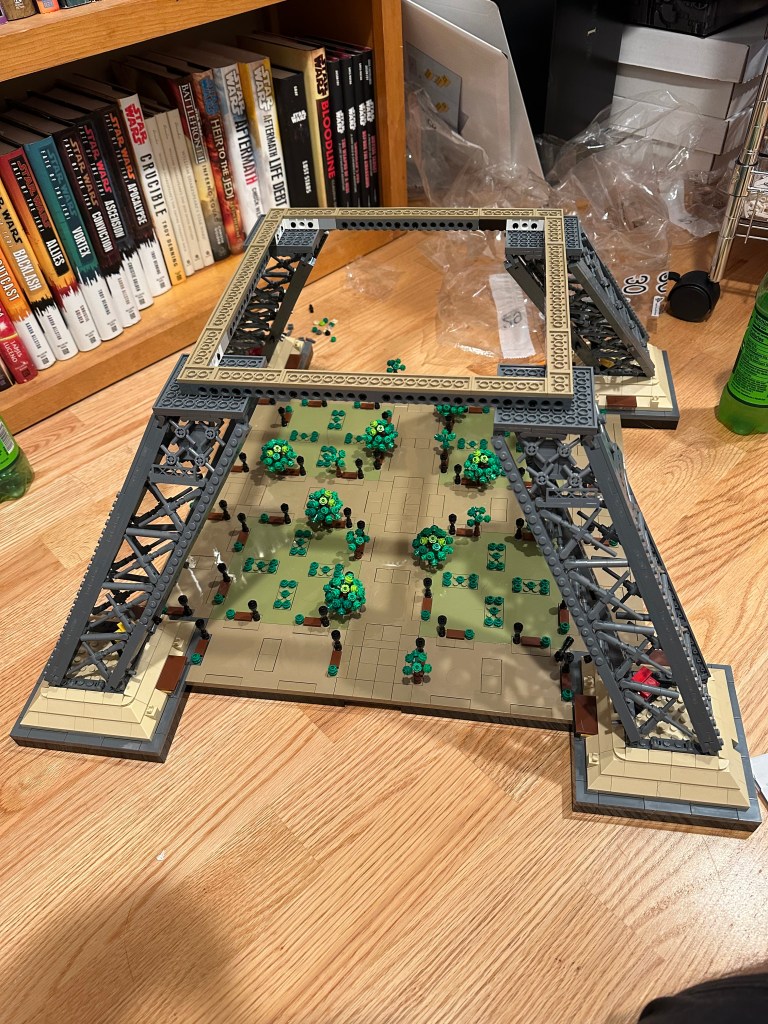
Evening one was just the base and the first layer of supports. Those trees got a bit monotonous, along with the trusses running up and down the legs of the tower. Especially the trusses. I was a little confused as to the red and yellow pieces on opposite legs, but it made sense once I resumed the next day.

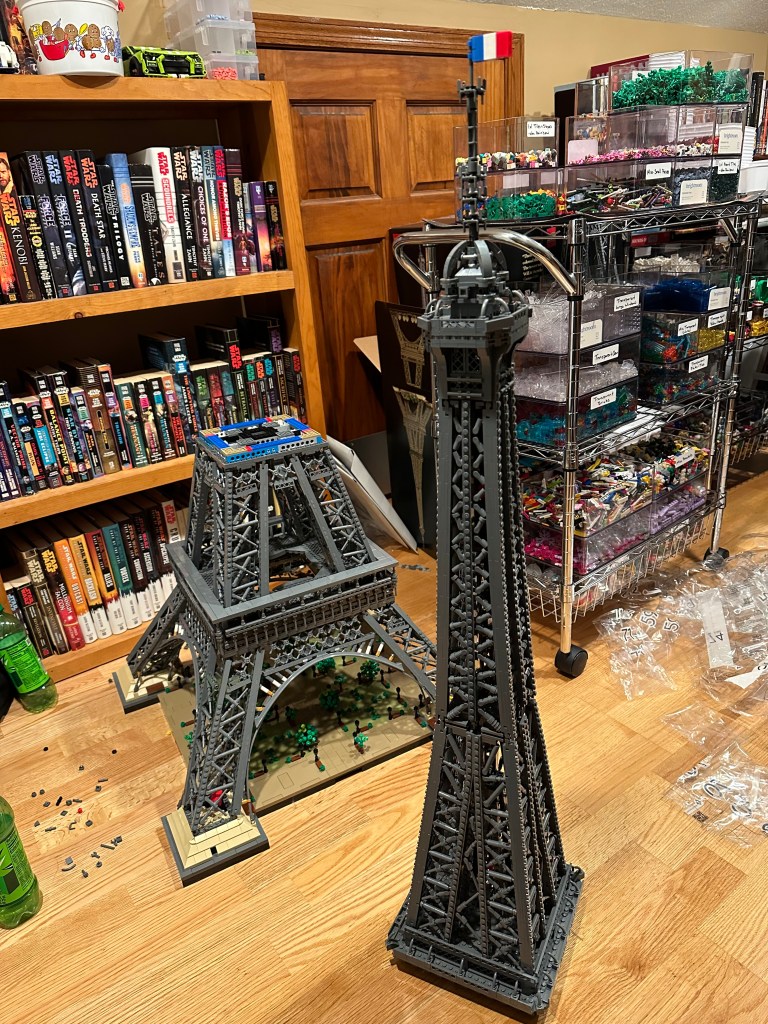
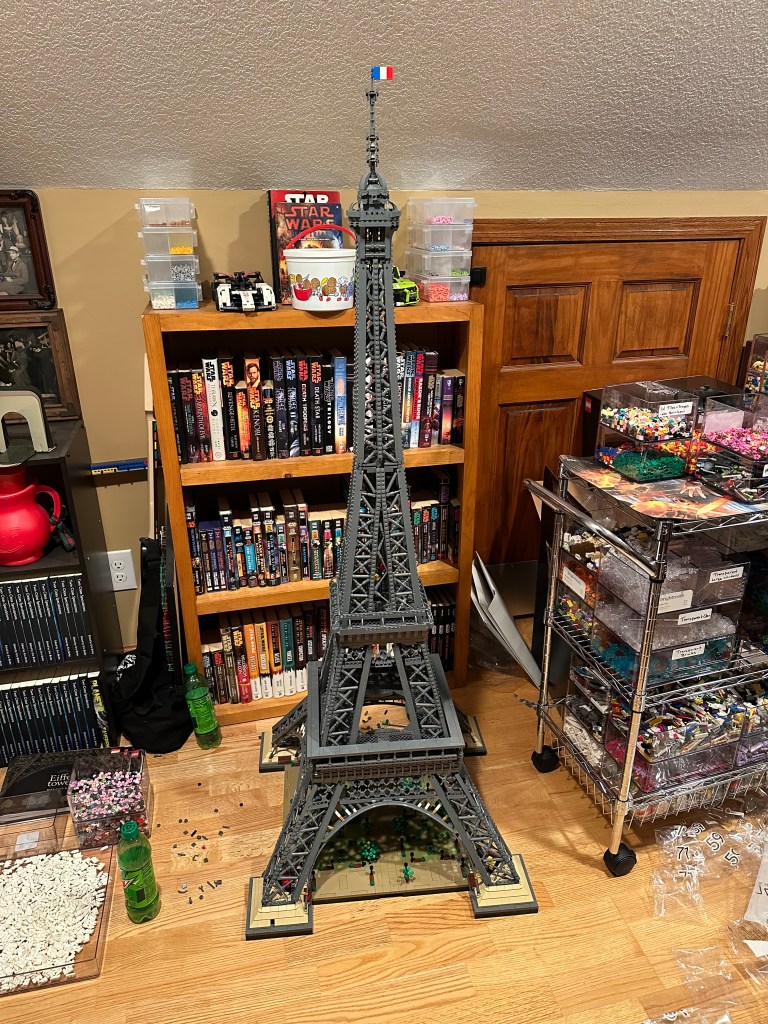
Build evening number two was cut short for reasons, and I was only able to get up to the blue pieces, not the smaller section of tower standing next to it. Part of the delay was just family stuff. Another part was something new for me with Lego sets.
Everyone so often there’ll be a piece missing from a set. Something at the factory didn’t go right and a small 1×1 plate will be missing. Lego is great as sending replacement parts if this happens, and it’s never really been a big deal, especially when my sorted inventory of pieces has a replacement I can use. This time, it wasn’t just one piece missing.
As most Lego builders know, there are numbered plastic bags that you open in order as you progress through the set. Inside those bags will sometimes be smaller plastic bags filled with a bunch of really small pieces. Bag 32 was once such bag. There were multiple small bags within. The only problem was that one of the smaller bags was the wrong bag. What that meant was I was missing not one, but ninety-six pieces. On the plus side, the wrong bag that was in there ended up being entirely extra pieces that found their way into my bins for future projects.
But I was missing a lot of pieces. What was I to do? First, I tried to find replacement parts for all the pieces. That sort of worked. All the pieces were that same dark grey color. I had plenty of the right type of piece, just not enough in dark grey. So The Eiffel Tower got a temporary paint job.
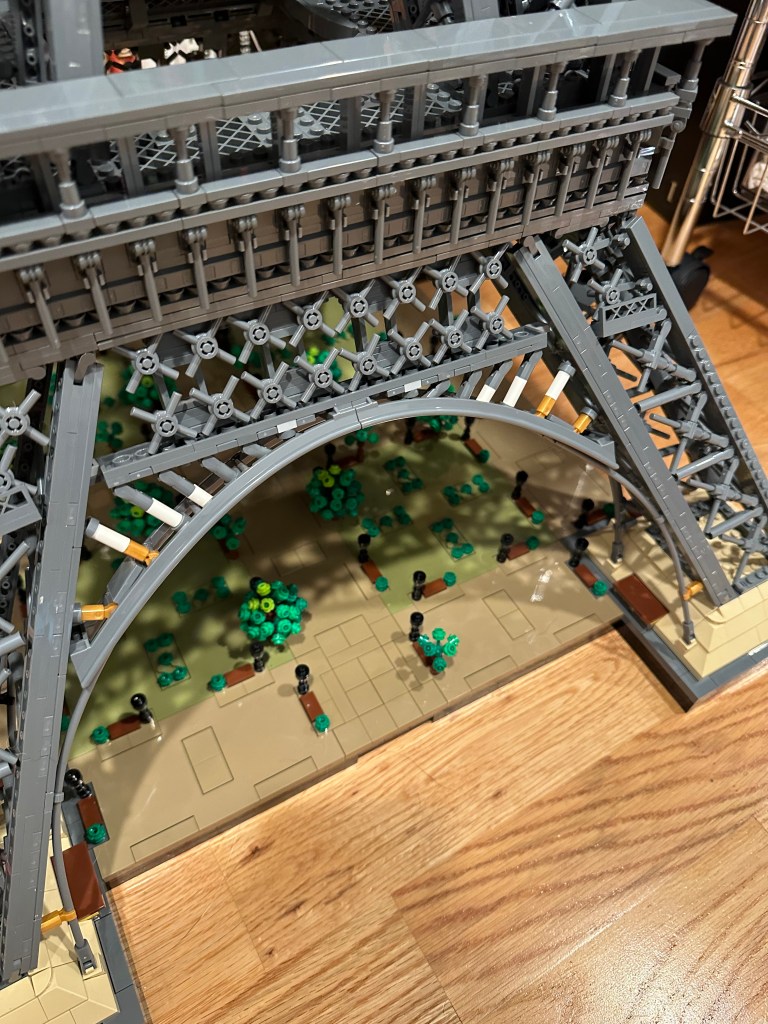
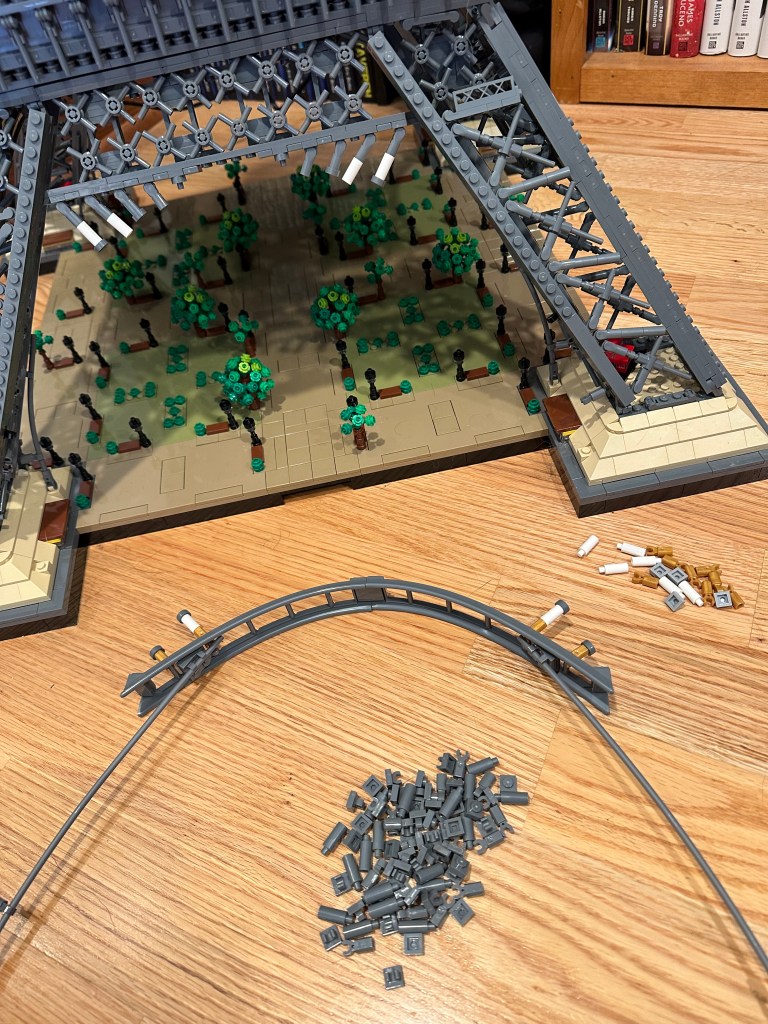
Each of the four sides looked like this. Luckily, this section wasn’t structurally significant, so when the replacement pieces arrived, swapping them out proved not too difficult.
When you go to the Lego site to request a missing piece, it’s an easy and basic form to fill out where you can look up the piece, enter your info, and boom, it’s on its way. But it was designed to replace one or two pieces at a time. Not ninety-six. Looking up and adding those one at a time would have taken forever, so instead I emailed customer service and explained the situation. After a couple of emails back and forth, the pieces were on their way. Super helpful and understanding.
While the actual, fully complete Eiffel Tower took a couple of weeks because of the replacement parts, I built the (with replacements) whole thing over three evenings. Part of me wanted to see if I could speed build the thing. I looked up the record for the set’s fastest build, and it is 9 hours, 14 minutes, and 32 seconds. I didn’t use a stop watch, but even with the hunting for replacement parts and constant shifting on the floor as my hips let me know how unhappy they were with my life choices, I don’t think I was too far off from that mark. If I assembled everything from a comfy chair at the table and had the proper pieces waiting for me… it could happen. I’ve always thought I was a speedy builder, and if I ever felt like disassembling and reassembling all 10001 pieces, I might have to give the record a go.
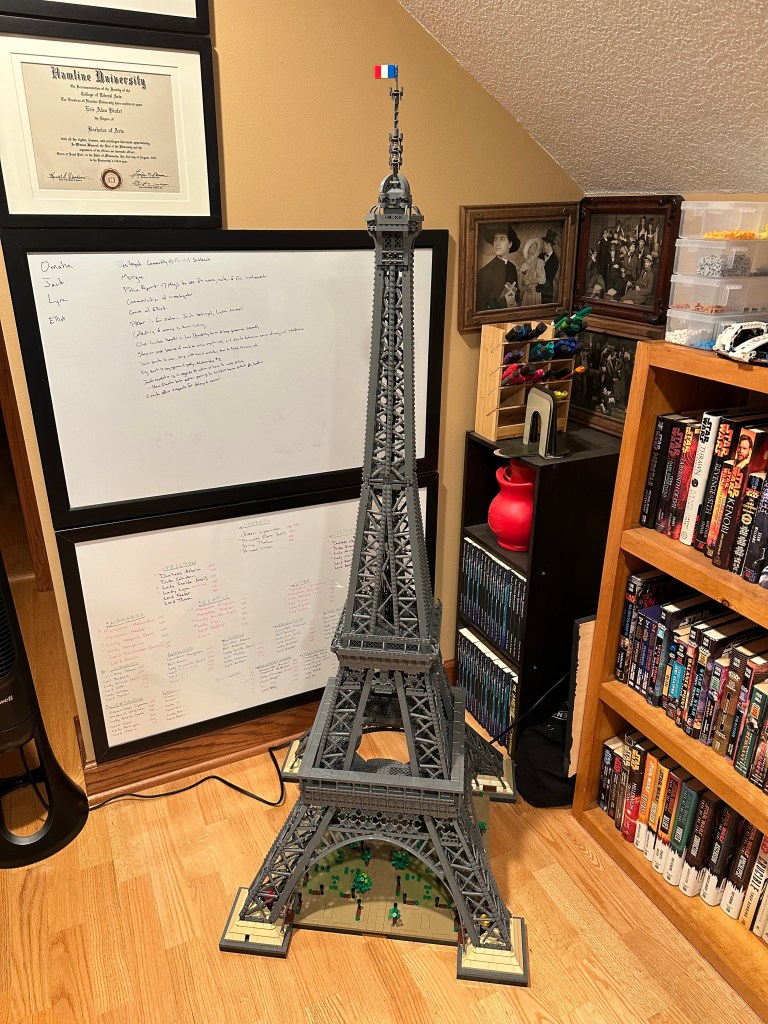
Now that it’s completed, it’s standing tall in the corner of my office. Before it arrived, I had briefly thought about using it as a bulletin board, hanging up character and plot ideas for later, but once I assembled it I realized the top was far too narrow for that. So instead I just have to lean this way or that to see my whiteboard notes. I can live with that. :)
Oh, and the red and yellow pieces? Elevators to the various observation decks. Zoom in and you can see them at intervals inside the tower. And lastly, all Lego sets are built using the same catalog of pieces. The colors can be changed easily enough, and yes, they’ll occasionally make new pieces for sets if needed. But there’s a thing called nice part usage, where you take a piece and use it for something other than what it was designed for. My favorite nice part usage in this set was the sausage. The thirty-two sausages.

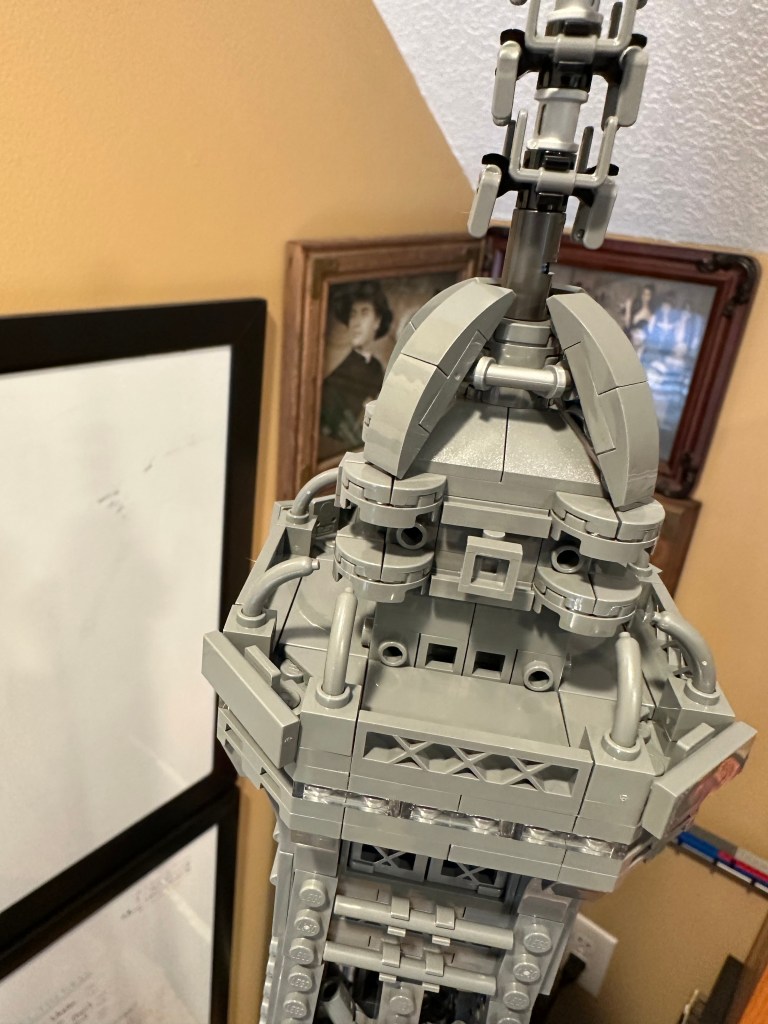
Because of the Paris Olympics I really want to surround this with micro-builds of Olympic events. But I’ve not nearly the time or bandwidth for that. Sad. But that’s all for today. Hope you enjoyed my little journey, and if you’ve any fun builds or Lego stories to share, feel free.