2025 Recap

Another year in the books, another year of successes and setbacks. Highlights!

Publications

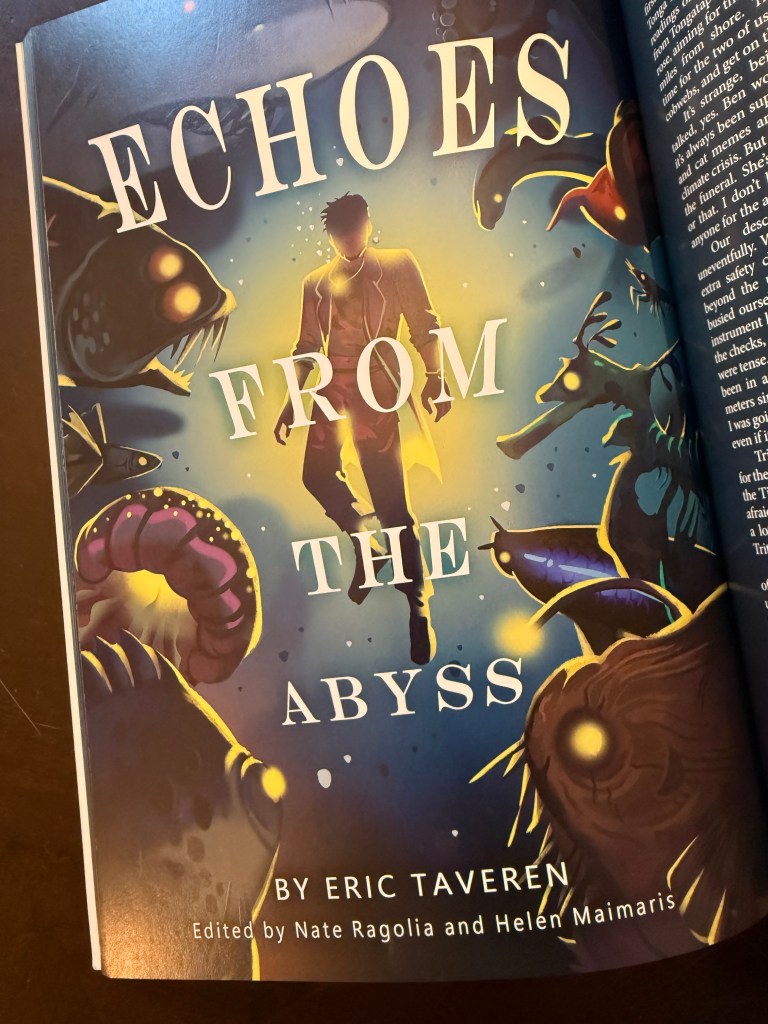
This year I had two pieces that went the distance. The first was a dream pub in F(r)iction Magazine. Echoes from the Abyss was based on a character from a novel idea I had, and when I saw they had an oceans themed issue I had to submit. And it’s a good thing I did.

The other piece I had published was my first ever poem. By that I mean the first one I ever wrote with the intent to send out. Usually poetry and I don’t get along well, but inspiration strikes whenever it wants. Unanimous was about Ichiro Suzuki and how he should have been unanimously elected into the Baseball Hall of Fame.
I actually heard from one of Under Review’s editors the other day with feedback he’d recently received. He said that someone reached out to him unsolicited just to say how much they liked the poem. Noice. 🙂

Milestones

Aside from F(r)iction, which I consider a milestone as it was my first professional pay publication, I also finished my MFA in Creative Writing this year. I defended my thesis—the first third of a fantasy/mystery novel—and the feedback I received was overwhelmingly positive. One of the comments was that it read like an edited, published novel. I’ll take that any day.

Setbacks

So this is more of a writing inconvenience than a setback, but in the fall I went back to work. The prior year I’d been a stay at home dad with the baby, and I’d been able to write during nap time or if the grandparents wanted a turn with the baby.

Now I’m a middle school special ed math teacher. I’d been hopeful that I could write during prep periods, but those ended up being mostly non-existent. And working at a low-income school… let’s just say that the kids can be draining. By the end of the day, after a full day of school and an evening of my own kids, believe me when I say I’m in no condition to write. What started as 200 pages written over 6 months before work became 6 pages written over 4 months once I started.

I won’t blame everything on the job though. I get distracted with new ideas often. Sometimes it’s a good thing. Just today I finished the first draft of a middle grade novel I’m tentatively calling The Fart Heist. This summer I wrote a two short stories that I really need to get back to as well as an essay that I’m almost ready to go back to.

The essay was about my dad. He died in August and it still is strange whenever I remember he’s gone. It was especially in my mind around the holidays since he used to host Thanksgiving every year and just now at Christmas too. Eventually I’ll get back to it. I don’t know that I’ll ever try and publish it, but it’s something for me at the very least.

Looking Forward

I’m no longer hopeful I can get any real writing done during the school year. Breaks will be nice (most of that middle grade novel was written during winter break), but to finish the novel that was my thesis, I’ll probably have to wait until summer. The toddler will be in day care and the soon-to-be third grader will be able to mostly occupy himself when I need writing time.

I haven’t sent anything short out for a while, so I don’t expect any more lit mag publications anytime soon. Unless something crazy convenient comes up, of course. But I think over the next few days I’ll work on The Fart Heist, hopefully have it ready to send out by the end of spring break, and then I can get back to the novel once school’s out.

Thank to all who visit this site. The numbers aren’t spectacular, but they’re consistent. I appreciate it. I hope you all have a wonderful 2026.

Until next time,

Eric

I’m in the New F(r)iction Issue!

My lifelong writing goal has always been simple: walk into a Barnes and Noble and see my name on a book. Well, I’m almost there 🙂

Instead of seeing my name on a book, I can see my name in one. F(r)iction’s newest issue, Oceans, is out, and unlike every other print magazine I’ve been published in—which were only available online—F(r)iction is stocked in Barnes and Nobles stores across the country! They already sent me my contributor copies, but I still had to go see my name in person.

As you can see, F(r)iction is not your ordinary literary magazine. Each issue is themed, and each piece has custom art created for it. I got a behind the scenes peek at their whole process and it is crazy cool.

I first saw F(r)iction three years ago at AWP in Seattle, and I knew immediately that if there was any magazine that I wanted a piece in, it was F(r)iction. I didn’t realize the issues were themed initially, and the first piece I sent in got rejected. But when I saw the Oceans theme coming I knew exactly what story I wanted to tell. It was mere days after submitting that they responded and wanted to work with me.

I don’t want to give any spoilers, but the story is based on a character from a novel I’ve outlined. I changed him a little so it made sense for a short story, but the novel’s character is a marine geologist who makes a world changing discovery near some thermal vents. For the short story I took the implications of his discovery, shaped them into a character, seasoned them with relationship drama, then let it simmer until the story was fully cooked.

I do have to thank Nate and Helen over at F(r)iction. Especially Nate. Without their input this story wouldn’t have the same oomph. We writers always have blind spots and they did an amazing job shining a light on what I was overlooking.

So head to your local Barnes and Noble and find it in their newsstand section (You may want to call first to see if they have it, the only location in my area that did was the Mall of America location). Or order it online if that’s easier. My story isn’t the only fun read in the issue either. You’ll find my story alongside work by Charlie Jane Anders, James Bradley, Dr. Ocean, and other brilliant contributors. It’s a gorgeous issue—go check it out.

Accidental Inspiration

Hey all. This’ll be a quick one. While at AWP I was talking with a horror writer and we were sharing setting ideas. We both have personal history in rural settings, and after I described my setting and a general idea to go with it, he full body shivered and told me to write the story. ASAP.

Now that thesis is in, I think that’ll be a good mental reset before I finish drafting the novel. I’d been thinking about the theme of it, and the tone, and my mind went back to a Stephen King story I’d read ages ago, The Girl who Loved Tom Gordon. In my mind it was a short story, probably because I’d read the pop-up book version. Lo and behold, the actual book was on my bookshelf. Points for being a book collector.

So I grab the book, stick it in my bag for the hotel (my wife has a work event in Kentucky and I’m on baby duty), with the expectation to carve out some time to work on it. Then I see this in the hotel:

It’s not exactly the Overlook Hotel, but the vibes are definitely there. Here I am, planning to read Stephen King, and I walk into this hotel. To top it off, I go into the bathroom, and the shower looks a lot like the one Rosamund Pike uses in Gone Girl to wash off all the blood.

I wanted to write a horror story. Looks like I’ve got plenty of inspiration to work with. Maybe instead of sitting in the lobby downstairs or at the desk in the room, I’ll just camp out in the hallway, cross-legged, and let the periphery mess with my head as my fingers work.

Until next time.

Also, what’s with these libraries in Kentucky?! I feel like they’re doing them very right, or very wrong.

On the Streets in Santa Monica, and Thesis too.

Two weeks ago I flew to LA to attend this year’s AWP Conference and Bookfair. AWP itself was about the same as usual: some good panels (yay Juan Carlos Reyes), some not-so-good panels (I’m too nice to name names), and too many books finding their way into my backpack (who’s excited for Gods?!).

A few AWP firsts:

  • Someone asked if I’d be interested is doing a reading next year 🙂
  • One of the people I split a hotel with head-butt me in their sleep 😦
  • I wrote and submitted a piece while at the conference 🙂
  • I took an extra day strictly for research 🙂

I mentioned in an earlier post that I had a conundrum with my current project. It takes place in LA and I started writing the pieces before last year’s fires. I had no idea how I should address them in-story. So I took the opportunity to talk with locals and get see what the fire was like for them, how it affected the areas I was writing about, and from there I had to make my decision.

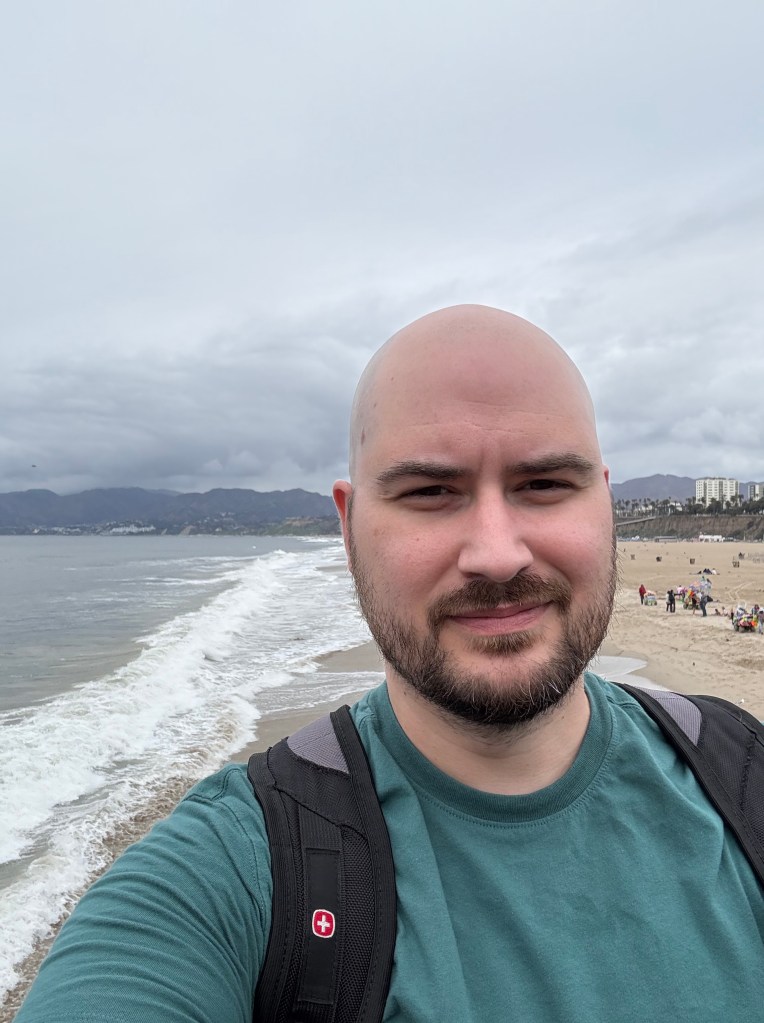
One thing that worked in my favor, specifically regarding the ability to talk to people uninterrupted, was that it was overcast and a little drizzly in the morning. That meant I only had to try a little to not bump into people as I walked on the Santa Monica pier. I talked with one of the employees there, because the tourists outnumber locals 99 to 1, and he said on nice day everyone on the boardwalk is shoulder to shoulder the whole way through.

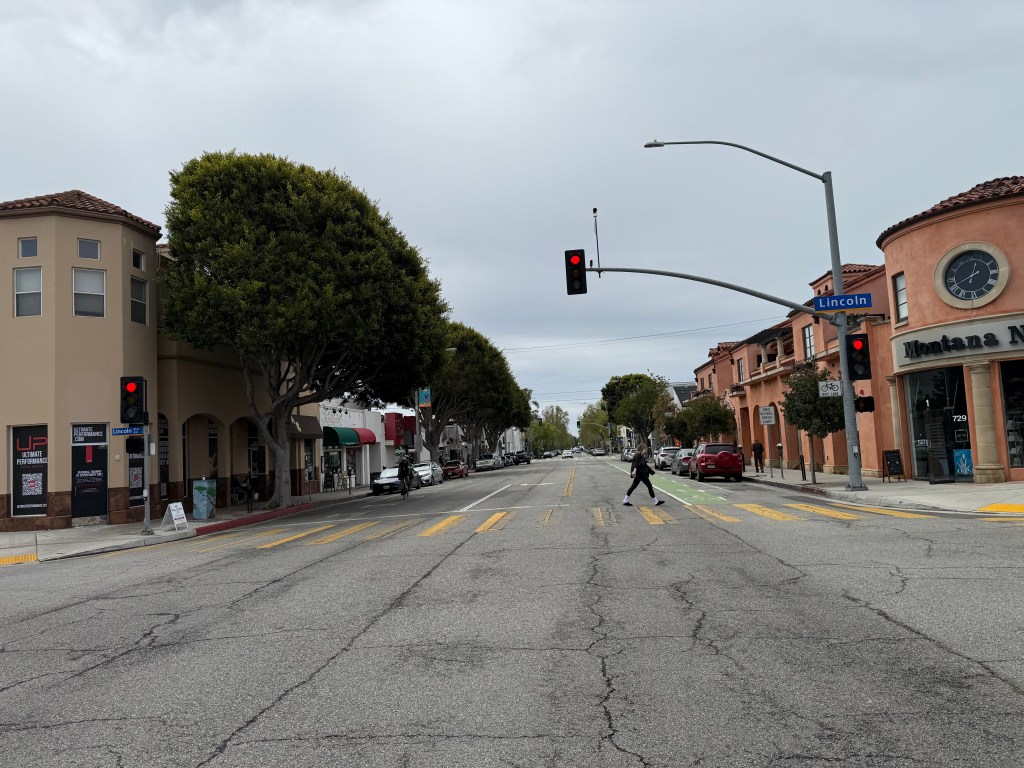
From the pier I needed to head to Montana Avenue, which wasn’t too far away. This was, of course, after walking a fair amount to find the bus to Santa Monica and walking along and around the pier. I’d read up on the area online, but seeing it in person was incredibly beneficial. One, I didn’t realize how much foot traffic there’d be. I’m used to Grand Ave in St. Paul, where parking is a nightmare because nearly everyone drives there and so much of the walking is to and from vehicles. Not the case on Montana Ave.

As with the pier, nearly everyone was a tourist. The only locals I found were employees of the stores, old people sitting outside of coffee shops, and shoppers at Whole Foods. I made the rounds, stopping at a few specific locations that I plan on incorporating into the story, and got a much better idea of the pulse of those dozen or so blocks.

The most interesting thing I found wasn’t something described online at all. Approaching from the west, the shops spring up almost out of nowhere and look new and fancy. Approaching from the east is the same experience. But there’s a little section in a middle, only a few blocks long, where the buildings, though still nice, have a distinct ma and pa shop feel to them. I didn’t feel like they were tailored to the trendy elite of the area.

My exploration kept me going for a while. A long, long while. At one point I checked my steps and swore out loud when I saw it read 20000 steps. By the end of the day, I’d walked nearly fourteen miles.

Those who personally know me know I’m not in bad shape. But they also know I’m not in walk fourteen miles in one day out of nowhere shape. Oh man did I hurt afterward. But it was worth it. I got home, used my research to update my thesis, and dropped off the printed copies this past Monday. I may have killed a tree in the process of printing them, but it’s for a good cause.

Now I wait a month until my thesis defense. I’m not worried, but waiting that long for anything can be a bit much. So maybe I’ll take a mental break and write a short story. Horror sounds good…

Until next time.

Los Angeles: A Setting Conundrum

Last spring I decided to have a portion of my novel take place in Los Angeles. One chapter would be closer to downtown, and two chapters would be in Santa Monica. I’ve never been to LA, so I did a bunch of research, found some locations that worked well for theme and ambiance, and went to town.

Then I found out AWP would be in LA this year. Perfect! I’d extend my trip a day, and see my locations in person. I could talk to people, get a feel for the community and the culture and really lend some authenticity to these chapters. Then the fires happened.

I don’t feel I need to go into detail as to how the fires have impacted the LA area, and how terrible the situation is. Everyone sees the news and social media posts. It’s bad, I acknowledge that, and I know the problem I’m about to pose is nothing compared to what they’re dealing with in LA.

What I’m struggling with is how this will impact my story.

The way I look at it, and this can apply to any setting where a significant event has occurred, is I have three options on how to proceed. The first is the easiest: pretend it never/hasn’t happened. I write fiction, so I can take liberties with the when of a story, or even the very world. I could set this pre-fires, create an LA that until very recently is the LA that most people know. All that would take is incorporating my trip research as I’d already planned, and either defining a year of the story (summer 2024 and earlier), or just pretend my areas were never impacted by the fires.

Option two is probably the hardest: incorporate the fire, including community impact. Given my knowledge of LA is based solely on media and research, this is the most daunting. When I go there in March, I’ll see firsthand the impact of the fires in the communities, especially the locations I’ve chosen to be in my story. By talking to people, I’ll hopefully hear what Santa Monica used to be like, the struggles they’re facing as they rebuild, and how they (individually and collectively) are moving on. My character’s family has a business on Montana Ave, so this could present a good opportunity to show community involvement, as well as allow for any creative liberties with building size and placement.

As daunting as effectively portraying that community will be, another concern I have is that it might look like I’m exploiting the community for my narrative. A terrible thing has happened, why not shove it into a story for emotional appeal? Right. Obviously that’s not the goal, as I’d already decided to use Santa Monica well before the fires. But I can’t deny that including the fire aftermath would inherently create an emotional hook for some readers. As writers, creating emotional connections with readers is the goal, the concern is that it might look like I’m taking advantage of a bad situation.

The third option is to have it take place elsewhere. I’d chosen LA because I needed a large city that wasn’t New York (where a healthy chunk of the book takes place), and I was looking for a certain vibe of wealth (Ch. 1) and then a nearby trendy shopping area with a more laid back feel (Ch. 2-3). I’m sure that combination exists elsewhere, but picking somewhere else would be learning a new location, researching it, adapting the narrative to account for it, etc. Definitely more work than option one, probably less work than option two.

So that’s the conundrum. How do I deal with a real natural disaster in my writing? Do I take the easy way and ignore it? Do I remove my story from the location entirely so the disaster has no bearing whatsoever? Or do I try and incorporate it, risk sounding exploitative and try to put some real truth into a piece of fiction?

AWP is at the end of March, so I still have some time to decide, but I need a completed draft by late April. Whatever decision I make, I’ll have only a few weeks to incorporate it. Maybe talking with locals will help make that decision for me. Maybe talking with other writers can give me some insight. Right now, I’m leaning toward including the fires, to have a very real way to tie my character into the community, but we’ll see.