Two weeks ago I flew to LA to attend this year’s AWP Conference and Bookfair. AWP itself was about the same as usual: some good panels (yay Juan Carlos Reyes), some not-so-good panels (I’m too nice to name names), and too many books finding their way into my backpack (who’s excited for Gods?!).
A few AWP firsts:
Someone asked if I’d be interested is doing a reading next year 🙂
One of the people I split a hotel with head-butt me in their sleep 😦
I wrote and submitted a piece while at the conference 🙂
I took an extra day strictly for research 🙂
I mentioned in an earlier post that I had a conundrum with my current project. It takes place in LA and I started writing the pieces before last year’s fires. I had no idea how I should address them in-story. So I took the opportunity to talk with locals and get see what the fire was like for them, how it affected the areas I was writing about, and from there I had to make my decision.
One thing that worked in my favor, specifically regarding the ability to talk to people uninterrupted, was that it was overcast and a little drizzly in the morning. That meant I only had to try a little to not bump into people as I walked on the Santa Monica pier. I talked with one of the employees there, because the tourists outnumber locals 99 to 1, and he said on nice day everyone on the boardwalk is shoulder to shoulder the whole way through.
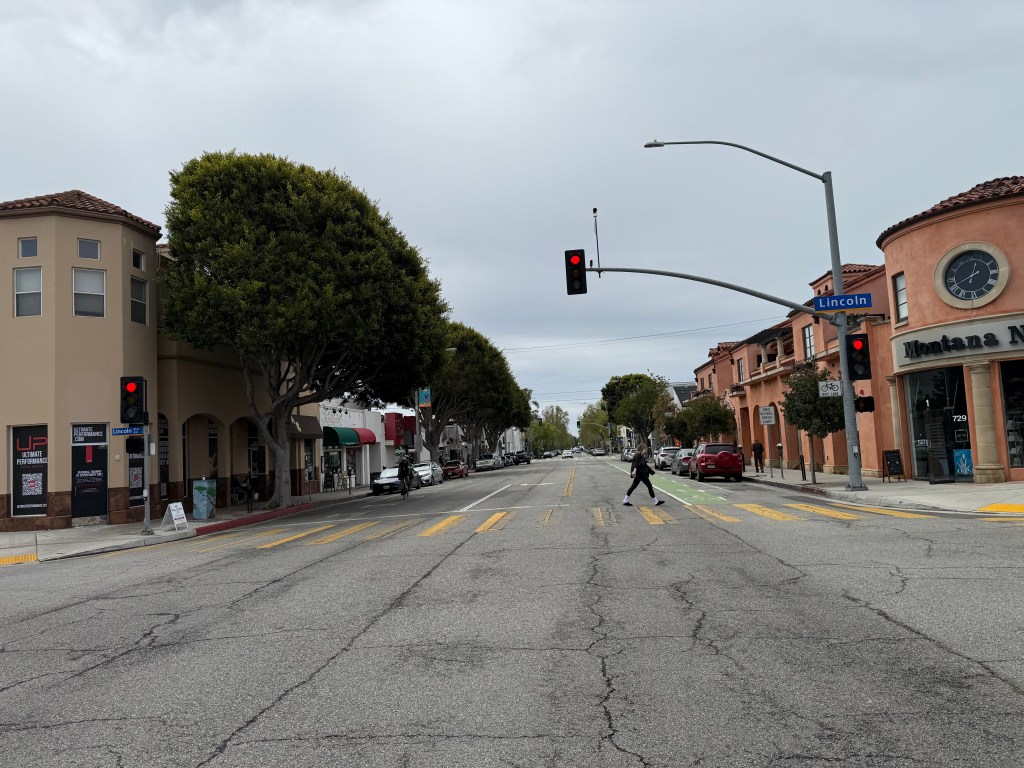
From the pier I needed to head to Montana Avenue, which wasn’t too far away. This was, of course, after walking a fair amount to find the bus to Santa Monica and walking along and around the pier. I’d read up on the area online, but seeing it in person was incredibly beneficial. One, I didn’t realize how much foot traffic there’d be. I’m used to Grand Ave in St. Paul, where parking is a nightmare because nearly everyone drives there and so much of the walking is to and from vehicles. Not the case on Montana Ave.
As with the pier, nearly everyone was a tourist. The only locals I found were employees of the stores, old people sitting outside of coffee shops, and shoppers at Whole Foods. I made the rounds, stopping at a few specific locations that I plan on incorporating into the story, and got a much better idea of the pulse of those dozen or so blocks.
The most interesting thing I found wasn’t something described online at all. Approaching from the west, the shops spring up almost out of nowhere and look new and fancy. Approaching from the east is the same experience. But there’s a little section in a middle, only a few blocks long, where the buildings, though still nice, have a distinct ma and pa shop feel to them. I didn’t feel like they were tailored to the trendy elite of the area.
My exploration kept me going for a while. A long, long while. At one point I checked my steps and swore out loud when I saw it read 20000 steps. By the end of the day, I’d walked nearly fourteen miles.
Those who personally know me know I’m not in bad shape. But they also know I’m not in walk fourteen miles in one day out of nowhere shape. Oh man did I hurt afterward. But it was worth it. I got home, used my research to update my thesis, and dropped off the printed copies this past Monday. I may have killed a tree in the process of printing them, but it’s for a good cause.
Now I wait a month until my thesis defense. I’m not worried, but waiting that long for anything can be a bit much. So maybe I’ll take a mental break and write a short story. Horror sounds good…
Last spring I decided to have a portion of my novel take place in Los Angeles. One chapter would be closer to downtown, and two chapters would be in Santa Monica. I’ve never been to LA, so I did a bunch of research, found some locations that worked well for theme and ambiance, and went to town.
Then I found out AWP would be in LA this year. Perfect! I’d extend my trip a day, and see my locations in person. I could talk to people, get a feel for the community and the culture and really lend some authenticity to these chapters. Then the fires happened.
I don’t feel I need to go into detail as to how the fires have impacted the LA area, and how terrible the situation is. Everyone sees the news and social media posts. It’s bad, I acknowledge that, and I know the problem I’m about to pose is nothing compared to what they’re dealing with in LA.
What I’m struggling with is how this will impact my story.
The way I look at it, and this can apply to any setting where a significant event has occurred, is I have three options on how to proceed. The first is the easiest: pretend it never/hasn’t happened. I write fiction, so I can take liberties with the when of a story, or even the very world. I could set this pre-fires, create an LA that until very recently is the LA that most people know. All that would take is incorporating my trip research as I’d already planned, and either defining a year of the story (summer 2024 and earlier), or just pretend my areas were never impacted by the fires.
Option two is probably the hardest: incorporate the fire, including community impact. Given my knowledge of LA is based solely on media and research, this is the most daunting. When I go there in March, I’ll see firsthand the impact of the fires in the communities, especially the locations I’ve chosen to be in my story. By talking to people, I’ll hopefully hear what Santa Monica used to be like, the struggles they’re facing as they rebuild, and how they (individually and collectively) are moving on. My character’s family has a business on Montana Ave, so this could present a good opportunity to show community involvement, as well as allow for any creative liberties with building size and placement.
As daunting as effectively portraying that community will be, another concern I have is that it might look like I’m exploiting the community for my narrative. A terrible thing has happened, why not shove it into a story for emotional appeal? Right. Obviously that’s not the goal, as I’d already decided to use Santa Monica well before the fires. But I can’t deny that including the fire aftermath would inherently create an emotional hook for some readers. As writers, creating emotional connections with readers is the goal, the concern is that it might look like I’m taking advantage of a bad situation.
The third option is to have it take place elsewhere. I’d chosen LA because I needed a large city that wasn’t New York (where a healthy chunk of the book takes place), and I was looking for a certain vibe of wealth (Ch. 1) and then a nearby trendy shopping area with a more laid back feel (Ch. 2-3). I’m sure that combination exists elsewhere, but picking somewhere else would be learning a new location, researching it, adapting the narrative to account for it, etc. Definitely more work than option one, probably less work than option two.
So that’s the conundrum. How do I deal with a real natural disaster in my writing? Do I take the easy way and ignore it? Do I remove my story from the location entirely so the disaster has no bearing whatsoever? Or do I try and incorporate it, risk sounding exploitative and try to put some real truth into a piece of fiction?
AWP is at the end of March, so I still have some time to decide, but I need a completed draft by late April. Whatever decision I make, I’ll have only a few weeks to incorporate it. Maybe talking with locals will help make that decision for me. Maybe talking with other writers can give me some insight. Right now, I’m leaning toward including the fires, to have a very real way to tie my character into the community, but we’ll see.
Today I want to talk about sexism on the internet, specifically regarding AI. I don’t think AI is inherently evil. It is just dependent on users for source material as well as prompts. The more sexist we are, the more sexist results it’ll produce. It’s no secret that exploitative sexist content runs wild on the internet, to the detriment of many. I try to avoid giving clicks to content I come across, but as you’ll see below, that content has a way of making itself known.
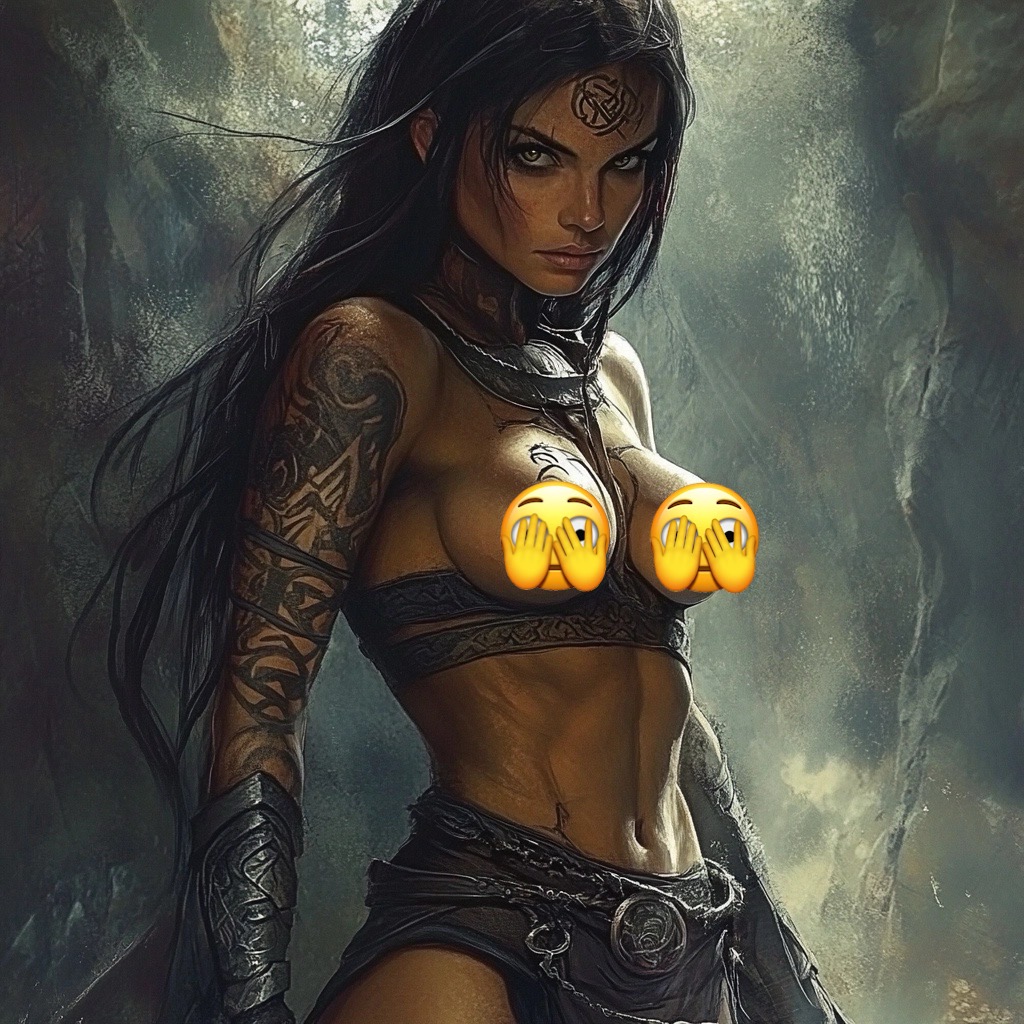
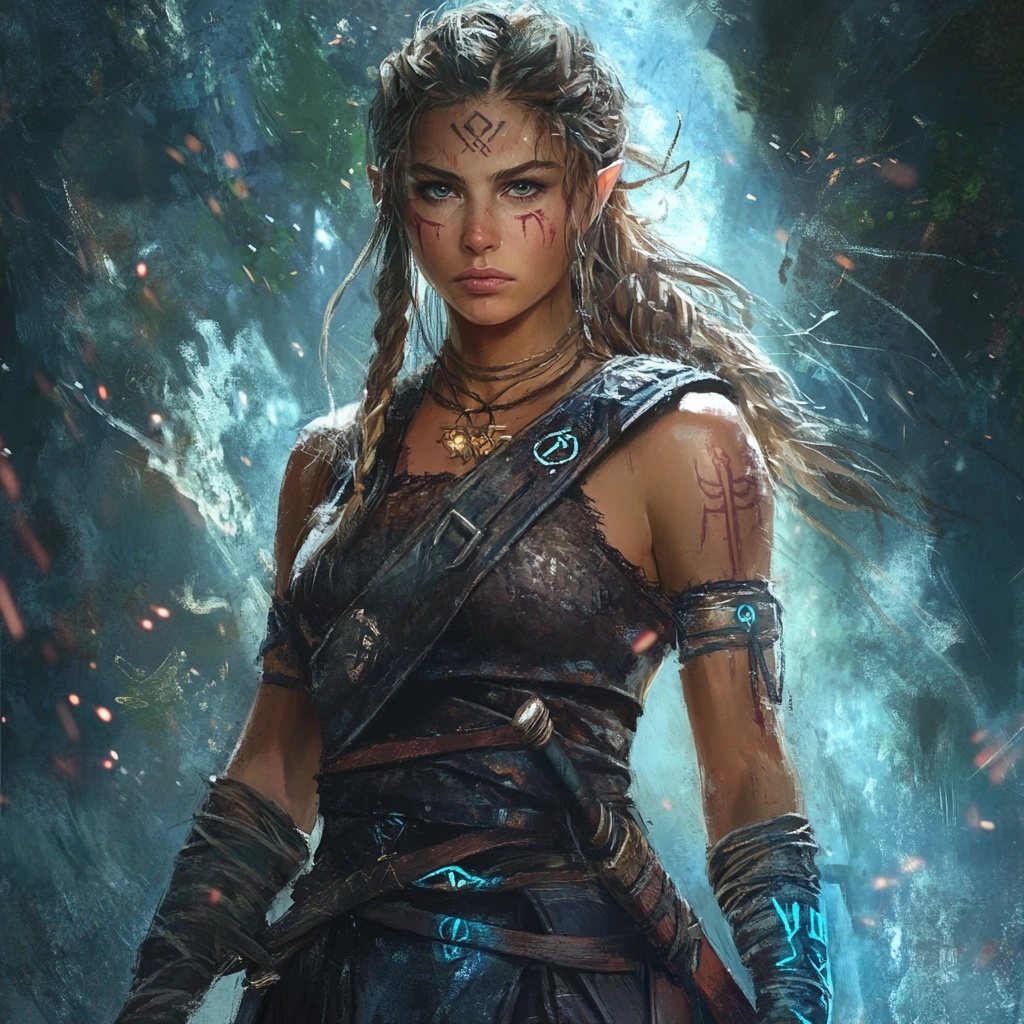
A few nights ago I was playing around on Midjourney, trying to come up with some character images for the novel I’m working on. I had an idea for a group of magical warriors who imbued runes on their bodies like tattoos, and when activated would provide armor, weapons, etc. I did my search first with male pronouns. All four generated images were close approximations to each other. Then I did the search with female pronouns. They were generally close, with one outlier. And that outlier had two *ahem* outliers.
I did the search again with gender neutral pronouns and the result was fairly close to the original prompt, with three of the four clearly being ripped dudes, and the fourth sported a hood that obscured his face, though the body was the same as the others.
This was my prompt: A magical warrior whose body is covered with runes. They are incredibly fit and wear no armor. The runes are all the protection they need.
I’m assuming the AI defaulted to a male when given the gender neutral pronouns because I used the word “warrior.” Clearly, there can be female warriors. But the AI algorithms are based on content that exists on the internet. It should come as no surprise that it’d assume the warriors would be dudes. I’m conflicted on the lack of clothes on all the pics. I did say the runes covered their entire body, but I’m pretty sure that could be conveyed with less skin showing for all of them. In fact I know it can, as you’ll see further down.
I do want to do a quick aside here and explain my usage of Midjourney. Many people hate generative AI, especially image generators. There are talented artists out there who are having their styles and ideas stolen to train the AI, and those same artists have less work as AI is being utilized instead of hiring them.
None of the images I generate are for any use beyond my own creative process. I don’t pass them off as my own, or use them to make money. My reason for using generated images is due to a somewhat rare mental handicap I have. I’ve been fairly candid about my experiences with aphantasia and how it makes writing very tricky. A quick definition is that I can’t picture images in my head. As you can imagine, that might make writing difficult.
One of the main struggles I have is coming up with a character’s appearance, and then keeping that appearance consistent throughout the story. I can’t just think up their image for reference. In the past, before AI, I’d base all my characters’ physical appearances on people I knew or on celebrities. One of my last projects included John Krasinski, Alexandra Daddario, Joaquin Phoenix, Victoria Beckham, and Jeremy Irons, among others.
To a certain extent, that limited what I could work with. Also, there aren’t a ton of well known actors who aren’t very attractive. Not everyone in a story should be a knockout, so that was limiting as well. But with generative AI, I can enter my description once, the way I want a character to be, and then it’ll make a picture of my character that I can reference as I write.
Here are some examples from my current project.
The first thing you might notice is that these people are all fairly attractive as well. Midjourney is really good at making beautiful people, and really good at making ugly people. Anything in the middle is difficult. Why? Because people on the internet obsess over anything really beautiful and really ugly. Like a sunrise and a train wreck, or a rainforest and People of Walmart. AI is only as good as the content we give it.
I’ll come back to these images in a moment, but I’m guessing you’re wanting to hear more about the post’s title (that’s why you clicked it). To boob, or not to boob. The answer: it ain’t up to me. Mostly.
The image I shared above of that runed warrior woman was not intended to produce uncovered breasts. Was I expecting a fit, attractive woman? Yes. That’s what the algorithm always gives me unless I explicitly say they’re obese or scarred or something. Here’s one of the other images generated from that same prompt.
Much less boobage and skin in general. She seems more model than warrior though; a distinct lack of fierceness, but that’s something that can be played with or simply described when I write. This is more of what I was expecting.
Most of the time, I don’t want the images of my characters to ooze sex and just let it all hang out. But there are some characters where that is essential to who they are. Emma Frost of the X-Men comes to mind. Or Ava Lord from Sin City 2. Or Ianthe from A Court of Thorns and Roses. For some female characters, their physical attributes are another tool in their toolbox.
So what happens when I try to have MidJourney generate an image with that type of character in mind?
“Sorry. Please try a different prompt. We’re not sure this one meets our community guidelines. Hover to tap to review the guidelines.”
This was the prompt I used specifically to get flagged: Incredibly attractive woman dressed scantily in order to sway political opponents with her overt sexuality.
Now, I shouldn’t be too surprised here. I imagine “dressed scantily” and “overt sexuality” are red flags. But what if I toned it down, still trying to find an image that will convey the character I’m unable to visualize?
“Incredibly attractive woman wearing a snug corset in order to sway political opponents with her striking aesthetics.” Same result.
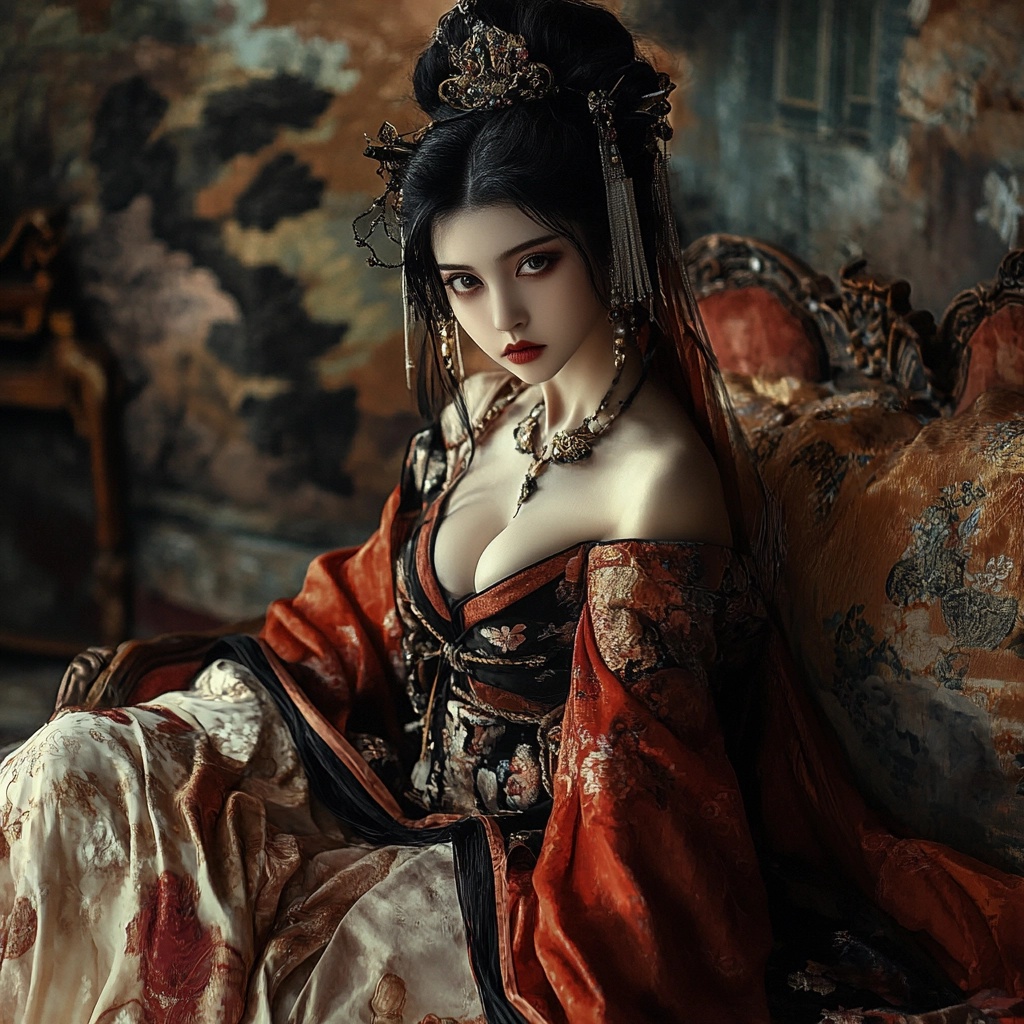
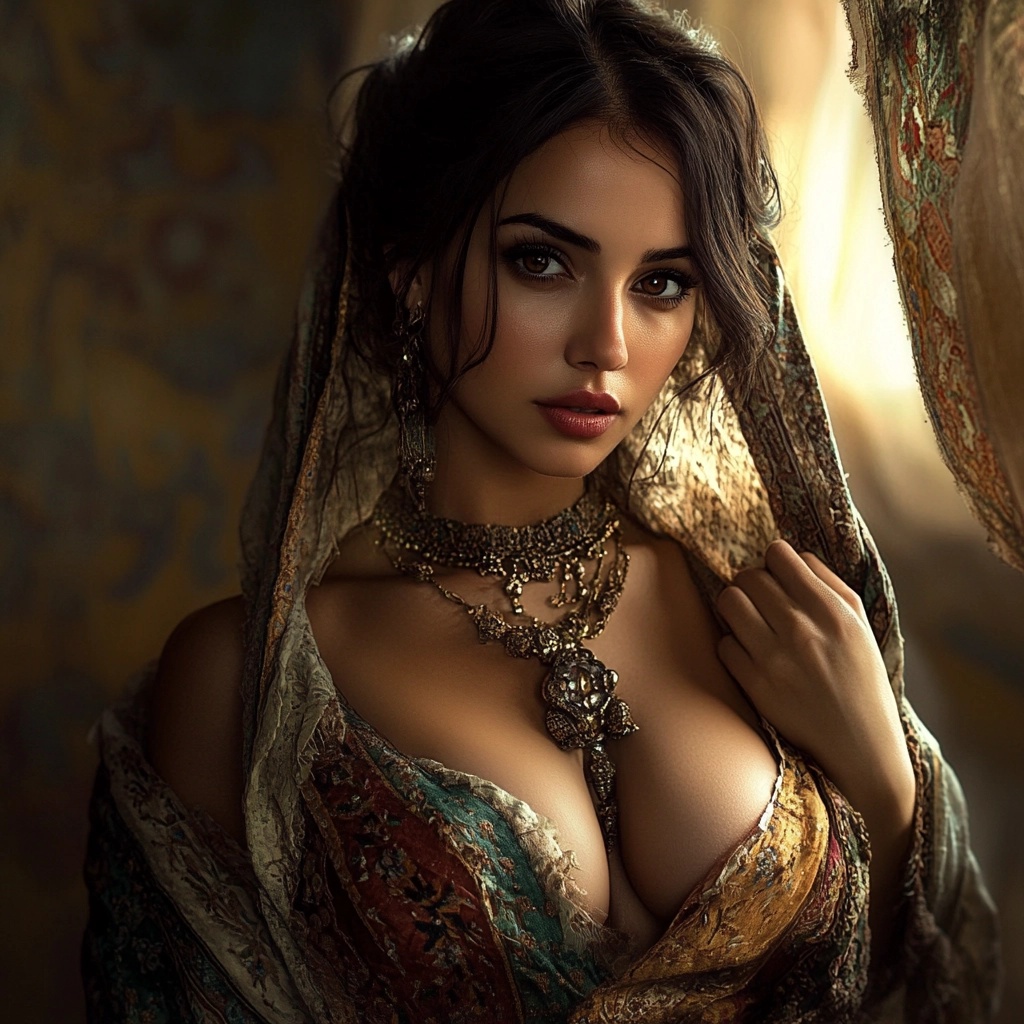
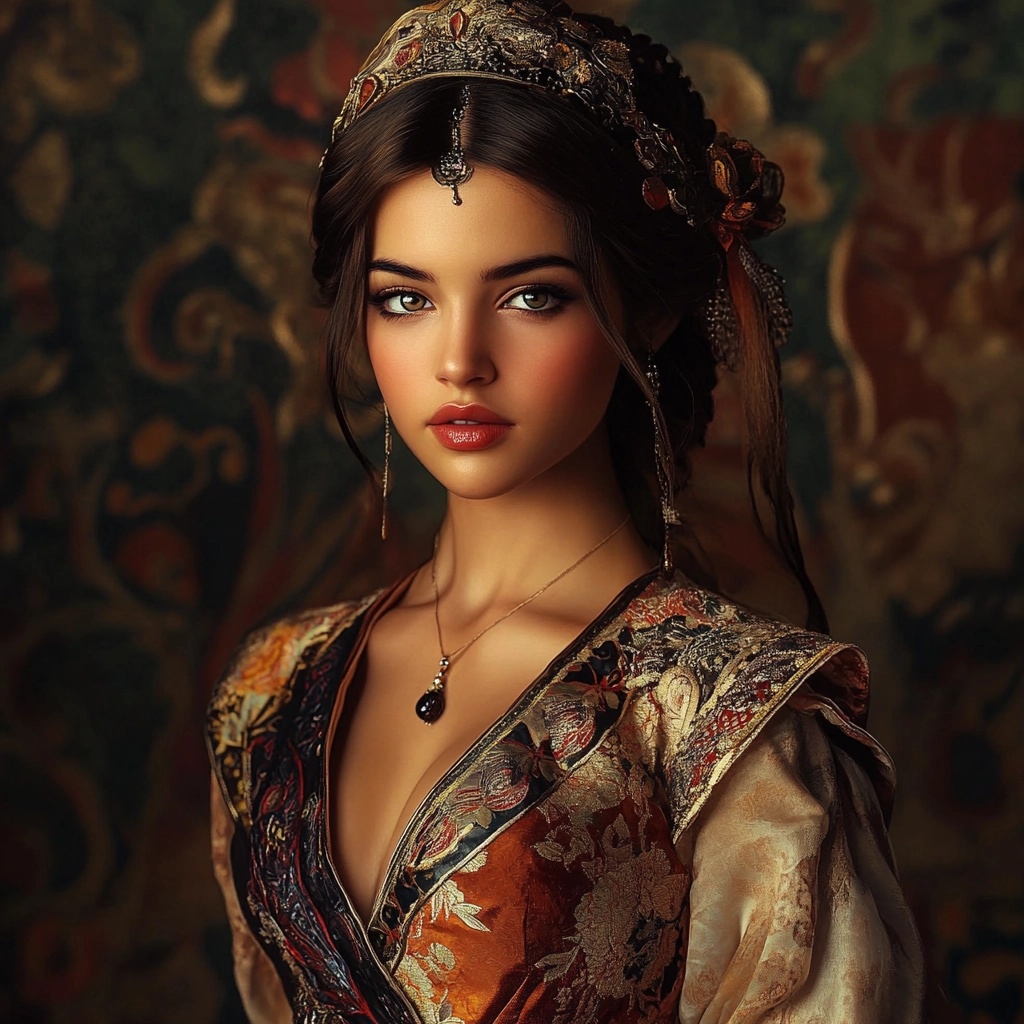
“Incredibly attractive woman wearing a courtesan’s outfit in order to sway political opponents with her striking aesthetics.” This one actually worked and produced this series of images:
A byproduct of the phrasing I had to resort to resulted in an Asian depiction of the character, I’m assuming because of the term “courtesan.” Do some of them fit the character I was looking for? Sort of. Was it tricky to generate these? Yup. Are they anywhere close to as revealing as that first image I shared? Not at all.
Aside from the racial decisions the AI has made, which can be its own whole thing, what I’m trying to figure out is when it decides to super sexualize the images and when it decides not to. Obviously, this last set was intended to be more sexualized. But what if that’s not the goal? Take for example one of my characters from above.
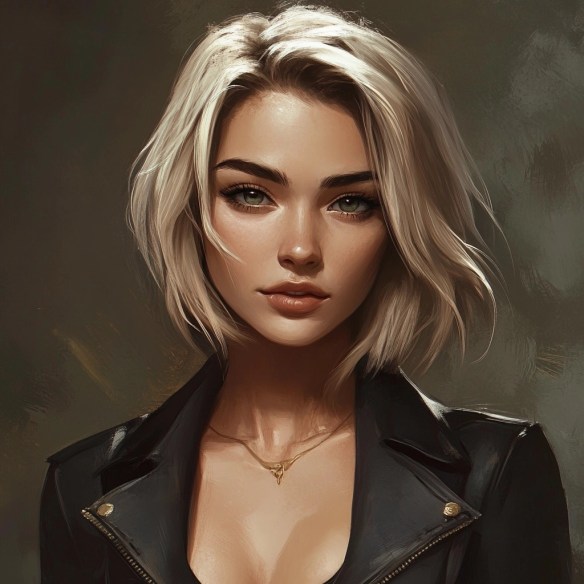
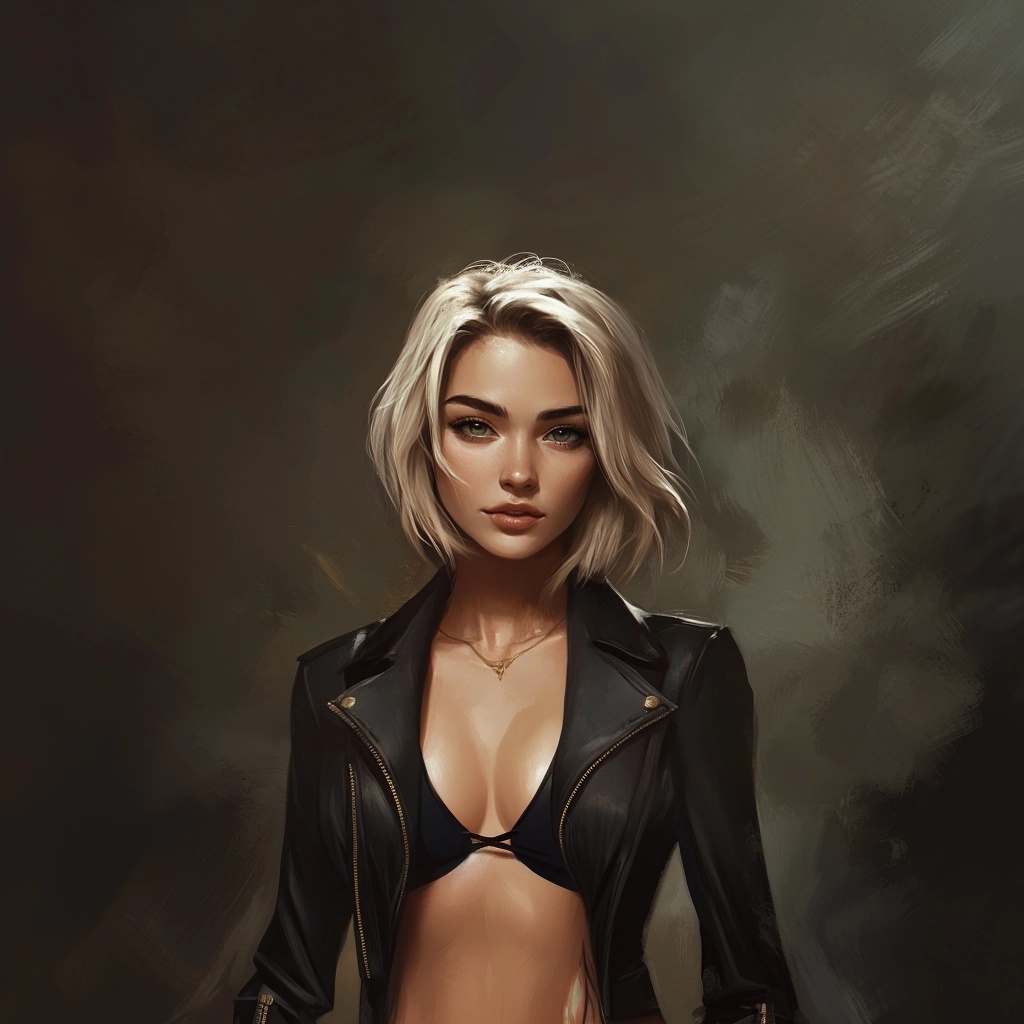
This character will be a future love interest of one of the main characters. She’ll appear once in the first book as an unknown burglar, and then won’t appear again until book two. But given her future prominence, I wanted to get a good idea of her right away.
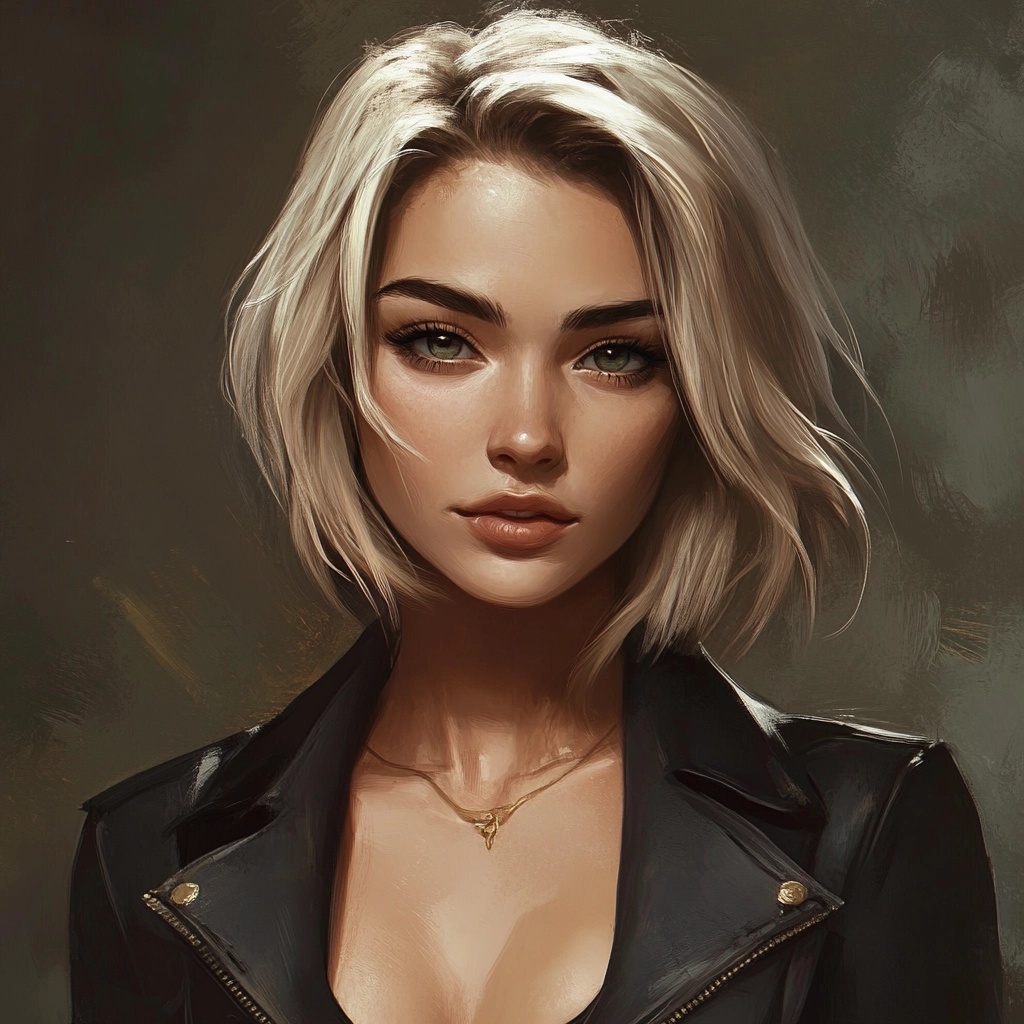
The prompt I used was: Late 20s human female with shoulder-length blonde hair. She is attractive and fit. She is a professional thief who uses gadgets, magic, and charisma to do her job. Feisty.
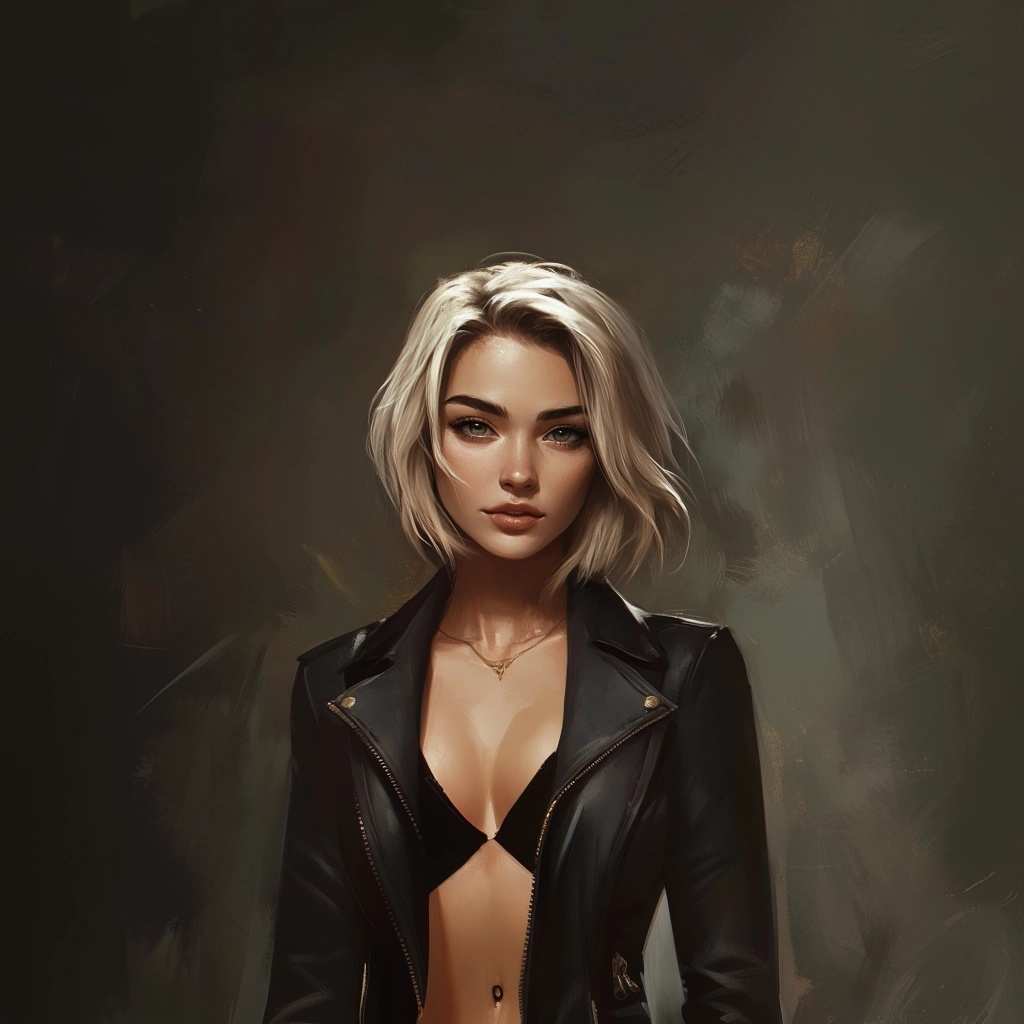
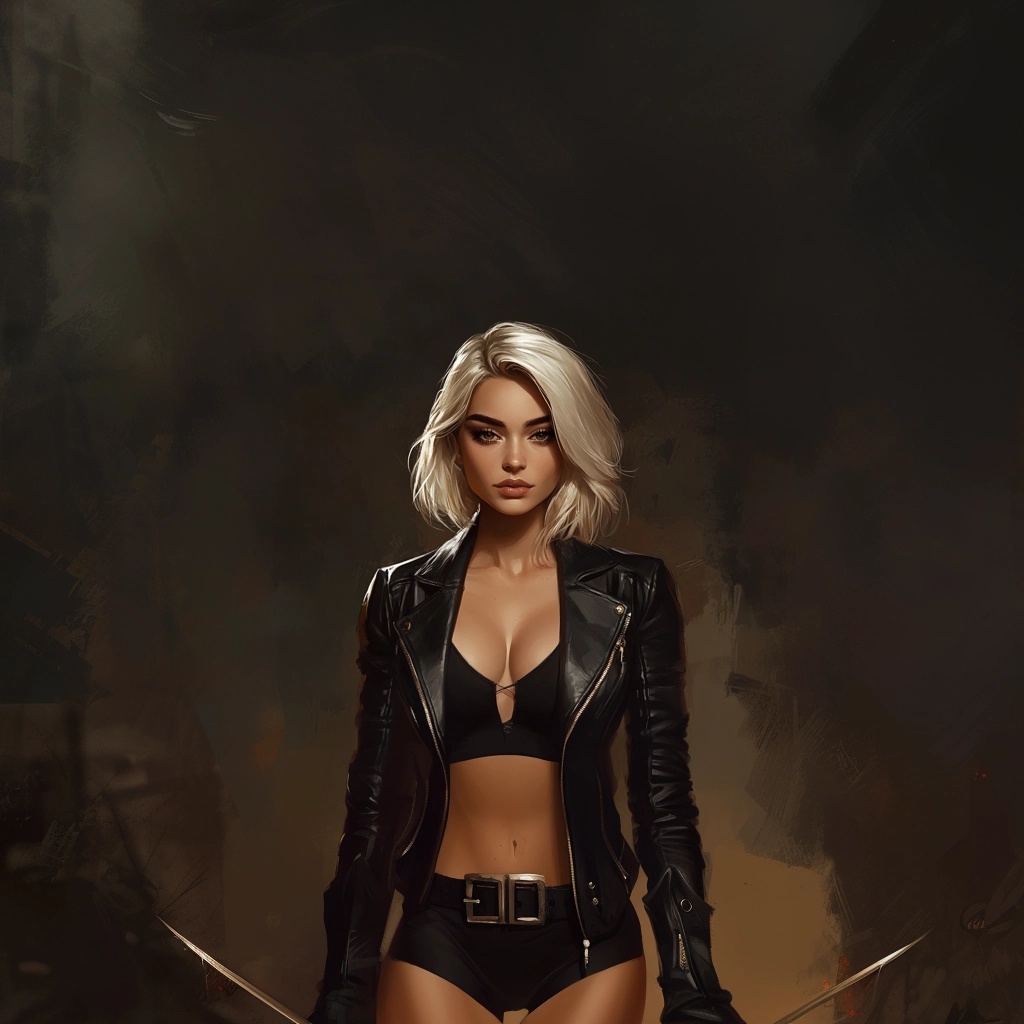
Now, attractive can mean all sorts of things. Most often than not though, for Midjourney that translates to cleavage. Of the four images it presented, I was drawn to this one because of her hair and expression. But, being unable to visualize images in my mind, I wanted more of a full body image. So I told it to zoom out. This is what happened.
Notice anything? This was not the look I wanted nor was going for. So I asked it to try again. And again. And again. My fifth try gave me this, which I figured would be the best I was going to get:
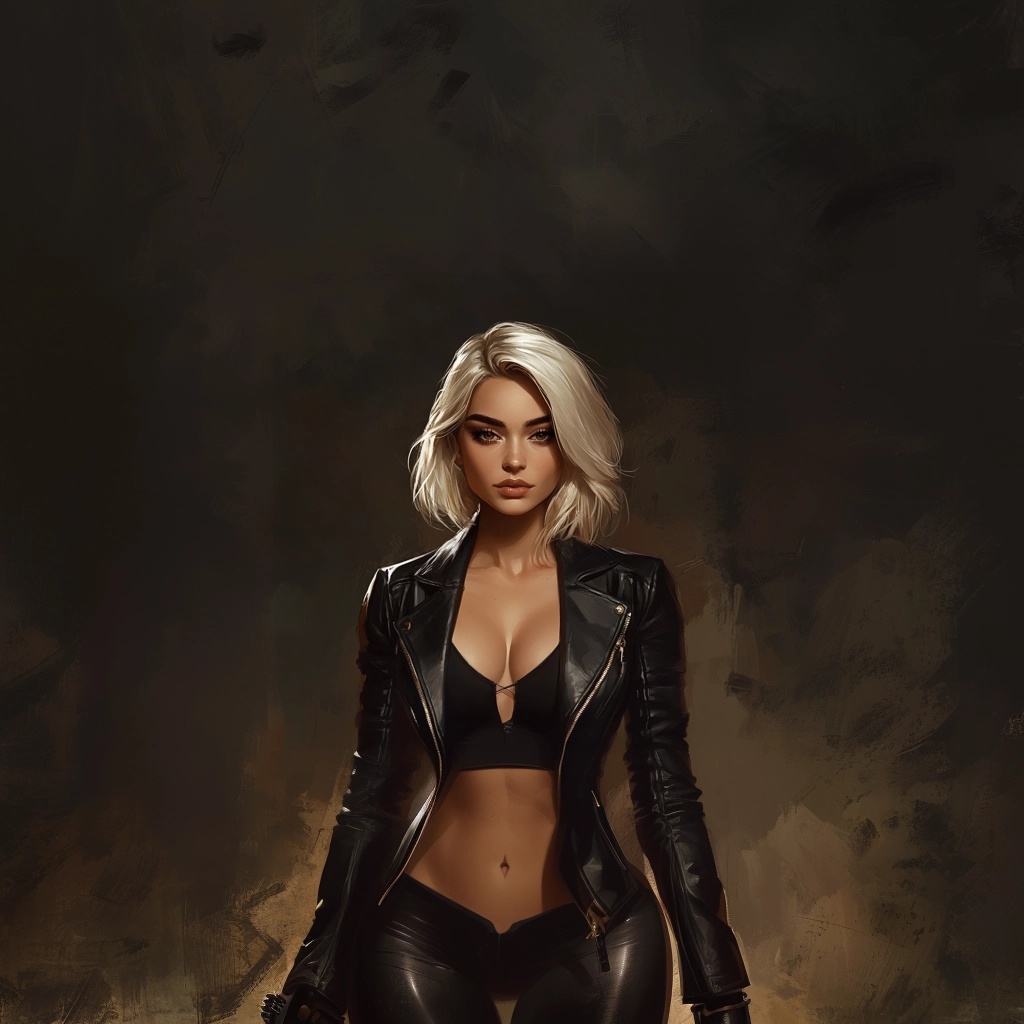
Couldn’t get away from the cleavage, but at least it didn’t look like she was wearing a leather jacket over a bikini. I mean she’s not, right? Right? Guess what happened when I asked it to zoom out again?
I had it try again six more times, hoping for an outfit that said thief, not leather pool party. The images did not get better, and some were even more ridiculous.
Clearly, Midjourney’s interpretation of my request really wanted her to dress this way. I tried to figure out what in my prompt signified this result, but nothing stood out. Before I move on, I do want to say that these images of her seem way more in line with the “aesthetics as a tool/weapon” than when I tried for that result.
But the gender biases in AI aren’t limited to women. Let’s look at one of the other characters.
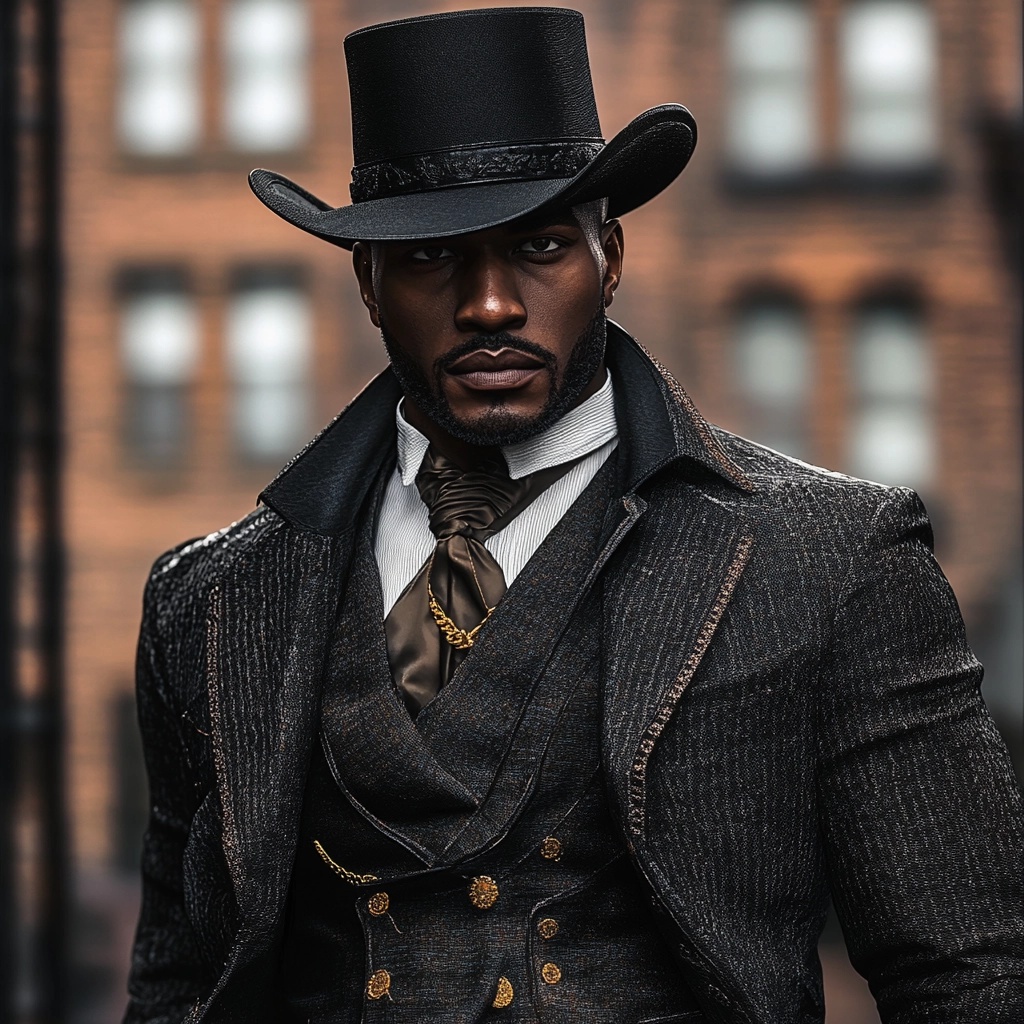
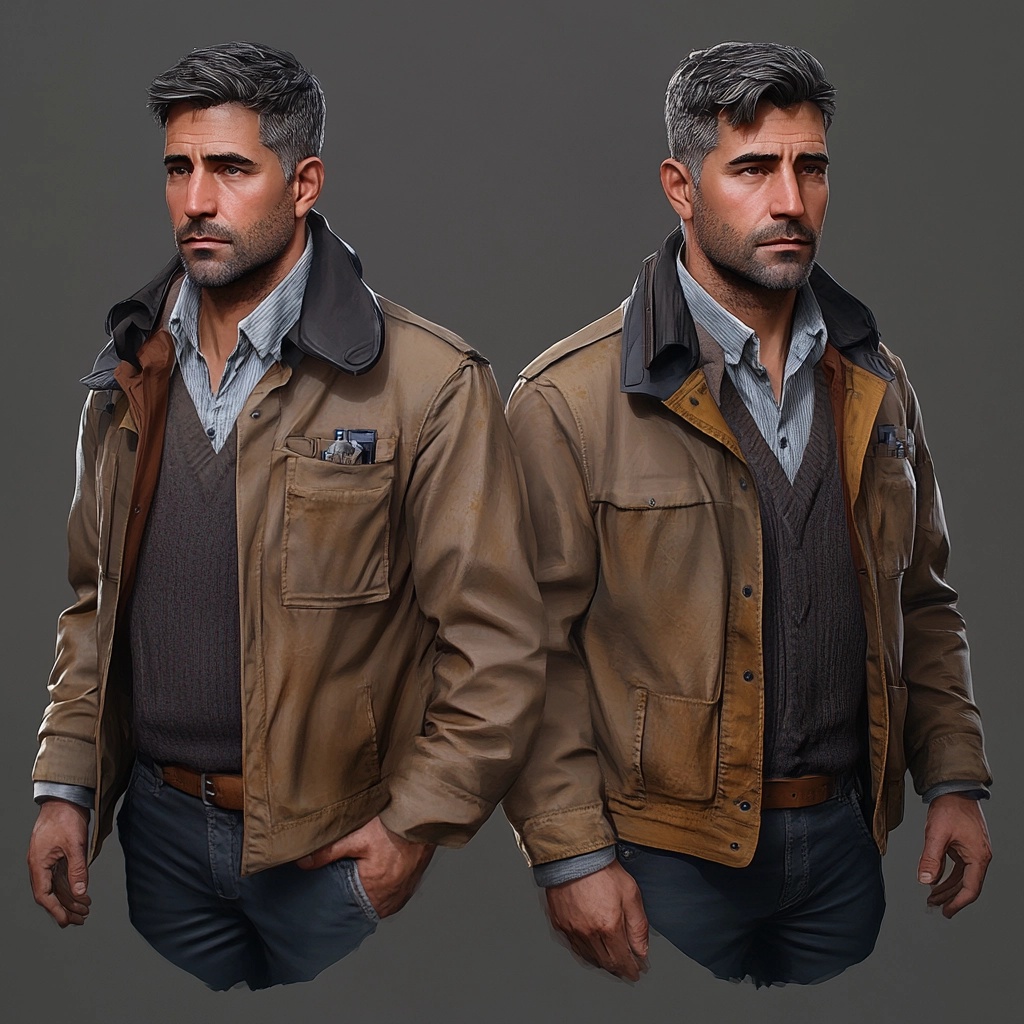
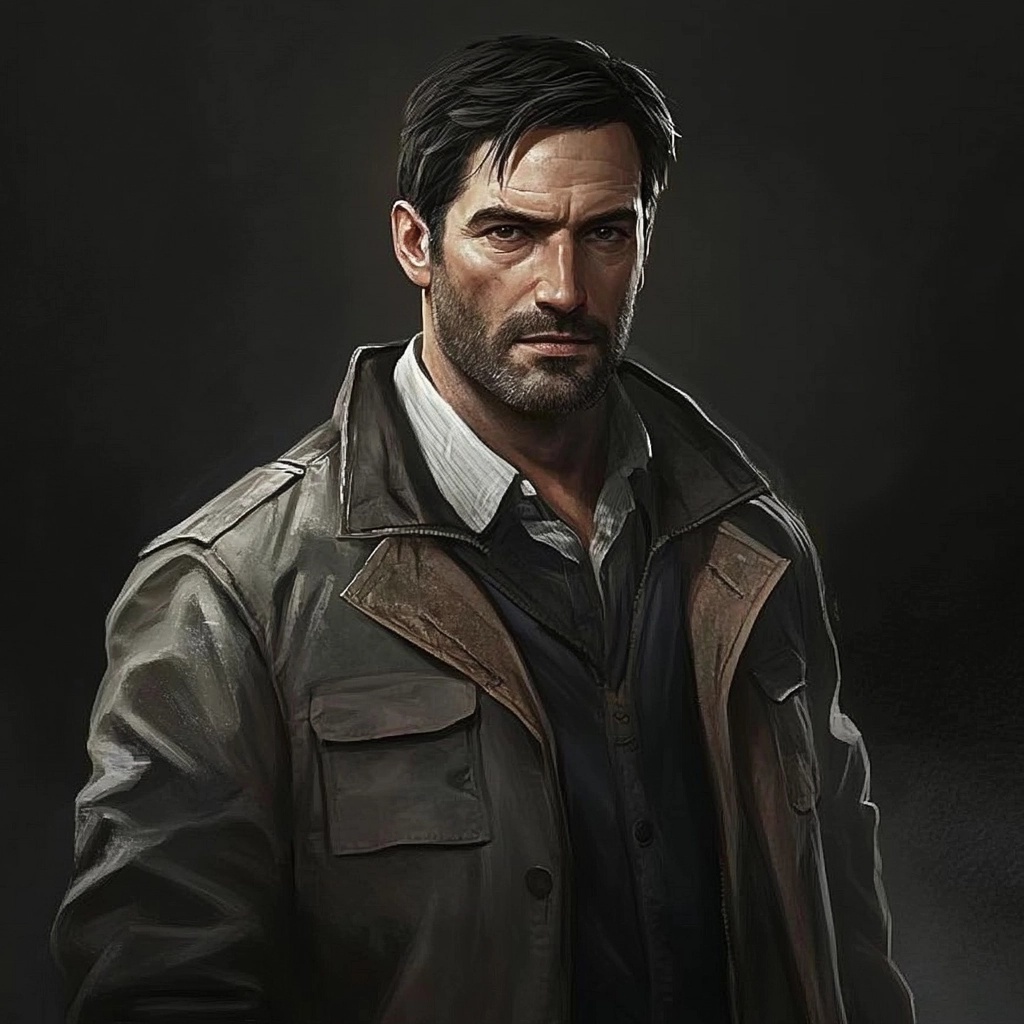
This is one of the main characters, the one who’ll fall in love with the woman above. He’s a claims investigator who spends most of his days at a desk. He used to play sports in college, but isn’t exceptionally active now.
Once of the challenges with AI, especially something like MidJourney where there’s only so much info you can convey, is giving it the right input. So I went with: Early 30s human male. Forensic investigator. Relatively fit. Short, dark hair. Dresses practically.
When I was younger, I was relatively fit. I did not look like this guy. This is stern Henry Cavill. Also, this dude is way more put together than I’d wanted. I guess dressing practically involves ties and vests. So I changed “dresses practically” to “rugged attire.”
Dude got older. Grey hair and/or stubble in each picture. And I’d still said early 30s. Based on my experience with the other pics, both in this project and in priors, I grabbed that first pic and called it good, because, as I said earlier, making a normal looking person is tricky. This guy was normal enough that I could run with it.
But like with the women, Midjourney had an idea of what my dude should be. Broad shoulders, chiseled jaw, large biceps. Of the character pics above, the most normal looking dude is the young man with the wavy dark hair, and for that prompt I’d said lanky with a slight build. And even then I’d got muscly results on my first go round.
So what is it with AI and these overly gendered results? It’s like Midjourney lives on either end of a bell curve. Is it because of our obsession with the beautiful or ugly? Is it learned behavior as people give it more and more prompts, looking for that sexy woman or that ripped man? Probably both. At times I fell guilty with some of my prompts, knowing they’ll likely perpetuate these problems.
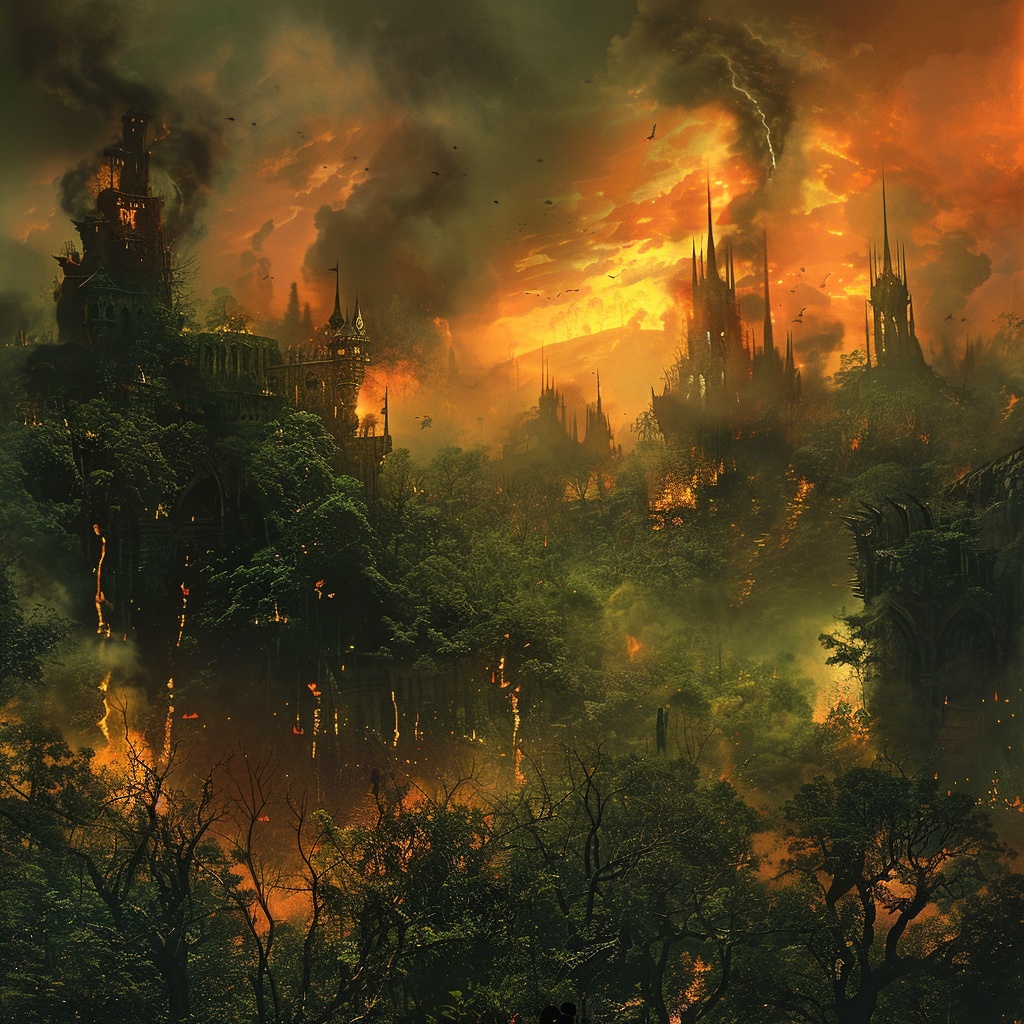
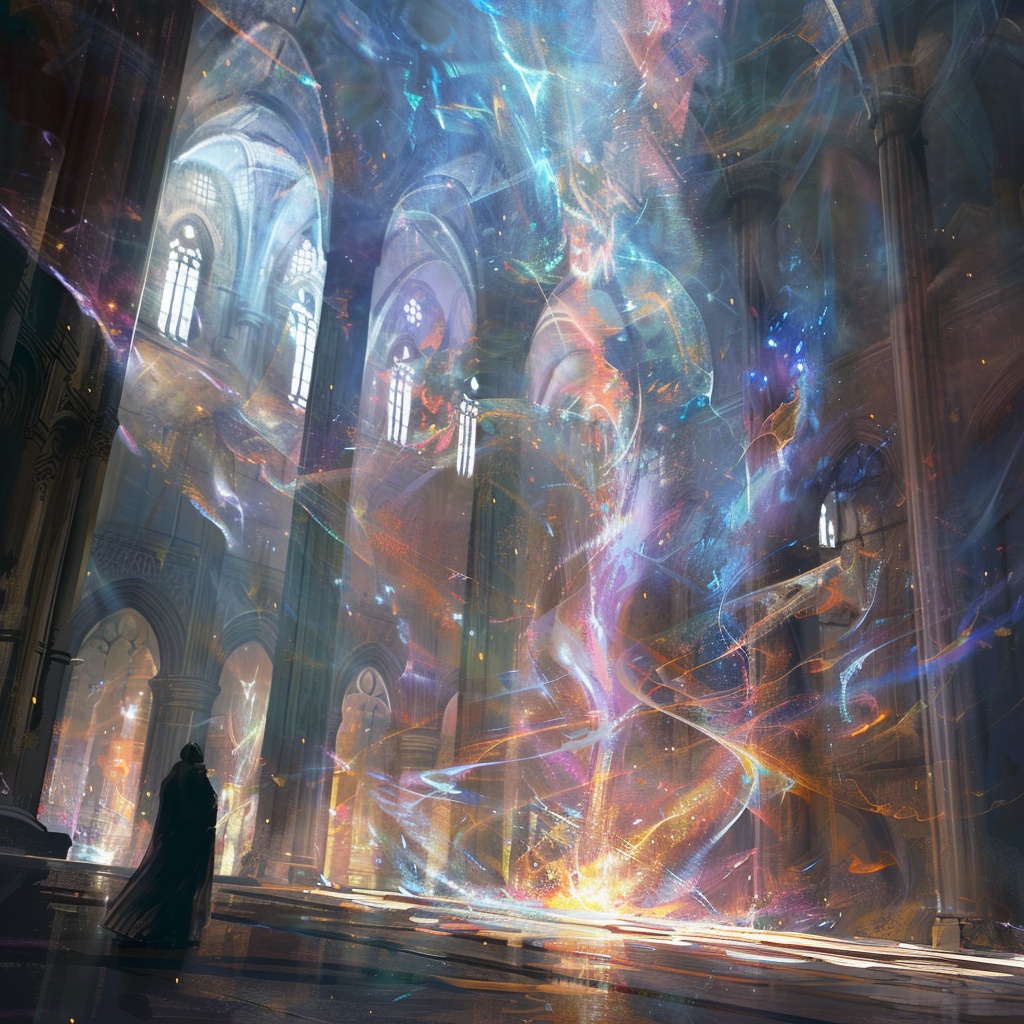
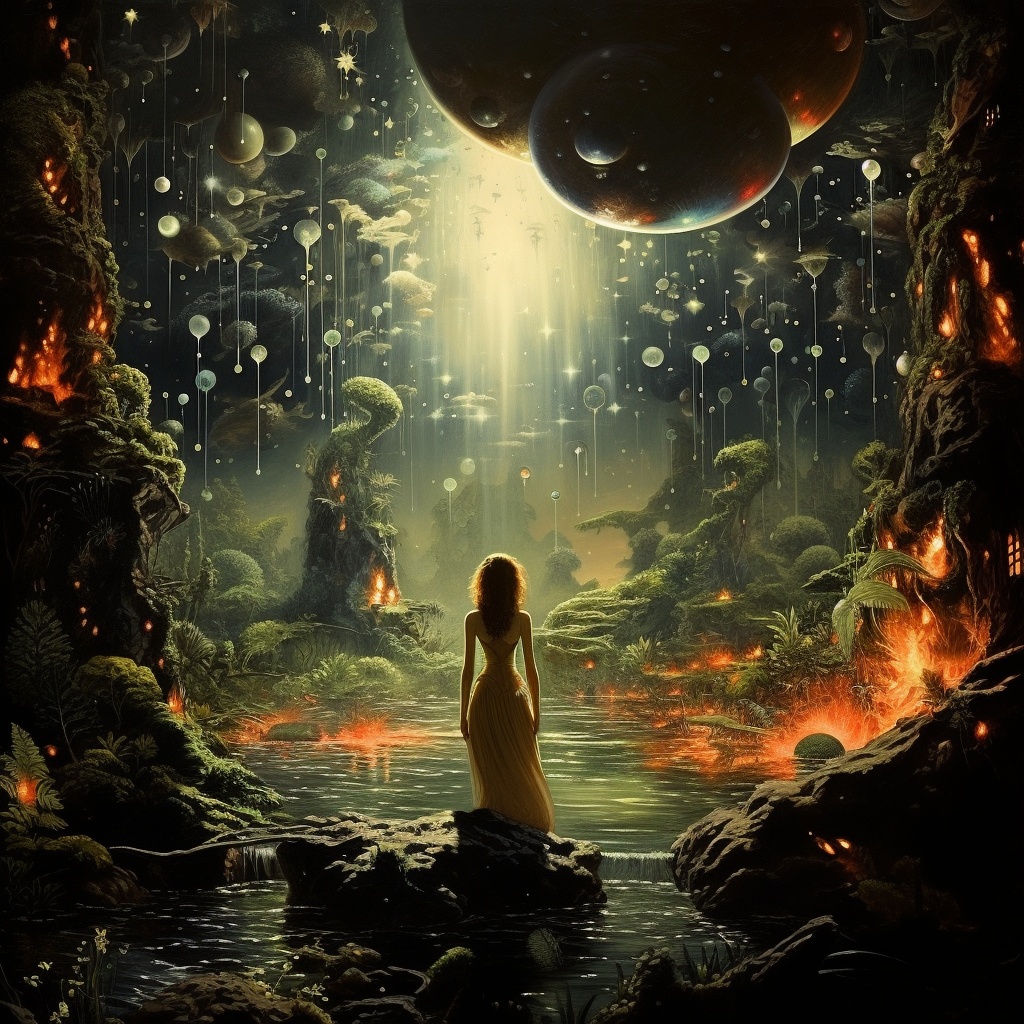
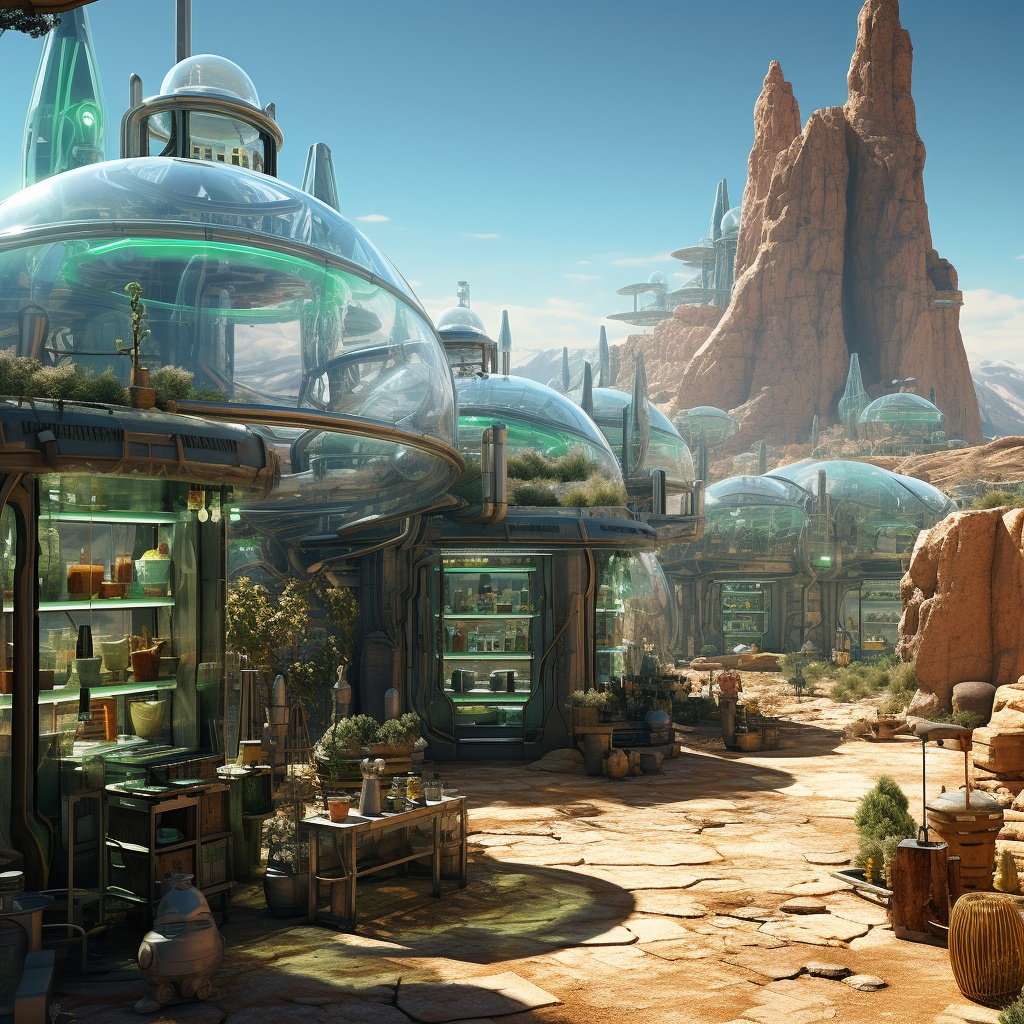
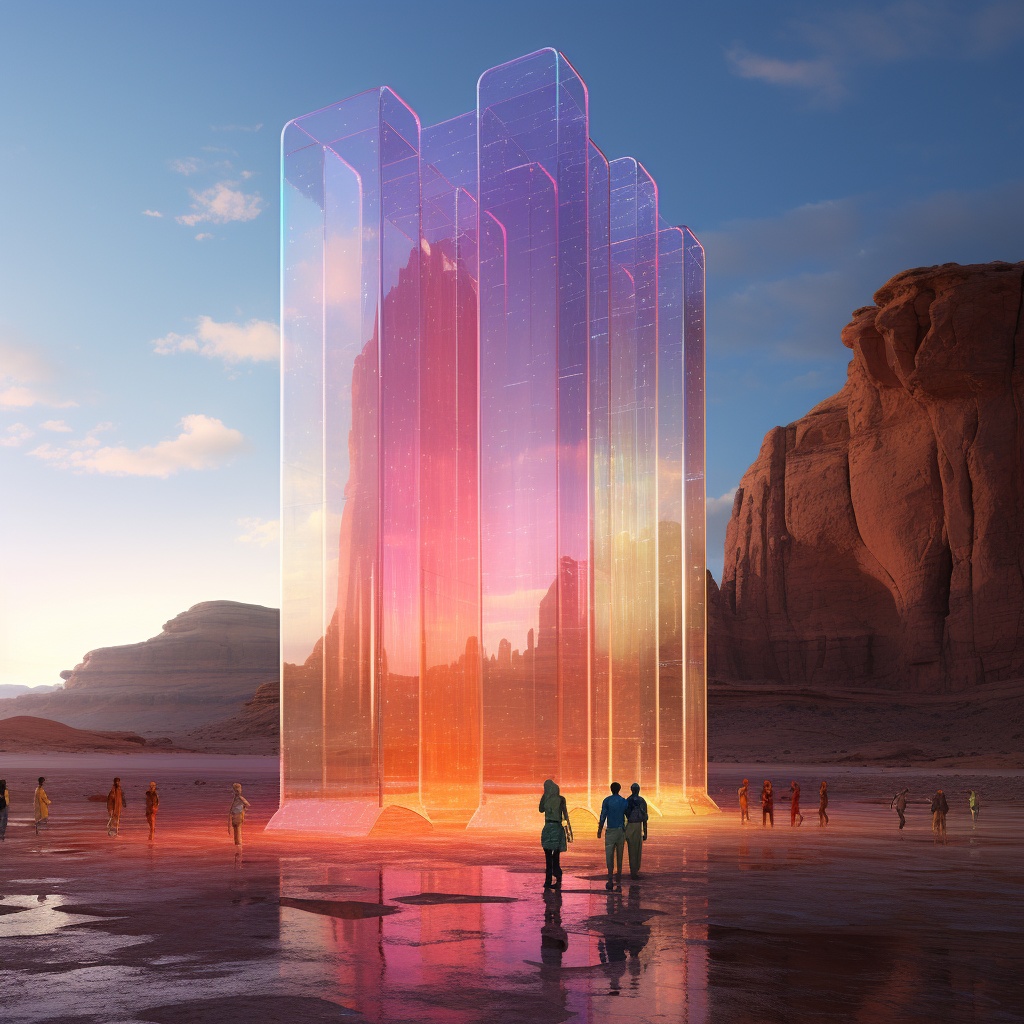
I do want to say, that as stereotype prone as Midjourney is, there have been extremely helpful results it’s given me, especially when it comes to setting and non-human beings. Here are some examples, all what I would consider faithful representations of my prompts.
I wish I had some sort of best practice or ethical rationale, but that’s what everyone’s debating right now. Do I think AI is the devil and should be stricken from everything? Of course not. AI is a tool, and like any tool, its efficacy is dependent on the user. And I don’t mean efficacy strictly in the quality of content, but also in its usage.
As tricky as AI is to figure out, especially given how frequently it changes and updates, it does have its uses. For some people, it speeds up mundane tasks. For others, it provides inspiration. For me, it helps me see the ideas that flood my brain. Yeah, sometimes it’s a little liberal with the boobs and deltoids, but it’s learning. It’s up to us to not only teach AI how to function, but to teach ourselves the right time to use it.
Way back in 1990 my family moved from the middle of nowhere North Dakota to a Seattle suburb. I grew up there and then went to college in Minnesota where I ended up settling down. Of course there have been trips to Seattle to visit family, but this marks the first time I’ve come back home without family being the impetus.
For those who haven’t heard of it, AWP (Association of Writers & Writing Programs) holds a conference each year and each year a different city hosts it. This year it happens to be in Seattle and so of course I’ll have to work in some family time too (I’ve a new niece not even three months old to see).
AWP has two main parts: the conference, stuffed full of so many panels you’ll never be able to attend all the ones you want, and the book fair, is “the nation’s largest marketplace for independent literary presses and journals, creative writing programs, writing conferences and centers, and literary arts organizations” that’ll blow every other book fair you’ve been to out of the water. In particular I’ll be searching out the Hamline MFA as well as the Great Weather for Media booths as I’ve got a vested interest in each of them.
As for the panels, hopefully my brain doesn’t explode. Here’s the crazy list of sessions I’ll be attending:
Writing about Culture and Place: Techniques for Vibrant and Ethical Worldbuilding
Reading at 24 Frames Per Second: Exploring Cinematic Influence on Literature
Demystifying the Application: Fellowships, Residencies, and Grants
Minding the Gaps and Mining Landscape in Linked Short Story Collections
How to Craft Enthralling Science Stories
The Sentence Is the Story: Reading, Writing, and Revising for Style and Sound
Nine Memorable Moments: Constructing Compelling Characters for the Screen
Filling in the Gaps: Folklore as Antidote to Forgetting
The Twenty-First Century Horror Novel
The Twist: Plot Turns That Make Movie Magic
Conjuring Thisness in Fiction: The Palpable Art of the Particular
Giving Helpful Feedback
Breaking Up with Shame: Writing Romance for Young Adults
Writing the Monster
Playwriting 101: Accessing Emotional Honesty in Storytelling
As you can see there’s quite the variety there. Obviously I’m interested in speculative content, but there revision and business sessions as well because like it or not those are part of the game. I don’t know exactly what I’ll get out of each session, but I’ll be taking copious notes for both my writing friends as well as MFA classmates to spread all that I learn.
I’ll sign off for now (I’m writing in the the hotel room and need to head out to meet up with someone attending AWP), but if you happen to be at AWP give me a holler.
I write this at 1:37 PM and so greet you all with a good afternoon, and not in the Will Ferrell/Ryan Reynolds way (unless you deserve it). As of yesterday I finished the last of my research for revising my novel and it’s time to hold myself accountable and report in.
Previously I mentioned three things that stood out in steampunk: Transportation, Science/Magic, and Weirdness. The five books I’ve read since then reinforce those observations with the addition of one more: History.
It just so happened that the books I previously read weren’t indicative of the Victorian locales commonly found in the genre. Of the five I just finished, all but Boneshaker were based in London. For me, this won’t play too much into the writing as my story takes place in a completelyfictitious world, but I do still want to talk about the setting and the history of it.
As a Theatre Arts and English major, I had plenty of exposure to British writers, and of course Britain played a major role in global politics (I’m using that term very loosely as I don’t want to fall down the rabbit hole of colonialism). With that, there is a lot of opportunity in period pieces for authors to embrace or tweak history and historical figures for the sake of the narrative and the world they’re inventing/adapting.
I particularly enjoyed how this played out in The Anubis Gates. The protagonist is a literary scholar who is an expert in Coleridge. It’s a time travel book and I’m not ruining anything by saying those characters meet. But that’s not where the literary and historical connections end. Many real-life persons are introduced and historical events help shape the narrative journey. I found myself wondering how much of what I was reading was factual (I knew some parts definitely were) and how much was invented. The fact that there were parts I was unsure of made it that much more engaging.
The Difference Engine was much more liberal with its treatment of historical figures and events, enough that I could lump it into the alternate history genre. But in staying true with the setting and technological advancements it solidly fits with the rest of the steampunk I’ve shoved into my brain the last couple of months. Boneshaker too did this, though in Seattle instead of London. As someone who grew up just south of Seattle I found that personally engaging as well. The author made a point at the end of the book to acknowledge what liberties she took with historical accuracy, giving a look into the massive amount of research that goes into period pieces.
As I pivot from reading to re-writing (and starting up grad school again on Monday), I’ve got not only a stronger idea of the genre that I’m piggybacking off of, but a much better handle of genre expectations, both to adhere to and to subvert. Whereas I was initially really trying to scientifically explain how the technology works in my story, I’ve learned that a lot of that can be hand waved away. Brandon Sanderson used an iceberg metaphor regarding world building that I think can be co-opted for this. He (paraphrasing) said that if you have enough surface level complexity, the reader will assume the unspoken parts of the world are known to the author and also have legitimate explanations/reasons. That works with the technology of steampunk. It’s basically magic, but as long as it’s explained in part, the rest is assumed to work as well.
That’s all I have for today. I try not to make these too long, though if you ask my wife I could go on about these books at some length. I’m starting a class focusing on point of view on Monday, so between that and rewrites my brain is going to be working overtime for the foreseeable future. Enjoy the weekend and I’ll try to have another post soon.

























 Eric Taveren