Why The Borderlands Movie Sucked… And How They Could Have Fixed It

For anyone who has had more than two conversations with me, it’s no secret that I’m a huge Borderlands fan. This is the game that got me into first person shooters. Borderlands 2 is only the second game that has made me walk away because of emotional storyline choices (FFVII popped that cherry in high school. Damn you Sephiroth). Borderlands has also provided my best multiplayer story experience (sorry Mario Kart and Smash Bros, you don’t really have a story).
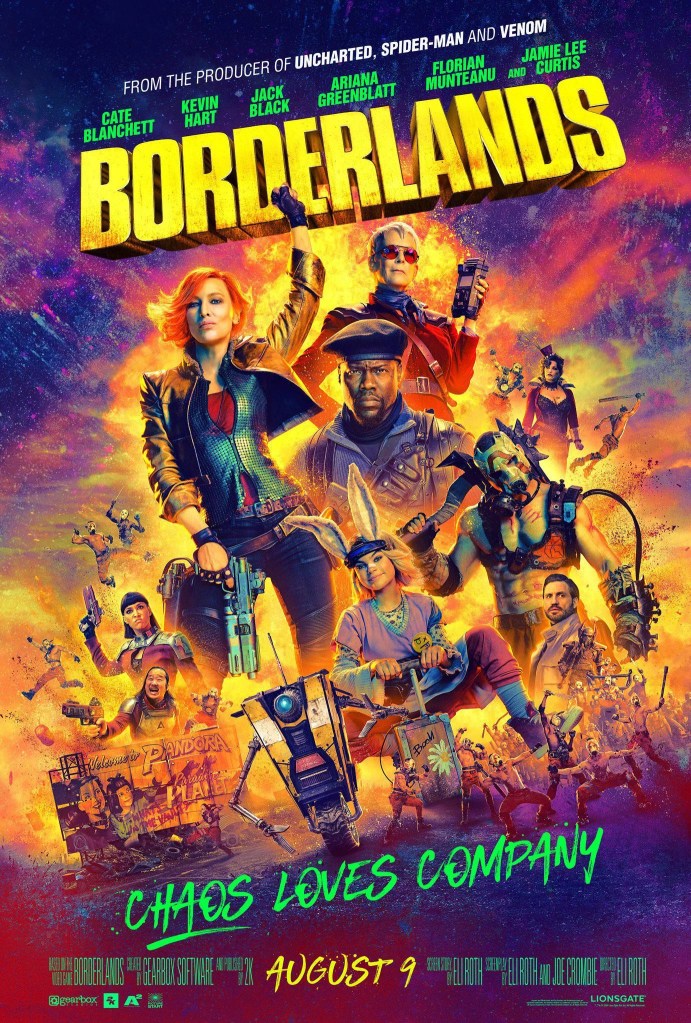
So when this movie was announced years ago, I was excited. Very excited. Then the casting began. Jack Black. Cate Blanchett. Jamie Lee Curtis. Kevin Hart. Yes. This was going be amazing. Was I a little concerned about Cate Blanchett’s age in regards to Lilith? Yes. Did Kevin Hart’s height seem surprising given the massive physical presence Roland had? Of course. But having seen Cloud Atlas become a movie and Wheel of Time become a show, I was open to interpretation.

As well all know, the movie has been utterly destroyed by critics. Disheartening. On pace for one of the worst movie releases ever. Dream-shattering. But that created the perfect silver lining. If I went into it thinking it would be an abomination, then I was likely to enjoy it more than if I’d super-hyped it up. Right? Right?!
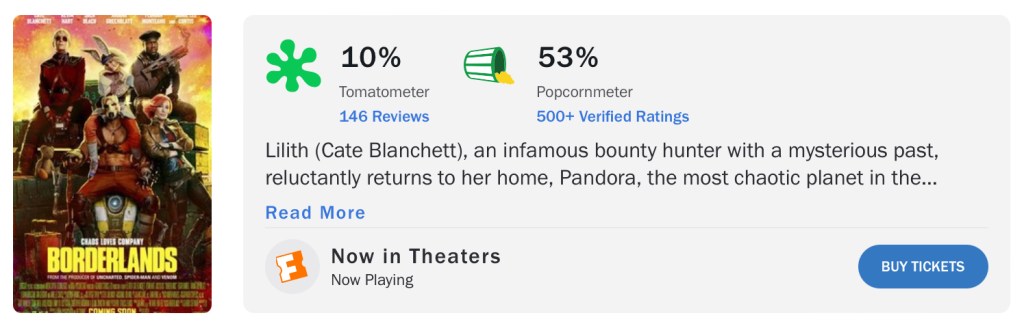
Borderlands was not a good movie. It wasn’t a terrible movie either. It was just a bad movie. The beginning was particularly bad, though it did get better as it went along. Why? I’ll point out very specific reasons that someone in the writing or editing process should have picked up on.

Warning! Spoilers are coming. I’ll try to only hint at big reveals in case you haven’t seen it, but I won’t be able to talk about this spoiler-free.

Problem One: Pacing.

This movie did not know what it wanted to be. Comedy/action? Straight action? Potty humor? Now, I’m not privy to exactly which parts were involved in the reshoots, but I’d wager a healthy sum it was focused on the beginning. It started out with Cate Blanchett exposition regarding Eridians and the Vault and for someone knowing nothing about the world of Borderlands, that would be very helpful. Part of me thinks they were trying to replicate her intro narration in LOTR. It didn’t work out.

The problem with narration is it slows everything down. Borderlands is a first person shooter. The most effective parts of this movie were when they leaned into that freneticism (something I’m assuming attracted them to director Eli Roth). The second problem with narration in film is that it’s often the sign of bad/lazy writing.

There are three moments of narration. The very beginning, a random bit maybe fifteen minutes later when Lilith gets to Pandora, and then a bit at the end. The middle narration was completely unnecessary. She tells us something happened, then we watch it happen. Then she tells us something happened, then we watch it happen. There’s that problematic writing axiom, show don’t tell. Regardless of how you feel about that, you definitely don’t do both at the same time.

The end narration was one of those contrived, moral of the story bits. No, it didn’t have a moral, but it told you how you were supposed to feel about what happened and where things were going. Audiences (arguably) aren’t dumb. We can form our own opinions. Don’t belittle us with that garbage.

The middle and ending narration were bad and shouldn’t have been there. That leaves the beginning narration. Can you have just the one segment of narration. Yes. Will the film be stronger without it? Probably. The reason I don’t like narration and find that it’s lazy, is most of the time that information can be conveyed during the action of the movie. We heard plenty of times that the Eridians were no longer there, that they left tech behind, and Vault Hunters sought the missing vault on Pandora. That takes out the entire opening narration right there.

The one other pacing thing I’ll mention, not even talking about the actual cutting and editing of the sequence of events, is as it relates to the tension of a scene or moment. Very serious, awe-inspiring Lilith flying around with fire wings? Probably a good time to throw Krieg in there with a 1.5 second gag line. Then back to the seriousness. What? Really? Who thought that was a good idea?

Problem Number Two: Continuity.

I imagine (or hope) much of the blame for this lies in the need for reshoots. Basically, there were several payoff moments toward the end of the movie that called back to earlier scenes in the film. The one that stands out the most was when Tannis offered Tina some tea. You could definitely tell this intimate moment was set up earlier. Except it wasn’t. I’m sure at some point there was a scene or set of lines involving Tannis and Tina and tea, but those lines didn’t make it into the final cut. The problem is that the emotional impact of the lines we did see was non-existent. Instead of an “awwww” derived from character growth, we just wonder why the celebration scene is being interrupted with tea? Every second of screen time is important. Why waste ten seconds on that line when it doesn’t mean anything to the audience.

Also, and this stemmed from an in-game joke, when they got to Sanctuary they all had to go up some stairs. I asked my friend at the theater, “how’d Claptrap get up the stairs?” And we both chuckled. Then later on there were stairs again and Claptrap started to do his “oh no, stairs” bit, and Krieg grabbed him and carried him. So they addressed the question/problem, but not when the question/problem first arose. Take the Sanctuary stairs out… perfect. Or have Krieg carry him in Santaury… works great. Ignore the stairs entirely and then do the stairs joke? Continuity problems. Things happen in an order for a reason. Understand those reasons.

Problem Number Three: Appropriate Level of Fan Service.

I admit this is a broad topic. In adaptations, anything and everything can be considered fan service. For the sake of this, I’ll break it down to three aspects: locations, dialogue, and characters.

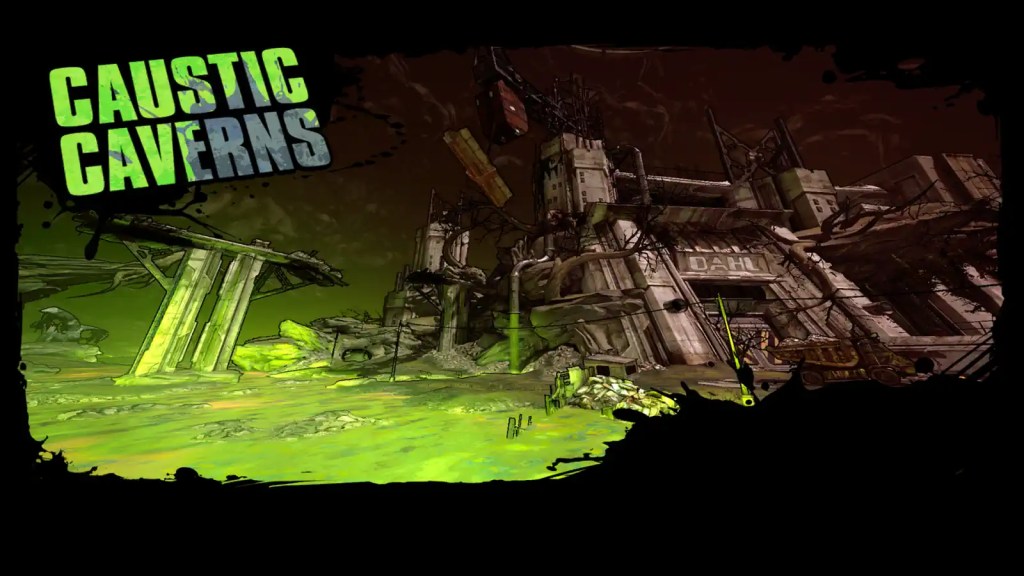
I’ll start with the least offensive: locations. I actually quite enjoyed seeing the world of Pandora and everything that was included. From named locations like Fyrestone and Sanctuary, to the exact placement of bones where that one badass skag always comes from, or the fact that they jumped over Piss Wash Gully, those visual treats were subtle and hit the fandom just right. Now, did it make sense for them to brave the Caustic Caverns only to stumble across a bandit stronghold whose denizens clearly didn’t use the caverns to get there? Not one bit.
Next: dialogue. Knowing first-hand how hard acting is, I don’t want any of this to seem a judgment on the actors. I’ve said for a long time that the greatest struggle for independent films is good writing, followed by good audio, but that’s another issue. That being said, were there times when Eli Roth should have said, “Okay, let’s try that one again?” Yes. Beyond that, there were moments when Easter eggs were thrown into dialogue at the expense of the quality of the dialogue.

For example, there’s the moment when Lilith realizes she needs a vehicle, so she says she’s gotta “catch a ride.” That’s straight from the game, but it sounds utterly ridiculous in the moment. Another time, Tina asks Lilith to grab her badonkadonk. Another reference straight from the game. With the right setup, it might have worked. But it didn’t. Even knowing what that meant, the execution was terrible. Fans like having those moments appear in film and TV, but it has to be organically integrated, not shoved in half-assed. We want to experience the world. We don’t want you to wink at us every time you think you’re clever.

And speaking of Tina, though off topic, let her blow stuff up! That’s what Tina does. Sure she throws some grenades at the end, but she gave Bob to Roland, and the few explosions when we meet her seem situational, not character driven. Tina is bat-shit. Let us see that.
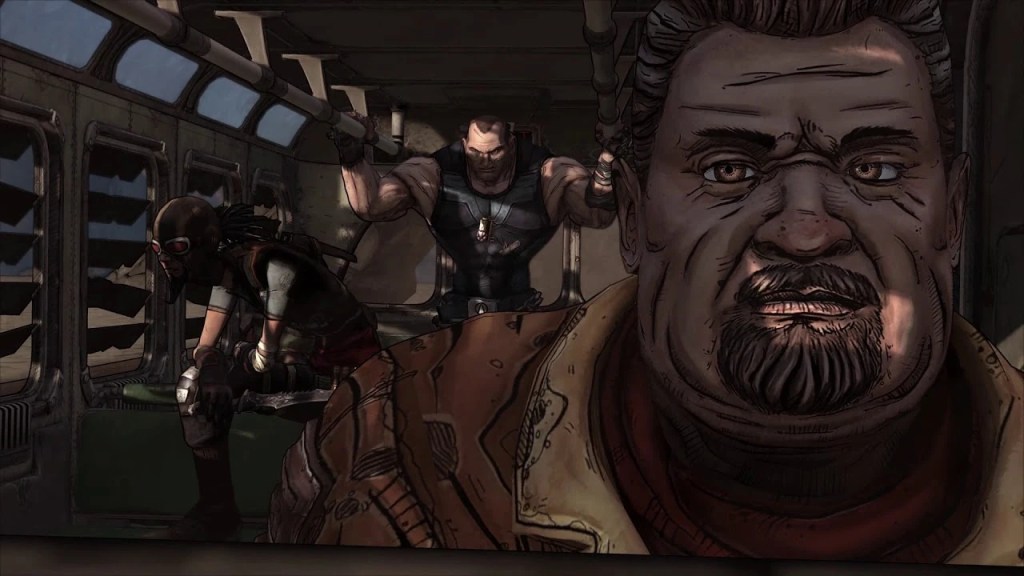
That leaves us with characters. I’m going to point out two poor choices, and two good choices. The poor choices (and there were more than just two) are Marcus and Krieg. It’s tricky, adapting a world with so many characters that so many people love. I understand wanting to satisfy everyone, but it can’t be at the expense of the story. Marcus had two real scenes. The first was picking up Lilith on the Vault Hunter bus. That is a classic callback to the first Borderlands game, and technically it served as a vehicle *ahem* to learn about Lilith’s feelings about Vault Hunters. But it ate up a lot of time and added nothing new to the story. We knew Lilith thought Vault Hunters were dumb. It played as an awkward scene shoved in for the sake of seeing the bus. His second scene was trying to barter with the Crimson Lance. That’s a perfect use for Marcus. Give him three lines (not just a split second visual like with Ellie). Show the audience that the people of Sanctuary stand together against the Lance. Advance the plot as our heroes try to escape. For people who know Marcus it’s “hey, it Marcus!” For those who don’t, it doesn’t matter. Because it adds to the world in a way that advances world-building and story at the same time, without taking us out of the moment.

The second poor choice was Krieg. I understand wanting the big dumb brute as a foil for pretty much everyone else, though the main contrast is with Tina. The problem is this big dumb brute lacks a face, only shouts, and only speaks in caveman garble. Combine the garble with shouting, and half of what he says (and that’s generous) is unintelligible. Does unintelligible dialogue advance plot or character or anything? No. Does a primary character with zero facial expressions work? Almost always, no. But I do like the idea of pairing a sensitive brute with a small child. Luckily, Borderlands has just the person for that. Brick! He’s big, he’s dumb, and man is he protective of Tina. Not only would we have understood him, but we would have seen actual emotion. And he could have addressed why he was on that Atlas ship in the first place.

There were two good character inclusions in the movie. The first is obviously Lilith. As much as she was underwhelming in the first game, her role in the subsequent games can’t be overstated. And then there’s Roland. Remember when I mentioned Borderlands 2 was one of the two games that made me emotional enough to walk away? Roland. God damn you, Handsome Jack.
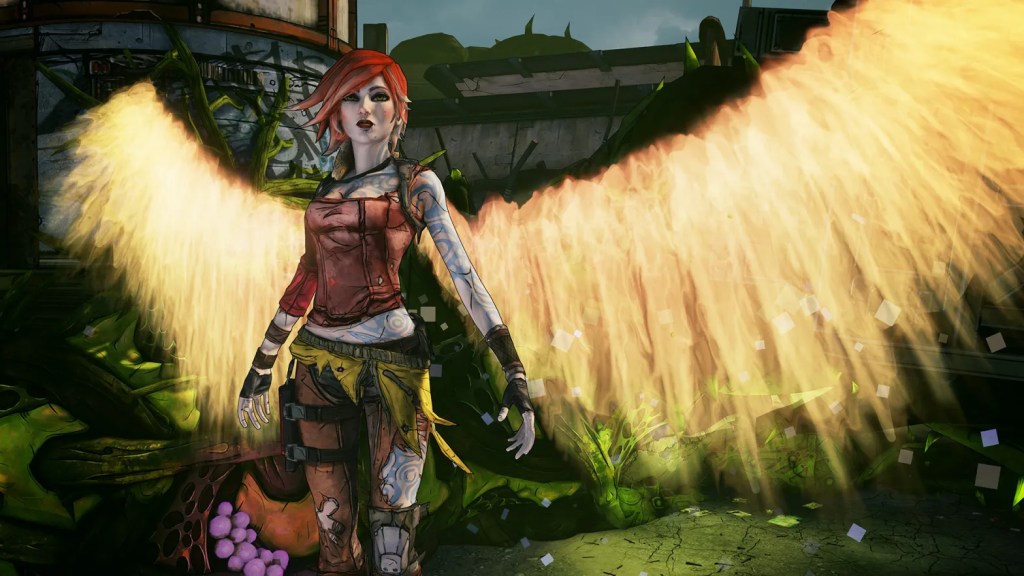
In Lilith we get a central character that is meaningful for the gamers, while also being a fairly well-realized cinema character. Adding her mother (completely wasting Haley Bennett) and showing her prior connections to Tannis and Moxxi worked very well and her character arc in the movie was one of the best parts. Also, when she goes full Firehawk… hits the nostalgia so hard.
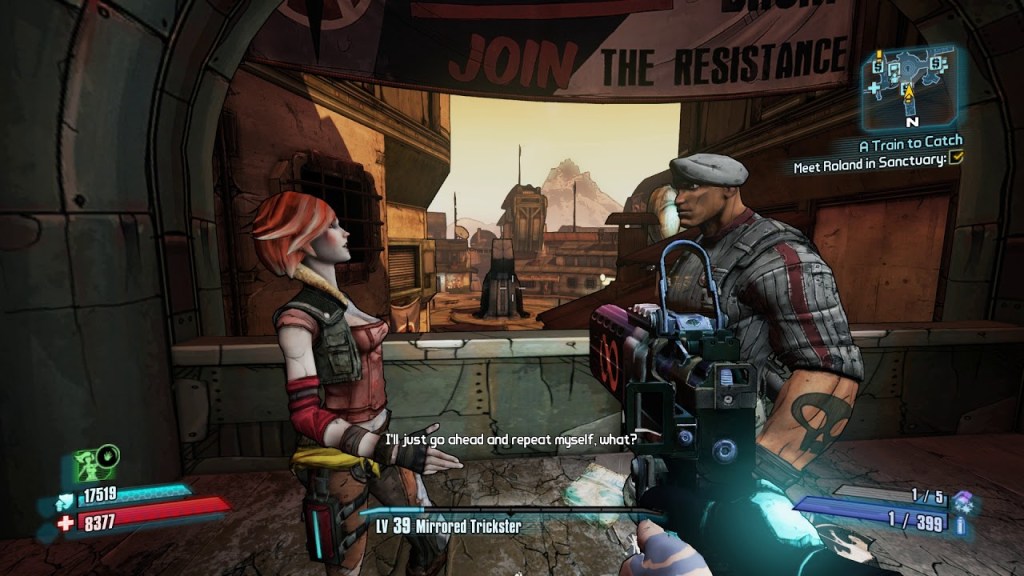
In Roland we get the jaded ex-corporate soldier. Roland’s character arc was lacking, likely due to the fact that he was intended as a supporting character to Lilith and Tina. But he was a great choice as a character to include. With better writing, we could have seen the corruption of the corporations (also negating the need for intro narration), and Roland’s setup as a Pandoran leader would have made sense on a practical and emotional level. There’s a reason his character was so pivotal in Borderlands 2. A sad note about him though… we never got to see him deploy hit turret. We see plenty of cool tech, and there are a couple of battles it would have been great in. Lilith got to phasewalk. Kreig almost always rampaged. But no turret for Roland. Missed opportunity.

These three problems I’ve addressed aren’t the only problems in the movie, they’re just three of the most obvious, and most easily fixed. The ease with which they could have been addressed is especially frustrating after waiting so long for this movie to exist. But it at least provides solace in knowing that a Borderlands movie won’t inherently be garbage. There is so much lore to pull from and so much opportunity for engaging storytelling, even if the movie doesn’t follow the game’s story.

TLDR: The movie was bad, especially beginning. Pacing, editing, and character usage were major problems.

I should say that the fights worked well, especially with the bandits in the tunnels and the main fight at the end. The chaos and unrelenting horde of meat fodder was very reminiscent of the game and very fun.

Would I watch it again? Maybe when my kid is old enough. Maybe just in the background so I can glance at nostalgic scenery. And, because I’m eight-years-old, watching Claptrap violently diarrhea bullets will never get old.

PS: When Roland breaks Tina out at the beginning, that was totally the perfect moment for a “little short for a Crimson Lance” joke. Right in line with Borderlands and much funnier than the short joke they put in later.


Book Review: The Tainted Cup

My MFA thesis starts up this fall and I’ve decided to write a fantasy mystery (Mystasy?), because those are two genres I don’t see paired up too often. And whereas I’ve had the idea for this book/series for quite a while, I haven’t had the time to devote to it. Once I made my decision, it begged the question, what is a fantasy mystery?

As luck would have it, I was walking out of my local library and a cover on the staff recommendation shelf jumped out at me. The gold on navy with green accents pulled my eye and I found myself hushing my kid so I could read the back. I needed to know what a fantasy mystery was. The back read “A Holmes and Watson-style detective duo take the stage in this fantasy with a mystery twist, from the Edgar-winning, multiple Hugo-nominated Robert Jackson Bennett.”

I was ready to ask the question “where have you been all my life?” to both the book and the staff recommender (thanks Mao), simply from holding it in my hand. I’d instantaneously set The Tainted Cup on a pedestal without even realizing it. And it didn’t disappoint.

The story starts with our main protagonist, Din, as he investigates his first murder. He’s partnered with brilliant eccentric recluse Ana, who never steps foot on the crime scene (or out of her house for that matter). This grisly and disturbing murder is only the beginning, because as with any mystery (and transformer), there’s more than meets the eye.

I never want to give away spoilers, so here’s my brief rundown of what I liked and why you should read it:

  1. The magic system is neat. Botanical and just vague enough to be mysterious in its own right.
  2. Din’s flaws make his resourcefulness impressive. Plus he’s not too shabby with a sword. 🙂
  3. Ana’s logic is never Deus Ex Machina. There’s never any logical leaps stemming from withheld information. Everything is presented, ready for you to figure it out.
  4. Also: kaiju. Because why not.

Obviously there’s more going for it than what’s listed, but no sense giving anything away. Oh, and did I mention it’s the first in a series? The Tainted Cup just came out this year, so we’ll have some waiting to do (2025 according to google), but with the character, world, and story setup that happens in these pages, we’ll before too long be able to return to this world and continue sleuthing with Din and Ana.

One surprising aspect for me was the amount of violence in the book. And by that, I mean there was much less than I expected. Most fantasy has crazy action scenes with swords and magic and mythical beasts. Mysteries often have chases and, of course, murders. You’d think that crossing the two genres would ratchet that up a bit. Not really. And that’s not a bad thing. It wasn’t even until after I’d finished that I’d had this realization. Personal preference: I’d have loved some more fights. But it worked just fine without them.

I very much appreciated how the information was doled out to the reader. Sometimes we got the info and made the connection along with the characters. Sometimes the detail was mentioned chapters earlier and only became relevant at a later time and it was on us to remember it. And other times we were given hints at known information that wasn’t pertinent in the moment, but became a promise of a meaningful reveal later.

But how, as a writer, do you determine what information to give and when? That’s a good question, and one that applies to more than just mysteries. You might have guessed it, our craft subject of the day is:

Information Rationing.

Let’s start with characters who have information. When it comes to non-perspective characters, information rationing isn’t too difficult. People lie. Or they’re ignorant. Or they tell half-truths, intentional or not. You can pick any number of reasons why a non-perspective character will omit information, assuming it works with the story and their character of course. Bilbo doesn’t tell Frodo the details of his ring. The Dursleys tell Harry his parents died in a car crash. The International Fleet doesn’t tell Ender those aren’t just games. They’ve got reasons, and those reasons make sense for the characters and the plot.

Perspective characters are trickier. When Katniss has that flashback about Peeta giving her bread, we learn something about the both of them that impacts the story later on. That memory is triggered and she conveys that information to us. But what if we she withheld that memory? The characters’ connection later on wouldn’t make as much sense.

Even more to the point, take when Penelope is truly shocked about something Lady Whistledown said. It doesn’t make any sense. She is Lady Whistledown. The character’s knowledge of her secret role is hidden, even in her POV. Unless there’s a Fight Club situation going on, she would reasonably have thought once or twice about the fact that she is the one writing gossip.

An effective way around this is for the character to be cognizant of the fact that they have information, and then move on. Everyone has secrets, but let’s say we’re in your head, and your secret comes up. You’re not going to not think about it. That’s silly. And unrealistic. And it loses the reader’s trust.

In The Tainted Cup, there’s a situation just like that. Din (and this isn’t really a spoiler since he thinks about it right away in chapter one) has somewhat regular thoughts about not wanting Ana to find out what he did, or what his limitations are. We eventually learn the truth, and all his actions make perfect sense because of it. But we don’t feel cheated as the reader, because Din was honest with us about what he knew, and we knew why he wasn’t going into specifics.

And beyond character information, there’s story information. One way story information is distributed is via the plot. For the longest time, those two terms were synonymous in my head. The way I like to think about it now is the story is what happens. The plot is the order in which we see it happen. In Edward P. Jones’ The Known World, we see the story of this fictional county through the lives of its many inhabitants. The stories are given to us in bits and pieces, from character to character and back again. If all those characters’ stories were told chronologically, one at a time, we’d still get the whole story, but we’d lose so much context and interconnection as we experienced each one. The rationing of information, the order in which the story is told, is was makes that story great. One of the many reasons, actually.

And of course we have to talk about mysteries. Finding clues, finding information, is what those books are all about. There are probably a ton of different ways to go about it, but I like to look at a mystery’s disbursement of information like a family tree. A likely incestuous family tree, but you get the idea. At the bottom is, for the sake of the analogy, you, the inciting incident, the moment that kicks the story off. From there we branch up to the parents, the clues we find. Some people only have one parent, some have two or four or even more. And those parents don’t exist in a vacuum. They have parents and cousins and aunts and uncles and secret lovers and all that.

But how do you know just how many parents your story needs? How many different people is your grandpa going to make kids with? For that, I start at the other end of the family tree. Your great great great great grandparent, for example. The bad guy. I need to figure out what they did, who they did it with, and why they did it. Each of those is one of their kids. Each of those kids will have their own motivations and actions and relationships, making kids of their own. Sometimes those kids will meet, sometimes they’ll get a little incestuous. But before long there’ll be this massive family tree of plot, all leading to the bad guy. You just need to find one of the bottom descendants and start your story there.

As with any incestuous relationship, the goal of the participants is to keep it hidden. Your protagonist needs to figure out which cousins did which cousins, and why. Surely it wasn’t just because of a pair of big brown eyes. Right? Right? Treat each step of the family tree as a new secret. Some won’t be hidden, they’ll just need to be traced. “Ohhhh, that’s who my great-grandma was.” Others will definitely be hidden and will take a bit more work. “Aunt Peggy did what?!” But once all the tree has been revealed, each clue, each relationship, will make sense and support the structure of the entire tree.

Wow. I had not planned on that analogy, especially not as much lover from the same mother. But I think it works. And you know what else works? The Tainted Cup. Without further ado, here’s how The Tainted Cup fares with The Author’s Arsenal.

For excellent character creation and portrayal, I award The Seal. Ana definitely is set up to be a big player in future books, but Din especially shines. For phenomenal world-building, I award The Scroll. The ecology of the world alone is astounding, but add in the politics and history and classism… very nice. And for brilliant storytelling, I award The Quill Pen. In order for a mystery to work, the storytelling has to be on point. And it very much is.

If you you’re a fan of either fantasy or mystery, and especially if you’re both, I highly recommend picking up The Tainted Cup. I don’t think I’ve read anything quite like it, and I’m certainly glad I did.

As always, feel free to let me know if there’s a book you want reviewed.

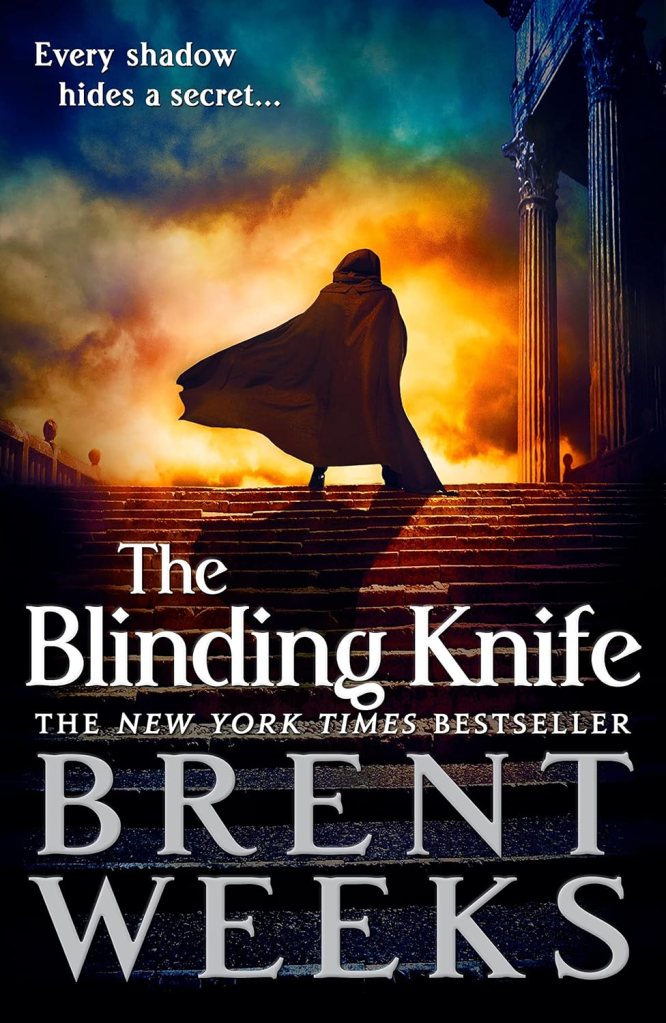
Book Review: The Blinding Knife

So, I officially hate Brent Weeks. Not actual hate where I wish him harm or anything, but more in the “man, you’ve made my life inconvenient” sort of way.

The Blinding Knife is the second in the Lightbringer series, following The Black Prism. My hatred stems from his magic system and world building. Eight years ago (I know, because I have my notes), I came up with this fun magic system involving the color spectrum, where people have different powers based on the color of light they’re exposed to. That’s super simplified, but the basic premise. I told my idea to Gavin, one of my fellow MFA students, and he was like, “Oh, like the Brent Weeks books.”

Say what? I’d never heard of Brent Weeks at that point, and the idea that someone had already published a magic system that was the same as the one I’d just spent a ton of time working on was disheartening. At the end of the semester that classmate gifted me a copy of The Black Prism so I could see what similarities existed. And because he really liked the book.

Flash forward to this past summer. I hadn’t read The Black Prism yet, not because I didn’t want to, but just because of its placement on the “to read” list. I was thinking about another story, and I mentioned to my wife that creating a base number system based on the story’s pantheon seemed super neat, especially when information could be interpreted different ways. I put some work into that, but mainly it was an idea to come back to.

Then I started reading The Black Prism in the fall. And yes, the magic was based on light. To my relief, that was where the similarity ended. How the magic functions and is tapped into is completely different, but any chromatic based magic system I use will still be seen as less novel because of The Black Prism’s existence.

Then I read The Blinding Knife these last couple of weeks. And guess what it introduced? A base number system based on the story’s pantheon. My jaw dropped as it was explained in-story. Are you kidding me, Brent Weeks?! A friend of my is now joking that I read the entire series in the past and have shut it out of my conscious memory. He’s waiting for my next idea and for it to be something from one of the next books. Sigh.

But, as much as I can joke that I hate Brent Weeks, I am thoroughly enjoying his books. So, let’s review The Blinding Knife (with minimal Black Prism spoilers).

The Blinding Knife picks up immediately where The Black Prism left off. Kip, Gavin, Karris, and Liv each leave Garriston with their own revelations about themselves and their companions. Kip is struggling to find (and earn) his place in the Chromeria, while the shadow of his father looms over him. And he’s got that fancy knife. Gavin’s mortality clock has advanced and he still has most of his great purposes to fulfill. Karris knows, and boy is that conflicting. And Liv is seeing things in a new light *ahem* and needs to reconcile what that’ll cost.

A few new characters are also introduced as Kip learns how to use his magic, and those relationships are clearly setting up more drama in future books. The Colors are dragging their feet and Andross Guile is still a world-class douche. A card game is introduced that becomes important for multiple reasons.

One of the more interesting aspects of the second installment is how the magic system is able to expand without (usually) feeling like deus ex machina. Weeks uses a simple but effective tactic for this: everything we’ve learned is what the Chromeria has authorized. In other words, there are secrets to the magic that rebels, color wights, self-taught drafters, etc., can, in a narrative sense, spontaneously use, in a way that doesn’t feel like cheating on the author’s part.

We also dive a bit deeper into the religion of the world. In the first book, we heard Orholam’s name prayed to and cursed with all the time. Now we are introduced to the concept of the Old Gods. Religion becomes a central arc for one of the main supporting characters and drives much of the action in the story (as it does in the real world).

Another aspect that impressed me was the escalation of stakes. For example—and without giving spoilery details—there’s a romance between two characters. And it’s not working. Then, yay, it’s going to happen! Then, shit! Oh, it’s doomed. Then, yay, it is happening. Then, shit shit shit, there’s no way it’s happening now. I won’t say how it ends, but the escalations kept me on my toes and very concerned for the outcome of the characters.

I think the part I enjoyed the most about the book wasn’t something I was actively aware of while reading. And that’s the point, and the goal of fiction. I became so immersed in the story, in the world, that I was happily along for the ride. I didn’t stop to analyze or think about what was happening (that happened when I wasn’t reading), I was able to sit back and just read.

As with the first book, and as to be expected in epic fantasy, there are fight scenes galore. Most are small, some larger, and of course there’s always the climatic confrontation. These scenes didn’t exist merely to have physical conflict. There is a narrative and/or character purpose for each. And each does double duty to delve further into the magic system and the world the characters inhabit.

And that brings me to the craft topic of the review. I just said that fights are a staple, and being such, there’s the risk of a dime-a-dozen feel. That doesn’t happen here because of *drum roll* specificity.

Specificity is the cure for the common trope. It allows you to take any idea and make it your own, no matter how common or overly used. For example: You ever hear of Star Wars? Hunger Games? Interview with the Vampire? Wizard of Oz? What do they all have in common? They all follow the same story arc. Almost exactly the same. What makes them different? The details. Specificity.

I know that’s a very broad brush with which to talk about details making stories unique. Let me use another example, this time from The Blinding Knife itself. I’d mentioned the introduction of a card game in the world of the story. It’s called Nine Kings. As I was reading the story I was engaged with the cards and their descriptions, as well as the strategy Kip employed while playing. There are so many different cards that there can be different decks, and each deck is normally themed around a color (the colors of the Chromeria). I recall having the passing thought at one moment that it reminded me of Magic the Gathering, but then the story moved on and so did I.

Well, as it happens, Brent Weeks was introduced to Magic the Gathering after writing the first book, but before writing the second. He enjoyed the game so much, that he wrote his own version of it into the sequel. Now, for those who don’t know, I am very into Magic the Gathering. I’ve played since middle school and have two massive library card catalogs filled with cards. Even with my massive history and knowledge of the game, I only had the briefest of moments of recognition with Nine Kings. Why? Specificity.

Weeks was able to take a concept that I was very familiar with and tweak it, adding detail after detail after detail in order to make it unique and distinct. This can be done with anything, no matter the source material. Have a character with a physical ailment/limitation? That’s nothing new. But if you’re specific about it, it becomes part of the character, as opposed to a descriptor of the character. Tomorrow and Tomorrow and Tomorrow’s Gabrielle Zevin spent chapter after chapter on Sam’s ankle/foot injury, and we were given a character whose physical limitations impacted the story in unique and heartbreaking ways, different from any other character with a physical limitation.

Depending on your choices, you don’t need to spend chapter after chapter on those details, but you need enough to make whatever concept or decision you’ve come up with fully your own. I say that I hate Brent Weeks because of the similar ideas, but the key to making that not an issue is specificity. We can both have magic related to light, but the how, the why, the drawbacks and benefits, all the nuances a magic system needs are what will separate them and make my story stand apart. Specificity.

Now, time for the big reveal. What tools in The Author’s Arsenal does Brent Weeks wield in The Blinding Knife?

For exceptional storytelling/narrative, I award the Quill Pen. There are a lot of balls for Weeks to juggle, a lot of motivations playing against one another, and it all flows so smoothly that the complexities don’t bog down the reader.

For depth and richness of theme, I award the Inkwell. Colors. The Light Spectrum. Wavelengths. What seems like a limited concept has been integrated into the world so richly that we’re fully on board with this unique magic system and how it colors *cough* every aspect of life in that world. Each color means something, and the characters act and react appropriately based on those colors.

And for world-building and setting, I award the Scroll. It sort of overlaps with the theme award, but I can’t say enough about the fully realized world we’re given and all the minutia included to ground that world and make it real. Details. Specificity. It’s all there.

A Blinding Knife has been the most enjoyable book I’ve read all year. My jaw literally dropped, I couldn’t put it down, and my wife more than one time had to sit through me retelling her aspects of the plot she had not one iota of investment in. Good times.

And there you are. If you have a suggestion for a review, feel free to drop it in the comments or send a message.

Book Review: A Court of Mist and Fury

When I told one of my tenth graders I was reading this book, she was scandalized. We were on the topic of books because I saw her reading The Belgariad, which I was shocked by as I haven’t seen anyone reading that since I’d read it over twenty years ago. Apparently her dad’s making her read it. Good for him. And her, too.

Anyway, the idea that a dude, especially a grown-up dude, was reading that book was almost too much for her to take. I can only guess at her ideas as to why I was reading New Adult Romantasy (too sexually graphic for YA, IMO). Part of the reason was that I’d seen so much about the series across social media that I knew I’d have to give it a go at some point. Part was that Jacqueline Carey teed up the genre for me back in my Belgariad days. The third part of the equation was there were no holds on it in the Libby app. The stars aligned (and not just in the Rhysand sort of way).

Warning for book one (A Court of Thorns and Roses) spoilers. Obviously, in a book review for a sequel, there will be spoilers for book one. If you haven’t read it, stop here. If you have, here we go.

A Court of Mist and Fury picks up with Feyre and Tamlin, she newly fae and he once again fully empowered. They’re engaged, they’re in love, just what’d you’d expect following the ending of the first book.

But things are not as they seem. Feyre had made a deal with Rhysand to spend one week a month with him in the Night Court (sans John Larroquette), where she’ll learn exactly who Rhysand is, and what life is like for the fae when not under Amarantha’s thumb.

Feyre not only has to deal with that bargain, but also the fame that comes with being the one to stop Amarantha. Everyone knows, and everyone is very, very grateful. And I’m not just talking about her Summer Court subjects (she is engaged to Tamlin, after all), but the fae across all the courts.

I don’t want to get into spoilers, and because the narrative structure of this book is different than A Court of Thorns and Roses, it’s hard to say more than what I already have without giving away surprises. What I will do is offer comparisons between the two.

More magic? Yes. More of the hot and sticky? Yes. Higher and clearer stakes? Yes. More fun action? Yes. More Feyre acting illogical? No, thankfully. All around, it’s a better book than the predecessor.

I spent most of the first section afraid that it would be nothing but illogical Feyre, but as soon as it switched gears I was on board. Tons of fun character development, world building, and contextualizing moments from the first book that enriched the narrative and made me like the first book more than I initially did.

Some of the non-perspective character motivations were a little shaky at times, but with so many characters, it’s hard to make everything fit snuggly. It has been the most fun read of the year so far, but it’s not without its flaws.

Which brings me to the craft subject of the day: foreshadowing.

Foreshadowing is a fairly common concept, but also very broad. Simplistically, foreshadowing is a warning or indication of a future event. But that definition implies we recognize the foreshadowing. Sometimes that’s the point, to purposefully clue the reader into something. Concrete foreshadowing. When Romeo dreams of seeing Juliet dead, the audience knows that’s how he’s going to find her. When Chekhov overtly draws attention to the gun, we know it’s going to play a role.

Other times, we’re given hints that only make sense after the reveal. Prophecy foreshadowing. Like in Sixth Sense, when the kid says he sees dead people, and they don’t know they’re dead. When we find out Bruce Willis is dead, that line carries a lot more meaning. Or even in A Court of Thorns and Roses, when there’s the line about Tamlin’s stone heart, we think it’s a common metaphor about being cold, or callous. Then we find out it’s a literal stone heart which is the key to defeating Amarantha.

Flashbacks and flash-forwards are another common medium for foreshadowing. In Hunger Games, we get the flashback of Peeta giving Katniss bread, essentially feeding her when she’s in need. Later, when Peeta needs feeding, Katniss feeds him, balancing out that act of kindness.

Next up is abstract, or symbolic foreshadowing. This is often used with setting. It was a dark and stormy night, or, a fog settled over the town. It can also be used with objects that have cultural meanings/baggage. In American Beauty, there is the iconic scene of the young girl lying in a pile rose petals, with more falling on her. Roses are often a symbol of romance and lust. In the same movie, you see the main character’s wife methodically pruning the roses in her yard. This will give us expectations about his relationship with both those women.

Lastly, we have fallacy foreshadowing, or a red herring. This is similar to the concrete foreshadowing, except it is supposed to trick the reader, as opposed to give them insight. When Obi-Wan tells Luke that Vader killed Luke’s father, that sets up the surprise reveal that Vader is Luke’s father. In Game of Thrones, Littlefinger pits Arya and Sansa against each other, readying us for a sister vs sister showdown, but they join forces and turn on him.

Foreshadowing is effective in that we have learned how to interpret the various types, and when the reveal comes, we are pleased or satisfied. When foreshadowing doesn’t work is when it tries to be one type, and ends up falling flat, or turns into another type. When you set up a proper foreshadow, you essentially make a promise to the reader. If you don’t fulfill that promise, the moment falls flat, and you lose that reader’s trust.

As I mentioned earlier, Sarah J. Maas handles foreshadowing well in the first book, especially with that stone heart moment. There are good instances in A Court of Mist and Fury as well (the one that stick out involves her sisters), but also a mishandled one that, for me, kept me at arm’s length the rest of the story. I won’t give it away, I’ll just say it involves “merfolk”, so you know what I’m talking about when it happens.

So how does A Court of Mist and Fury fare with the Author’s Arsenal?

For world-building and setting, A Court of Mist and Fury earns The Scroll. We had a taste of the fae world in the first book, and we really delved deep and explored so many new locations and cultures, in addition to expanded on what we already knew.

And for character building, it earns The Seal. Many of the characters were presented in new light, and grew to be much more than they were before. The relationships between Feyre and her companions (and their relationships with each other) are was drive the narrative and suck the reader into this world Maas has created.

Unlike some other books I’ve read recently, I’m looking forward to the next installment. I’m just hoping Elain becomes more than just a pretty mannequin.

Side note: If I had the time and energy, I’d have tied The Belgariad into the review’s ending, a sort of foreshadowing. But it has been twenty-plus years since I’ve read them and it’s hard to remember specific details. Forgive me. 🙂

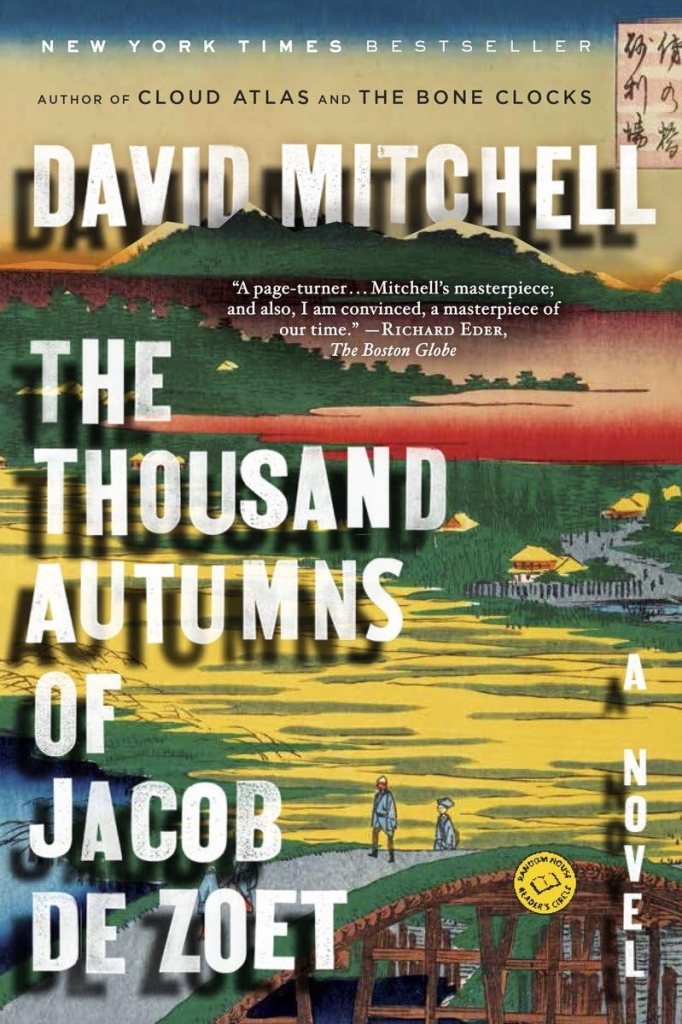
Book Review: The Thousand Autumns of Jacob de Zoet

Welcome back for another book review. I want to preface this with an admission of the chance for bias. David Mitchell is one of my favorite authors, perhaps even my favorite, though it’s really hard to choose. One of my short pieces I plan to shop around once I think it’s good enough is actually about him. With favorites, there’s a tendency to overlook faults or take strengths for granted. I’ll try to do neither.

You may wonder why, if Mitchell is one of my favorites, I have not yet read The Thousand Autumns of Jacob de Zoet until now, when it’s been out for well over a decade. Circumstance and poor luck. Shortly after it came out and I acquired it, I moved. It went into one of many boxes, and most of those didn’t get unpacked for a while. By the time they did, I found a box had disappeared in the move, along with half my Mitchell books. I assumed they’d show up and then I’d finish reading it, but eventually I gave up hope and just now reacquired it.

That out of the way, let’s get to it. A spoiler-free review of The Thousand Autumns of Jacob de Zoet, by David Mitchell.

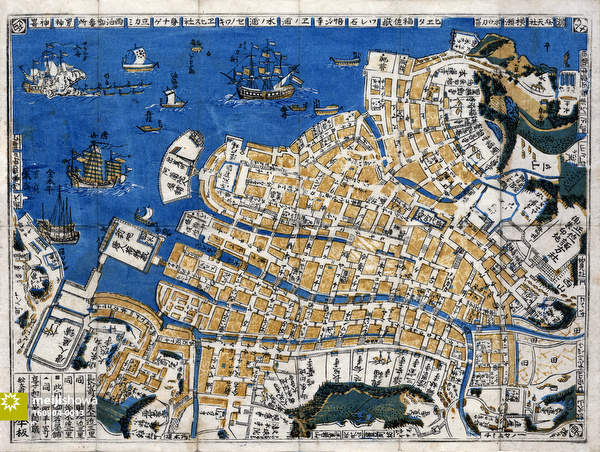
The Thousand Autumns (I’ll refer to the novel thusly to save space and prevent finger strain) follows three primary characters: titular clerk Jacob de Zoet, unlikely medical student Orito Aibagawa, and Japanese-Dutch interpreter Uzaemon Ogawa (I’ll order Japanese given and family names as we’re used to in Western culture to prevent confusion). Set in Dejima, a trading enclave in Nagasaki, Jacob is trying to make money so he can marry his betrothed back in the Netherlands. He meets Orito by chance, and Uzaemon for need of an interpreter.

Map of Nagasaki from 1801 (Kyouwa 1, 享和元年). Dejima (also: Deshima) is clearly visible in the harbor. Printed by Yamatoya (大和屋板).

What starts off with the makings of a love story morphs into a story with ever expanding scope and the mysticism/magic you’ve come to expect in a Mitchell novel. Things are never as they seem, nor are people. More so of course than is expected anyway, as that sentiment can be applied to nearly every person or character.

Throughout the story, all the characters are faced with trials of morality and ethics. None as much as Jacob, Orito, and Uzaemon. Sometimes strong ethics serve a person well, other times they hurt. The ramifications of those choices drive the narrative as well as the whole Nagasaki region.

A few aspects I want to highlight in particular are setting, prose, and character. Let’s start with setting.

When I was in school, the foreign language I studied was Japanese. My wife also studied it, though she lived in Japan and focused more on the culture and history than I did. She read this book and said she found the setting boring because she already knew about the era and life of the Japanese and their policies regarding trade and foreigners and all the details were old news for her. What that tells me is that Mitchell has done his homework.

As a fan, I know that Mitchell has spent time in Japan as well and speaks Japanese, so it’s no surprise his knowledge of the language, culture, and history are so accurate. As someone who focused more on the language and less on the other aspects, I found the portrayal to be enlightening, the dynamics of Japan’s isolationism 200 years ago tremendously interesting and mind boggling at the same time.

There are true events woven into the story, like the attack of the British in Nagasaki, what I assume to be the Great Kaga Earthquake, and of course the warring European nations. These moments ground the reader in the reality of the world which serves to both strengthen the impact of Mitchell’s story and also highlight his unique book-to-book connections.

Moving on to prose, Mitchell was aided in that he was able to draw on Japanese symbology and propriety to help order rich, authentic words such that the sentences seemed foreign and familiar all at once. I noticed in particular a tactic of interspersing descriptions of setting between spoken words and actions that I don’t recall in his other writing, and that’s having just read Utopia Avenue a few months ago.

I haven’t the audacity, nor experience, to try and accurately portray another living culture’s mannerisms speech patterns, and when Mitchell does so in The Thousand Autumns, I never felt for once that he was stereotyping or using unusual vocal patterns as an interesting crutch, relying on the foreign sounds or diction to engage the reader. When Orito or Uzaemon spoke, their words read authentic and true, which is no small task. That holds true with their thoughts as well.

Lastly, before I go into craft, I want to mention a brief thought on my reactions to character. Talk to anyone who knows me, and they’ll tell you I’m not outwardly emotional, perhaps bordering on sociopathic. That’s a bit of an exaggeration, but the point I’m trying to make is that I’m rarely emotionally responsive. For me to react emotionally to a book says something about its efficacy. (Unless we’re talking about rage quitting. Non-effective storytelling there. I’m looking at you Ready Player One)

There’s a moment, and I’m being vague to avoid spoilers, where Jacob has to say goodbye to someone. I got choked up. Like, tight throat, sniffles, the whole shebang. The moment wasn’t an overly dramatic profession of love, or a heart wrenching death of a beloved character, but a simple goodbye. The reaction this moment elicited could only have been achieved through solid portrayal, and thus investment from me, of the character Jacob.

Okay, on to craft talk. Today’s topic: Research.

I touched on this earlier in setting, but wanted to expand beyond the scope of The Thousand Autumns. I can think of few exceptions where research would not be necessary for a novel. I’m sure Neil Gaiman had to dig through tons of myths and religions when he wrote American Gods. Or Cherie Priest had to find maps and records of 1880s Seattle for her Boneshaker books. Research lends credibility to a story, but it also grounds the reader in the world.

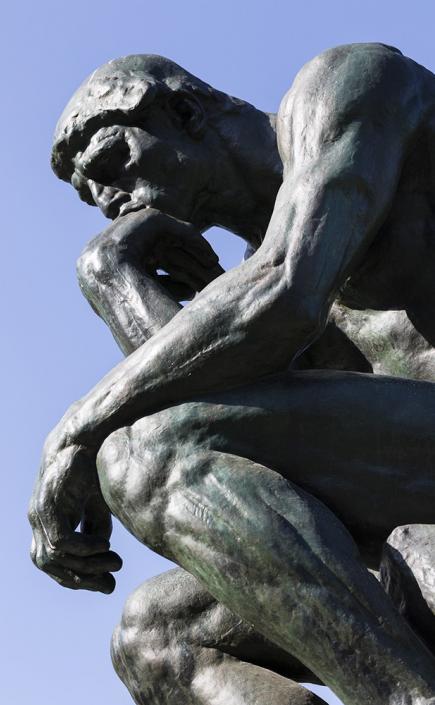
Imagine you’ve picked up DaVinci Code and you’re following Robert Langdon through the Louvre and Dan Brown throws in something about racing past Rodin’s The Thinker on his way to the Mona Lisa. Dan Brown is pretty sure The Thinker is in Paris, and the Louvre has all the cool stuff, so it’s probably there. Spoiler: It’s not. It is in Paris, but it’s at Museé Rodin, not the Louvre.

The magic of DaVinci Code is all the research that makes the story, the interconnected bits of history, engaging the reader with history. Every place Langdon visits is real. I actually have an annotated copy of the book complete with photos and illustrations of the sites and pieces of art. Few people will know every art and history reference in the book, but having that information there raised the reading experience to a whole new level.

Research gives validity to the world of your story. And it doesn’t matter if your world is Earth or Mars or Xanth or something I’ve never heard of. Sometimes research it just finding the proper details. I’m working on a story where the protagonist is a carpenter and I had to learn how to build a chair with medieval era tools. I already knew how to with modern tools, but I can’t exactly have my character whip out a cordless drill. Or there was the story of mine just published in Space Brides. Exactly how bright is Jupiter if you’re standing on Europa? How far does that elevator ride through the ice need to be? Research.

I know sometimes research may seem like a slog, that every page you get to poses a new question that interrupts your flow. One trick is to throw a placeholder in so you can keep writing and do the research later. For months I had “HE BUILDS A CHAIR” followed by the rest of the scene. Another is simply read a ton about what your character knows or experiences before you write and you can just go with it. Or, if you’re David Mitchell, go live in Japan for a decade. To each their own. 🙂

I can’t really give advice as to how to best do research. That depends on you and your story. But I can’t stress enough the importance of it. We’ve all heard of the seven basic plots that all stories follow. What separates those stories from one another are the details. We get those details from research. Details enrich the reading experience and color your worlds. Find those details. Do the research.

Now, time to break out the Author’s Arsenal and throw some accolades at The Thousand Autumns of Jacob de Zoet.

For accurate linguistic depictions and line to line pacing, I award The Parchment. For making me emotional and balancing culture with agenda, I award The Seal. And for the research, for bringing an accurate (of course accounting for factionalized elements) world of turn of the 19th century Japan to his readers, I award The Scroll.

For those who have not read David Mitchell, these awards should not be surprising. His novels are regularly long and short listed for awards, and the varied settings and times they take place in always present something new. My first exposure to him was Cloud Atlas. It is my favorite book of all time. Just phenomenal. But, if you’re thinking about reading The Thousand Autumns of Jacob de Zoet, don’t. At least, not first.

I needed to put in here somewhere that most of his novels are loosely (some not so loosely) connected. You technically could read them in any order, but I think what makes the most sense (and my google search confirms my thoughts) is that you should read them in order of publication. That would mean Ghostwritten, number9dream, Cloud Atlas, Black Swan Green, The Thousand Autumns of Jacob de Zoet, The Bone Clocks, Slade House, and Utopia Avenue. For me, the weak link was Black Swan Green, but I know those who really enjoyed it.

Hopefully this review will have made a new Mitchell fan or two. Until next time, happy reading, and if you have any books you’d like me to read and review, let me know.