Recent Reads: Good, Bad, and not too Ugly.

So I’m in the middle of thesis and that doesn’t leave much time for in depth book reviews. Instead, I’m going to just list what I’ve read this year that hasn’t yet received a full review and give some brief thoughts.

(in order of when I read it, oldest to most recent)

Edgedancer by Brandon Sanderson

I’m 99% certain a portion of Edgedancer appeared in a short story collection, because I know I’ve read the first section before. But that was maybe a quarter of this text. The rest read like typical Sanderson, and that’s definitely not a bad thing. I like Lift’s character: she’s fun, funny, and most of the time her thoughts and speech are appropriate to her age. The only criticism I’ve ever had of Sanderson involves his portrayal of young voices, and a few times that stuck out in Edgedancer. But still a very fun read, and integral to the events on Roshar and the greater Cosmere.

Black Canary: Breaking Silence by Alexandra Monir

This is one of those stories that relies on the reader to blindly accept the state of the world. The Court of Owls has taken over Gotham, oppressed women, and the rest of the country and world didn’t care? Really? Assuming I buy into this (which I have to if I want to keep reading), it was an interesting exploration of what would happen to the next generation of superheroes, how and why they make the decision to resist. As with many YA books, I felt the social/moral lessons lacked any semblance of subtlety, treating the reader almost like an idiot. Not a fan of that part. I was going through each of these DC YA books, but I think I’ll take a break after this one for a bit.

Killing Floor by Lee Child
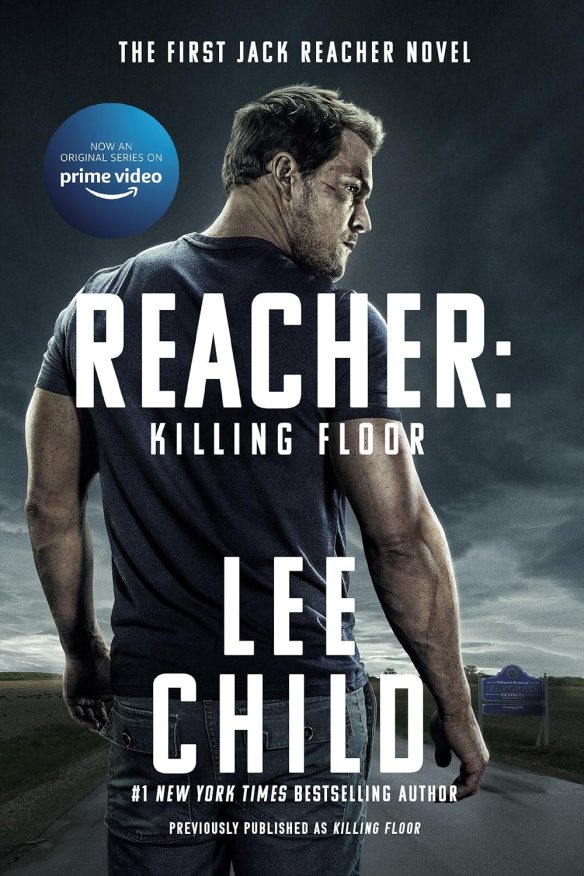
The most interesting aspect of this read was that I’d recently watched the TV show, and the first season is based on this novel. It’s the first Jack Reacher story, so while the reader is meeting this character for the first time, I’d already met him on screen. And I knew what was going to happen. Luckily, enough creative liberty was taken in the show that the book was still surprising and entertaining. I was also trying to pay attention to the craft of the book, how the mystery was put together. I heard after the fact that Lee Child doesn’t outline, and that makes a certain amount of sense. It’s a good thing I liked it, because Goodwill has filled my shelf with almost all of the others in the series.

The Mime Order by Samantha Shannon
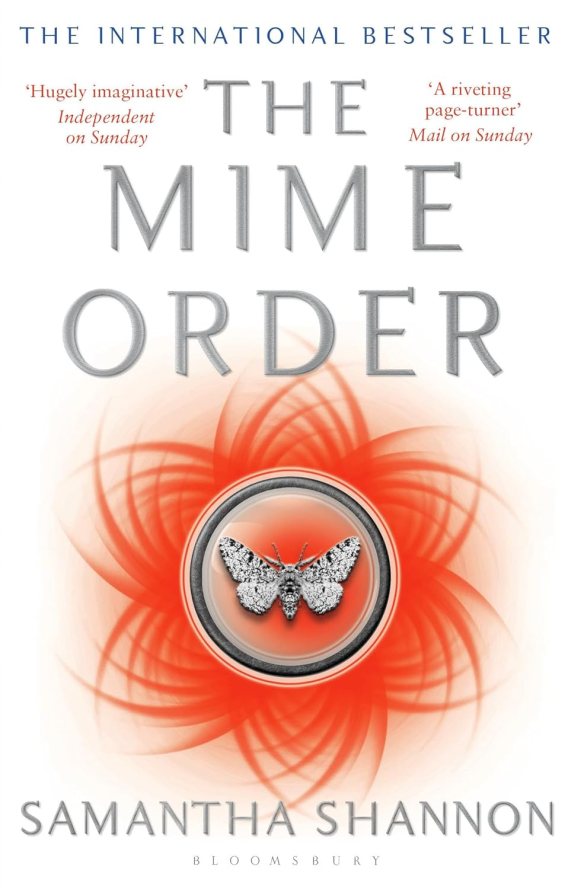
The Mime Order is a worthy successor to The Bone Season, though it’s an entirely different type of book. The Bone Season was a survival story, leading into rebellion, and The Mime Order is a political story fueled by the desire for that rebellion. Samantha Shannon does a marvelous job with world-building and thinking out how her story decisions would actually impact the people and society. Also, she sure knows how to set up rivalry and animosity. Makes any comeuppance incredibly satisfying.

The Darkness Outside Us by Eliot Schrefer
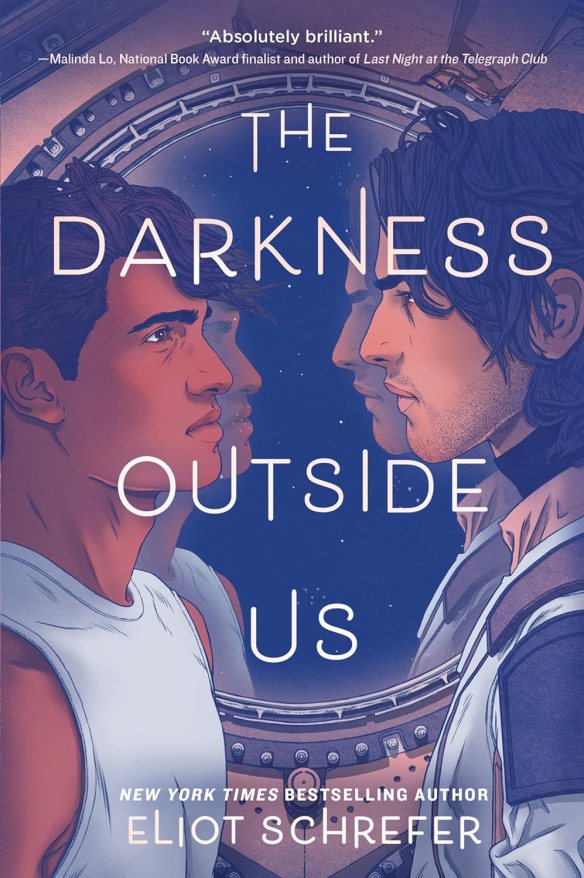
I’m pretty good at sussing out clues and figuring out where a story is going to go. While I did guess the general thrust of what was happening in the story, as the specifics unfolded I was continually dropping my jaw. Multiple “oh shit” moments. And as much as I enjoy a good science-based sci-fi story, this really was a love story that happened to be in space. And that worked wonderfully.

The Talisman by Stephen King and Peter Straub
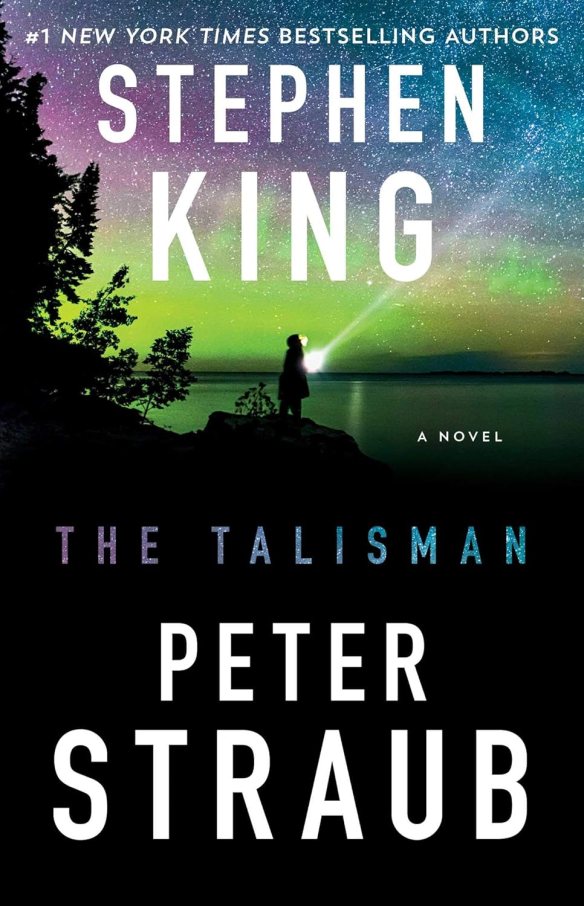
I’ve been reading through The Dark Tower series and all its related writings. I’m assuming the Territories are where Roland comes from, or perhaps where he’s from is affected by them. I’ll probably find out in The Waste Lands. On its own, The Talisman reads more like a magical realism story than horror, even though my copy’s cover hyped up the horror aspect a ton. It had a really slow start to it, though I find that tends to be true with most Stephen King that I’ve read. In order to care what happens to the character, you have to care for the character, and he certainly gives you all the background with which to start caring. The prose was engaging the whole way through, and my only real criticism was that I felt that the story lacked purpose at the end. Yes, Jack learned truths about himself and his family, but so what? Why is that important? It was entertaining, but not fulfilling.

The Name of All Things by Jenn Lyons

The sequel to The Ruin of Kings, The Name of All Things picks up immediately where the last book left off. And also it doesn’t. Like the first book, the narrative structure of the story is told largely in people’s accounts of past events. So for the first 80% of the book there are brief sections in present day, but everything else is people talking about what they’ve been doing for the last handful of years. This isn’t a bad thing, and I’m actually rather curious as to how this continues into the next books. Are we finally going to get Thurvishar’s story? It was fun seeing how the events of the two books crossed paths both in the past and how they met in the present. And I can’t overstate how much the world and magic are integrated into the people and the story itself. Fantastic. This is probably my favorite book on this list.

A Court of Wings and Ruin by Sarah J Maas
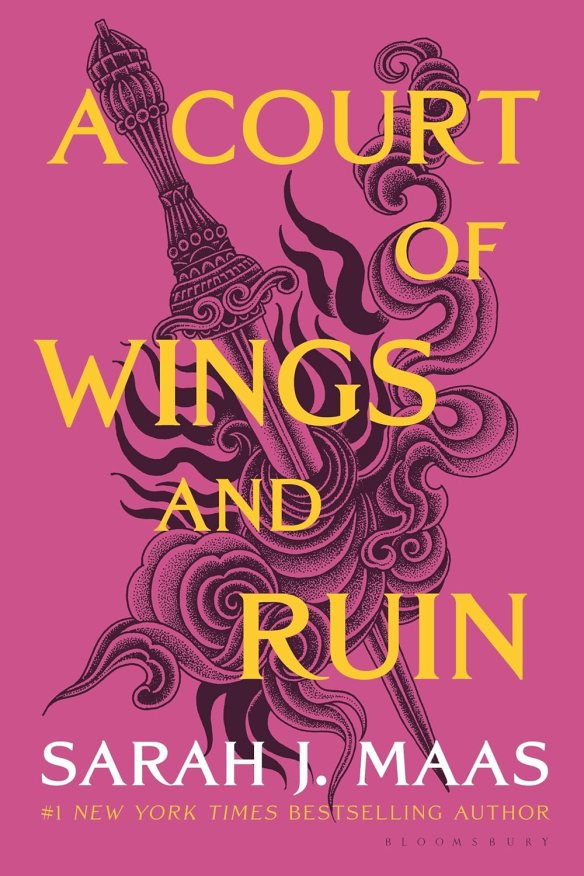
This third book in the Court of Thorns and Roses series was the strongest of the three by a healthy margin. Why? Character growth. Character agency. Stakes that weren’t relying on spectacle. Crazy monsters and epic battles (yes, I know this has both) are fun, but they aren’t the reason we read a book. I feel like there were hints of this stronger storytelling in the earlier books, but Maas has really started to figure everything out in A Court of Wings and Ruin. Though I still think the fairy tale allusions would work better with a lighter touch. I wasn’t expecting to come across the swan princess in this read, and even now that’s how I remember that character.

Doomsday Clock by Geoff Johns, Gary Frank, and Brad Anderson
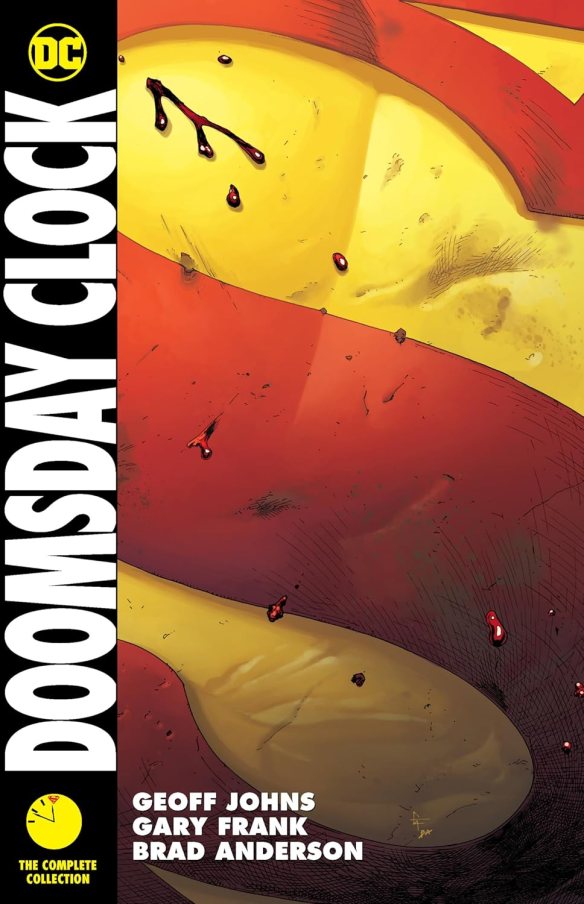
My only exposure to The Watchmen prior to reading this were the Zack Snyder film and the HBO series. Both of which I really enjoyed. I very much enjoyed how they poked at the idiocy of the politics in this country, in particular a certain long-tied leader. But I also enjoyed how they brought Watchmen into the greater DC world. I do get tired of the “OMG Superman is the best hero ever and always will be” shtick, but I was glad that he didn’t just show up and win. I enjoyed the Rorschach storyline the most, followed by Dr. Manhattan’s origins. Those photographs were fun ways to show just how tormented he’s been.

Eruption by Michael Crichton and James Patterson
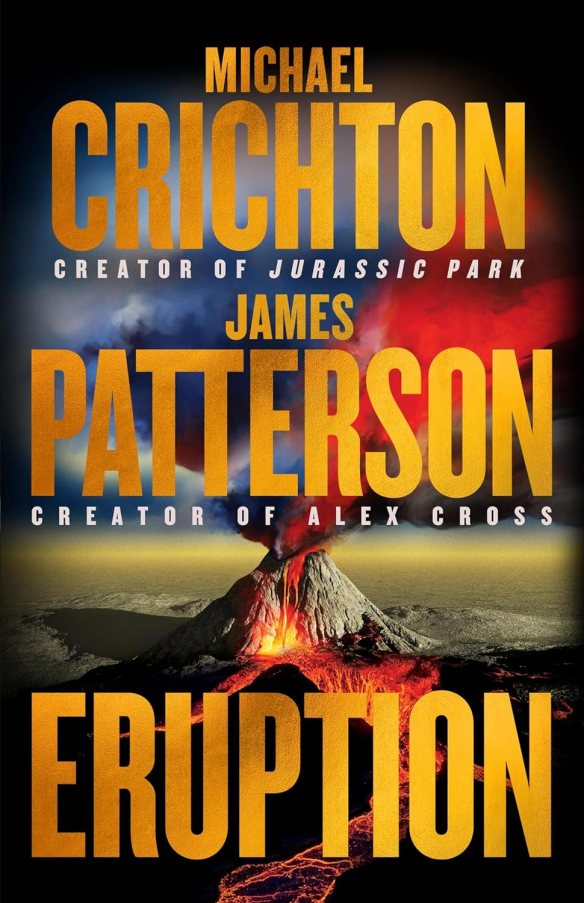
I was asked the other day which writer had influenced my writing the most, and my answer was MIchael Crichton. I remember reading Jurassic Park, and shortly after that, Timeline, and being in awe of how he could take real science, make one little leap, and have a whole engaging story unfold based on the 99% truth of that scientific foundation. Much of what I write now has science integration, and I credit that 100% to Crichton. Now, since he passed many years ago, it’s been a while since I’ve read one of his novels. I don’t remember the chapters being as short as they were in Eruption. I’m going to go ahead and attribute this to Patterson. I don’t think this was a bad choice, just a different choice. I like Patterson, both his Alex Cross and Maximum Ride stuff, and I think he was a great choice to get the feel of Crichton, even if I could tell there was a difference pretty quick. I was expecting crazier at the end, and yet there were still surprises in the specifics. And Mac really needs to get laid.

The Black Book by Edward W Robertson

I finished this one yesterday at my kid’s soccer practice… audiobooks are super convenient. It’d been a while since I read one of Robertson’s books. I started a long time ago when the first three were available as a free Audible download. This is the second book in a prequel series, and while it was entertaining—Robertson always does fun banter with his characters—I don’t feel it was particularly unique in his world, especially after reading soooo many of them. Cally read a bit like Dante, but the other characters were their own people. Do I regret reading this? No. It had fun moments and has set up for some craziness in the next book. Do I think it deserved a bit more attention to pacing and realization of stakes? Yes.

There were some non-fiction books in there as well that I won’t review because they’re writing aids and if that’s what you’re looking for, you’ll have already found it. The three I read were How to Write a Mystery, edited by Lee Child, Writing Picture Books by Ann Whitford Paul, and Save the Cat! Writes a Young Adult Novel by Jessica Brody.

The short and sweet: How to Write a Mystery was not helpful. Save the Cat! Writes a Young Adult Novel had some good tidbits. Writing Picture Books had a fair amount of good advice. Though I did have to question everything Whitford Paul said for a while after she said chicken could be better than hamburgers. No. Just, no.

That’s all for now. I started The 7 1/2 Deaths of Evelyn Hardcastle just as soccer practice was getting over. Hopefully I’ll have enough time to give it a proper review.

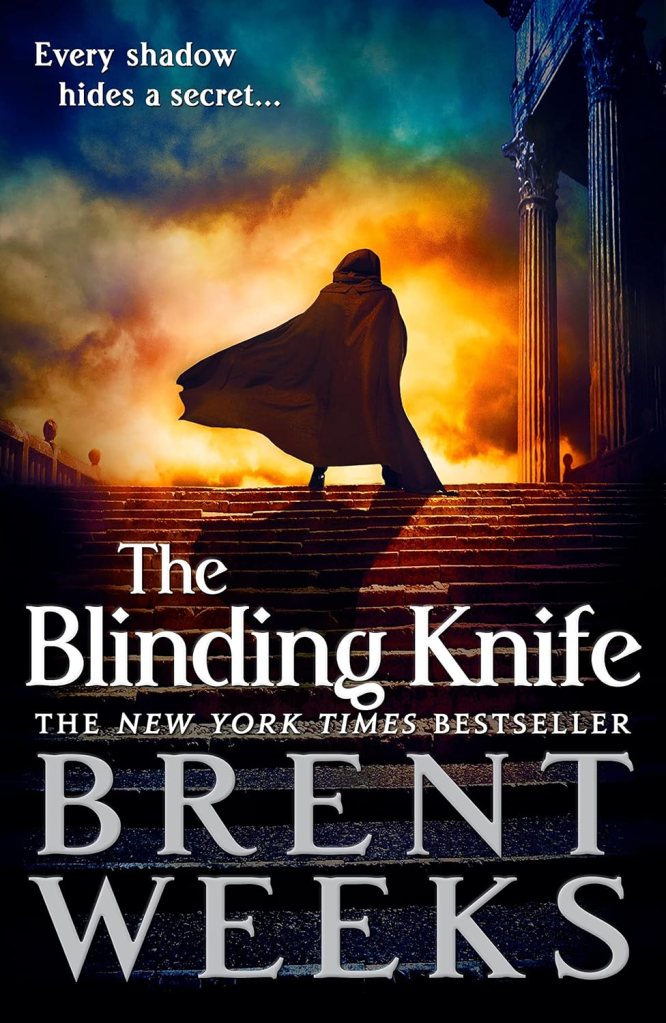
Book Review: The Blinding Knife

So, I officially hate Brent Weeks. Not actual hate where I wish him harm or anything, but more in the “man, you’ve made my life inconvenient” sort of way.

The Blinding Knife is the second in the Lightbringer series, following The Black Prism. My hatred stems from his magic system and world building. Eight years ago (I know, because I have my notes), I came up with this fun magic system involving the color spectrum, where people have different powers based on the color of light they’re exposed to. That’s super simplified, but the basic premise. I told my idea to Gavin, one of my fellow MFA students, and he was like, “Oh, like the Brent Weeks books.”

Say what? I’d never heard of Brent Weeks at that point, and the idea that someone had already published a magic system that was the same as the one I’d just spent a ton of time working on was disheartening. At the end of the semester that classmate gifted me a copy of The Black Prism so I could see what similarities existed. And because he really liked the book.

Flash forward to this past summer. I hadn’t read The Black Prism yet, not because I didn’t want to, but just because of its placement on the “to read” list. I was thinking about another story, and I mentioned to my wife that creating a base number system based on the story’s pantheon seemed super neat, especially when information could be interpreted different ways. I put some work into that, but mainly it was an idea to come back to.

Then I started reading The Black Prism in the fall. And yes, the magic was based on light. To my relief, that was where the similarity ended. How the magic functions and is tapped into is completely different, but any chromatic based magic system I use will still be seen as less novel because of The Black Prism’s existence.

Then I read The Blinding Knife these last couple of weeks. And guess what it introduced? A base number system based on the story’s pantheon. My jaw dropped as it was explained in-story. Are you kidding me, Brent Weeks?! A friend of my is now joking that I read the entire series in the past and have shut it out of my conscious memory. He’s waiting for my next idea and for it to be something from one of the next books. Sigh.

But, as much as I can joke that I hate Brent Weeks, I am thoroughly enjoying his books. So, let’s review The Blinding Knife (with minimal Black Prism spoilers).

The Blinding Knife picks up immediately where The Black Prism left off. Kip, Gavin, Karris, and Liv each leave Garriston with their own revelations about themselves and their companions. Kip is struggling to find (and earn) his place in the Chromeria, while the shadow of his father looms over him. And he’s got that fancy knife. Gavin’s mortality clock has advanced and he still has most of his great purposes to fulfill. Karris knows, and boy is that conflicting. And Liv is seeing things in a new light *ahem* and needs to reconcile what that’ll cost.

A few new characters are also introduced as Kip learns how to use his magic, and those relationships are clearly setting up more drama in future books. The Colors are dragging their feet and Andross Guile is still a world-class douche. A card game is introduced that becomes important for multiple reasons.

One of the more interesting aspects of the second installment is how the magic system is able to expand without (usually) feeling like deus ex machina. Weeks uses a simple but effective tactic for this: everything we’ve learned is what the Chromeria has authorized. In other words, there are secrets to the magic that rebels, color wights, self-taught drafters, etc., can, in a narrative sense, spontaneously use, in a way that doesn’t feel like cheating on the author’s part.

We also dive a bit deeper into the religion of the world. In the first book, we heard Orholam’s name prayed to and cursed with all the time. Now we are introduced to the concept of the Old Gods. Religion becomes a central arc for one of the main supporting characters and drives much of the action in the story (as it does in the real world).

Another aspect that impressed me was the escalation of stakes. For example—and without giving spoilery details—there’s a romance between two characters. And it’s not working. Then, yay, it’s going to happen! Then, shit! Oh, it’s doomed. Then, yay, it is happening. Then, shit shit shit, there’s no way it’s happening now. I won’t say how it ends, but the escalations kept me on my toes and very concerned for the outcome of the characters.

I think the part I enjoyed the most about the book wasn’t something I was actively aware of while reading. And that’s the point, and the goal of fiction. I became so immersed in the story, in the world, that I was happily along for the ride. I didn’t stop to analyze or think about what was happening (that happened when I wasn’t reading), I was able to sit back and just read.

As with the first book, and as to be expected in epic fantasy, there are fight scenes galore. Most are small, some larger, and of course there’s always the climatic confrontation. These scenes didn’t exist merely to have physical conflict. There is a narrative and/or character purpose for each. And each does double duty to delve further into the magic system and the world the characters inhabit.

And that brings me to the craft topic of the review. I just said that fights are a staple, and being such, there’s the risk of a dime-a-dozen feel. That doesn’t happen here because of *drum roll* specificity.

Specificity is the cure for the common trope. It allows you to take any idea and make it your own, no matter how common or overly used. For example: You ever hear of Star Wars? Hunger Games? Interview with the Vampire? Wizard of Oz? What do they all have in common? They all follow the same story arc. Almost exactly the same. What makes them different? The details. Specificity.

I know that’s a very broad brush with which to talk about details making stories unique. Let me use another example, this time from The Blinding Knife itself. I’d mentioned the introduction of a card game in the world of the story. It’s called Nine Kings. As I was reading the story I was engaged with the cards and their descriptions, as well as the strategy Kip employed while playing. There are so many different cards that there can be different decks, and each deck is normally themed around a color (the colors of the Chromeria). I recall having the passing thought at one moment that it reminded me of Magic the Gathering, but then the story moved on and so did I.

Well, as it happens, Brent Weeks was introduced to Magic the Gathering after writing the first book, but before writing the second. He enjoyed the game so much, that he wrote his own version of it into the sequel. Now, for those who don’t know, I am very into Magic the Gathering. I’ve played since middle school and have two massive library card catalogs filled with cards. Even with my massive history and knowledge of the game, I only had the briefest of moments of recognition with Nine Kings. Why? Specificity.

Weeks was able to take a concept that I was very familiar with and tweak it, adding detail after detail after detail in order to make it unique and distinct. This can be done with anything, no matter the source material. Have a character with a physical ailment/limitation? That’s nothing new. But if you’re specific about it, it becomes part of the character, as opposed to a descriptor of the character. Tomorrow and Tomorrow and Tomorrow’s Gabrielle Zevin spent chapter after chapter on Sam’s ankle/foot injury, and we were given a character whose physical limitations impacted the story in unique and heartbreaking ways, different from any other character with a physical limitation.

Depending on your choices, you don’t need to spend chapter after chapter on those details, but you need enough to make whatever concept or decision you’ve come up with fully your own. I say that I hate Brent Weeks because of the similar ideas, but the key to making that not an issue is specificity. We can both have magic related to light, but the how, the why, the drawbacks and benefits, all the nuances a magic system needs are what will separate them and make my story stand apart. Specificity.

Now, time for the big reveal. What tools in The Author’s Arsenal does Brent Weeks wield in The Blinding Knife?

For exceptional storytelling/narrative, I award the Quill Pen. There are a lot of balls for Weeks to juggle, a lot of motivations playing against one another, and it all flows so smoothly that the complexities don’t bog down the reader.

For depth and richness of theme, I award the Inkwell. Colors. The Light Spectrum. Wavelengths. What seems like a limited concept has been integrated into the world so richly that we’re fully on board with this unique magic system and how it colors *cough* every aspect of life in that world. Each color means something, and the characters act and react appropriately based on those colors.

And for world-building and setting, I award the Scroll. It sort of overlaps with the theme award, but I can’t say enough about the fully realized world we’re given and all the minutia included to ground that world and make it real. Details. Specificity. It’s all there.

A Blinding Knife has been the most enjoyable book I’ve read all year. My jaw literally dropped, I couldn’t put it down, and my wife more than one time had to sit through me retelling her aspects of the plot she had not one iota of investment in. Good times.

And there you are. If you have a suggestion for a review, feel free to drop it in the comments or send a message.

Book Review: A Court of Mist and Fury

When I told one of my tenth graders I was reading this book, she was scandalized. We were on the topic of books because I saw her reading The Belgariad, which I was shocked by as I haven’t seen anyone reading that since I’d read it over twenty years ago. Apparently her dad’s making her read it. Good for him. And her, too.

Anyway, the idea that a dude, especially a grown-up dude, was reading that book was almost too much for her to take. I can only guess at her ideas as to why I was reading New Adult Romantasy (too sexually graphic for YA, IMO). Part of the reason was that I’d seen so much about the series across social media that I knew I’d have to give it a go at some point. Part was that Jacqueline Carey teed up the genre for me back in my Belgariad days. The third part of the equation was there were no holds on it in the Libby app. The stars aligned (and not just in the Rhysand sort of way).

Warning for book one (A Court of Thorns and Roses) spoilers. Obviously, in a book review for a sequel, there will be spoilers for book one. If you haven’t read it, stop here. If you have, here we go.

A Court of Mist and Fury picks up with Feyre and Tamlin, she newly fae and he once again fully empowered. They’re engaged, they’re in love, just what’d you’d expect following the ending of the first book.

But things are not as they seem. Feyre had made a deal with Rhysand to spend one week a month with him in the Night Court (sans John Larroquette), where she’ll learn exactly who Rhysand is, and what life is like for the fae when not under Amarantha’s thumb.

Feyre not only has to deal with that bargain, but also the fame that comes with being the one to stop Amarantha. Everyone knows, and everyone is very, very grateful. And I’m not just talking about her Summer Court subjects (she is engaged to Tamlin, after all), but the fae across all the courts.

I don’t want to get into spoilers, and because the narrative structure of this book is different than A Court of Thorns and Roses, it’s hard to say more than what I already have without giving away surprises. What I will do is offer comparisons between the two.

More magic? Yes. More of the hot and sticky? Yes. Higher and clearer stakes? Yes. More fun action? Yes. More Feyre acting illogical? No, thankfully. All around, it’s a better book than the predecessor.

I spent most of the first section afraid that it would be nothing but illogical Feyre, but as soon as it switched gears I was on board. Tons of fun character development, world building, and contextualizing moments from the first book that enriched the narrative and made me like the first book more than I initially did.

Some of the non-perspective character motivations were a little shaky at times, but with so many characters, it’s hard to make everything fit snuggly. It has been the most fun read of the year so far, but it’s not without its flaws.

Which brings me to the craft subject of the day: foreshadowing.

Foreshadowing is a fairly common concept, but also very broad. Simplistically, foreshadowing is a warning or indication of a future event. But that definition implies we recognize the foreshadowing. Sometimes that’s the point, to purposefully clue the reader into something. Concrete foreshadowing. When Romeo dreams of seeing Juliet dead, the audience knows that’s how he’s going to find her. When Chekhov overtly draws attention to the gun, we know it’s going to play a role.

Other times, we’re given hints that only make sense after the reveal. Prophecy foreshadowing. Like in Sixth Sense, when the kid says he sees dead people, and they don’t know they’re dead. When we find out Bruce Willis is dead, that line carries a lot more meaning. Or even in A Court of Thorns and Roses, when there’s the line about Tamlin’s stone heart, we think it’s a common metaphor about being cold, or callous. Then we find out it’s a literal stone heart which is the key to defeating Amarantha.

Flashbacks and flash-forwards are another common medium for foreshadowing. In Hunger Games, we get the flashback of Peeta giving Katniss bread, essentially feeding her when she’s in need. Later, when Peeta needs feeding, Katniss feeds him, balancing out that act of kindness.

Next up is abstract, or symbolic foreshadowing. This is often used with setting. It was a dark and stormy night, or, a fog settled over the town. It can also be used with objects that have cultural meanings/baggage. In American Beauty, there is the iconic scene of the young girl lying in a pile rose petals, with more falling on her. Roses are often a symbol of romance and lust. In the same movie, you see the main character’s wife methodically pruning the roses in her yard. This will give us expectations about his relationship with both those women.

Lastly, we have fallacy foreshadowing, or a red herring. This is similar to the concrete foreshadowing, except it is supposed to trick the reader, as opposed to give them insight. When Obi-Wan tells Luke that Vader killed Luke’s father, that sets up the surprise reveal that Vader is Luke’s father. In Game of Thrones, Littlefinger pits Arya and Sansa against each other, readying us for a sister vs sister showdown, but they join forces and turn on him.

Foreshadowing is effective in that we have learned how to interpret the various types, and when the reveal comes, we are pleased or satisfied. When foreshadowing doesn’t work is when it tries to be one type, and ends up falling flat, or turns into another type. When you set up a proper foreshadow, you essentially make a promise to the reader. If you don’t fulfill that promise, the moment falls flat, and you lose that reader’s trust.

As I mentioned earlier, Sarah J. Maas handles foreshadowing well in the first book, especially with that stone heart moment. There are good instances in A Court of Mist and Fury as well (the one that stick out involves her sisters), but also a mishandled one that, for me, kept me at arm’s length the rest of the story. I won’t give it away, I’ll just say it involves “merfolk”, so you know what I’m talking about when it happens.

So how does A Court of Mist and Fury fare with the Author’s Arsenal?

For world-building and setting, A Court of Mist and Fury earns The Scroll. We had a taste of the fae world in the first book, and we really delved deep and explored so many new locations and cultures, in addition to expanded on what we already knew.

And for character building, it earns The Seal. Many of the characters were presented in new light, and grew to be much more than they were before. The relationships between Feyre and her companions (and their relationships with each other) are was drive the narrative and suck the reader into this world Maas has created.

Unlike some other books I’ve read recently, I’m looking forward to the next installment. I’m just hoping Elain becomes more than just a pretty mannequin.

Side note: If I had the time and energy, I’d have tied The Belgariad into the review’s ending, a sort of foreshadowing. But it has been twenty-plus years since I’ve read them and it’s hard to remember specific details. Forgive me. 🙂