When I told one of my tenth graders I was reading this book, she was scandalized. We were on the topic of books because I saw her reading The Belgariad, which I was shocked by as I haven’t seen anyone reading that since I’d read it over twenty years ago. Apparently her dad’s making her read it. Good for him. And her, too.

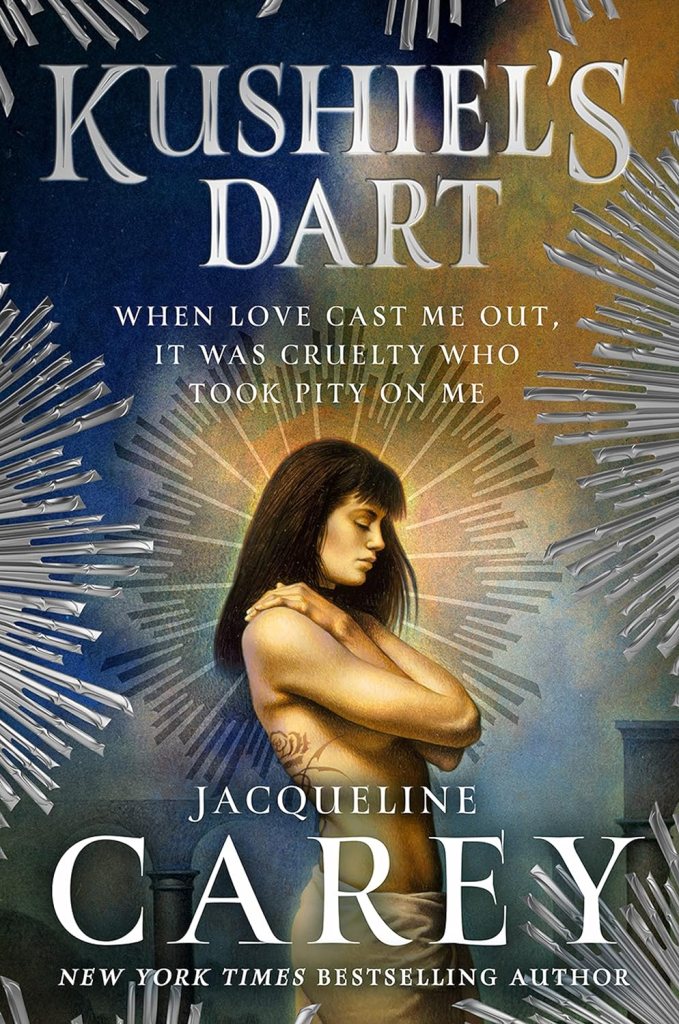
Anyway, the idea that a dude, especially a grown-up dude, was reading that book was almost too much for her to take. I can only guess at her ideas as to why I was reading New Adult Romantasy (too sexually graphic for YA, IMO). Part of the reason was that I’d seen so much about the series across social media that I knew I’d have to give it a go at some point. Part was that Jacqueline Carey teed up the genre for me back in my Belgariad days. The third part of the equation was there were no holds on it in the Libby app. The stars aligned (and not just in the Rhysand sort of way).
Warning for book one (A Court of Thorns and Roses) spoilers. Obviously, in a book review for a sequel, there will be spoilers for book one. If you haven’t read it, stop here. If you have, here we go.

A Court of Mist and Fury picks up with Feyre and Tamlin, she newly fae and he once again fully empowered. They’re engaged, they’re in love, just what’d you’d expect following the ending of the first book.
But things are not as they seem. Feyre had made a deal with Rhysand to spend one week a month with him in the Night Court (sans John Larroquette), where she’ll learn exactly who Rhysand is, and what life is like for the fae when not under Amarantha’s thumb.
Feyre not only has to deal with that bargain, but also the fame that comes with being the one to stop Amarantha. Everyone knows, and everyone is very, very grateful. And I’m not just talking about her Summer Court subjects (she is engaged to Tamlin, after all), but the fae across all the courts.
I don’t want to get into spoilers, and because the narrative structure of this book is different than A Court of Thorns and Roses, it’s hard to say more than what I already have without giving away surprises. What I will do is offer comparisons between the two.
More magic? Yes. More of the hot and sticky? Yes. Higher and clearer stakes? Yes. More fun action? Yes. More Feyre acting illogical? No, thankfully. All around, it’s a better book than the predecessor.
I spent most of the first section afraid that it would be nothing but illogical Feyre, but as soon as it switched gears I was on board. Tons of fun character development, world building, and contextualizing moments from the first book that enriched the narrative and made me like the first book more than I initially did.
Some of the non-perspective character motivations were a little shaky at times, but with so many characters, it’s hard to make everything fit snuggly. It has been the most fun read of the year so far, but it’s not without its flaws.
Which brings me to the craft subject of the day: foreshadowing.

Foreshadowing is a fairly common concept, but also very broad. Simplistically, foreshadowing is a warning or indication of a future event. But that definition implies we recognize the foreshadowing. Sometimes that’s the point, to purposefully clue the reader into something. Concrete foreshadowing. When Romeo dreams of seeing Juliet dead, the audience knows that’s how he’s going to find her. When Chekhov overtly draws attention to the gun, we know it’s going to play a role.
Other times, we’re given hints that only make sense after the reveal. Prophecy foreshadowing. Like in Sixth Sense, when the kid says he sees dead people, and they don’t know they’re dead. When we find out Bruce Willis is dead, that line carries a lot more meaning. Or even in A Court of Thorns and Roses, when there’s the line about Tamlin’s stone heart, we think it’s a common metaphor about being cold, or callous. Then we find out it’s a literal stone heart which is the key to defeating Amarantha.

Flashbacks and flash-forwards are another common medium for foreshadowing. In Hunger Games, we get the flashback of Peeta giving Katniss bread, essentially feeding her when she’s in need. Later, when Peeta needs feeding, Katniss feeds him, balancing out that act of kindness.
Next up is abstract, or symbolic foreshadowing. This is often used with setting. It was a dark and stormy night, or, a fog settled over the town. It can also be used with objects that have cultural meanings/baggage. In American Beauty, there is the iconic scene of the young girl lying in a pile rose petals, with more falling on her. Roses are often a symbol of romance and lust. In the same movie, you see the main character’s wife methodically pruning the roses in her yard. This will give us expectations about his relationship with both those women.

Lastly, we have fallacy foreshadowing, or a red herring. This is similar to the concrete foreshadowing, except it is supposed to trick the reader, as opposed to give them insight. When Obi-Wan tells Luke that Vader killed Luke’s father, that sets up the surprise reveal that Vader is Luke’s father. In Game of Thrones, Littlefinger pits Arya and Sansa against each other, readying us for a sister vs sister showdown, but they join forces and turn on him.
Foreshadowing is effective in that we have learned how to interpret the various types, and when the reveal comes, we are pleased or satisfied. When foreshadowing doesn’t work is when it tries to be one type, and ends up falling flat, or turns into another type. When you set up a proper foreshadow, you essentially make a promise to the reader. If you don’t fulfill that promise, the moment falls flat, and you lose that reader’s trust.
As I mentioned earlier, Sarah J. Maas handles foreshadowing well in the first book, especially with that stone heart moment. There are good instances in A Court of Mist and Fury as well (the one that stick out involves her sisters), but also a mishandled one that, for me, kept me at arm’s length the rest of the story. I won’t give it away, I’ll just say it involves “merfolk”, so you know what I’m talking about when it happens.
So how does A Court of Mist and Fury fare with the Author’s Arsenal?

For world-building and setting, A Court of Mist and Fury earns The Scroll. We had a taste of the fae world in the first book, and we really delved deep and explored so many new locations and cultures, in addition to expanded on what we already knew.
And for character building, it earns The Seal. Many of the characters were presented in new light, and grew to be much more than they were before. The relationships between Feyre and her companions (and their relationships with each other) are was drive the narrative and suck the reader into this world Maas has created.
Unlike some other books I’ve read recently, I’m looking forward to the next installment. I’m just hoping Elain becomes more than just a pretty mannequin.
Side note: If I had the time and energy, I’d have tied The Belgariad into the review’s ending, a sort of foreshadowing. But it has been twenty-plus years since I’ve read them and it’s hard to remember specific details. Forgive me. 🙂
 Eric Taveren