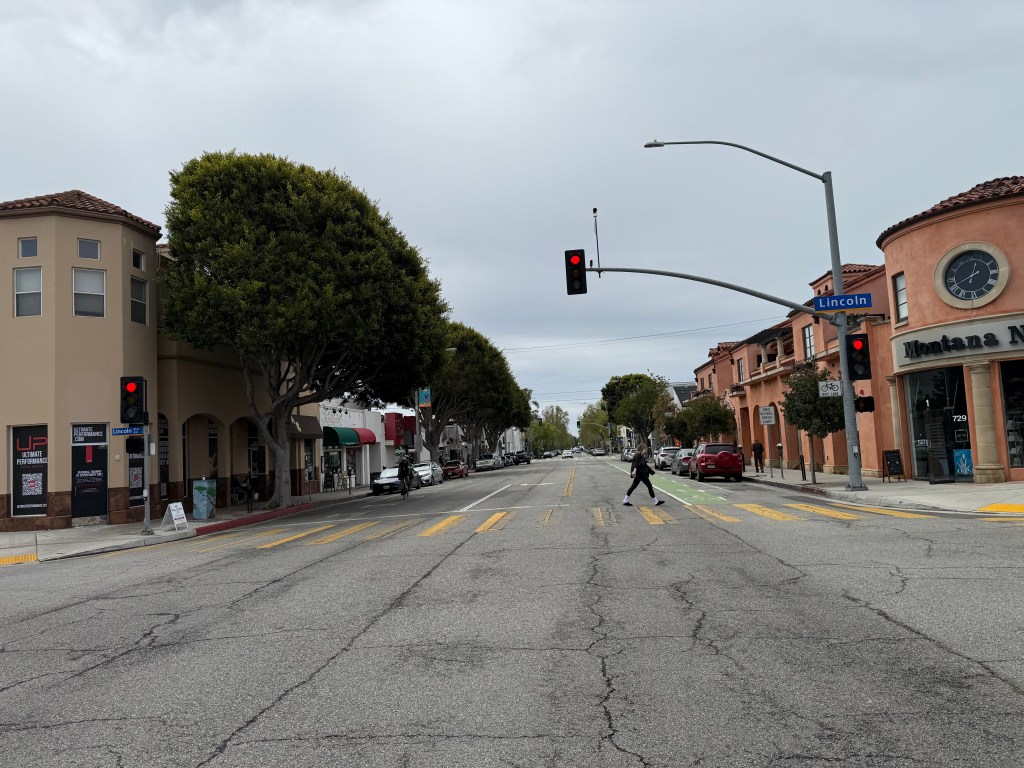
On the Streets in Santa Monica, and Thesis too.

Two weeks ago I flew to LA to attend this year’s AWP Conference and Bookfair. AWP itself was about the same as usual: some good panels (yay Juan Carlos Reyes), some not-so-good panels (I’m too nice to name names), and too many books finding their way into my backpack (who’s excited for Gods?!).

A few AWP firsts:

  • Someone asked if I’d be interested is doing a reading next year 🙂
  • One of the people I split a hotel with head-butt me in their sleep 😦
  • I wrote and submitted a piece while at the conference 🙂
  • I took an extra day strictly for research 🙂

I mentioned in an earlier post that I had a conundrum with my current project. It takes place in LA and I started writing the pieces before last year’s fires. I had no idea how I should address them in-story. So I took the opportunity to talk with locals and get see what the fire was like for them, how it affected the areas I was writing about, and from there I had to make my decision.
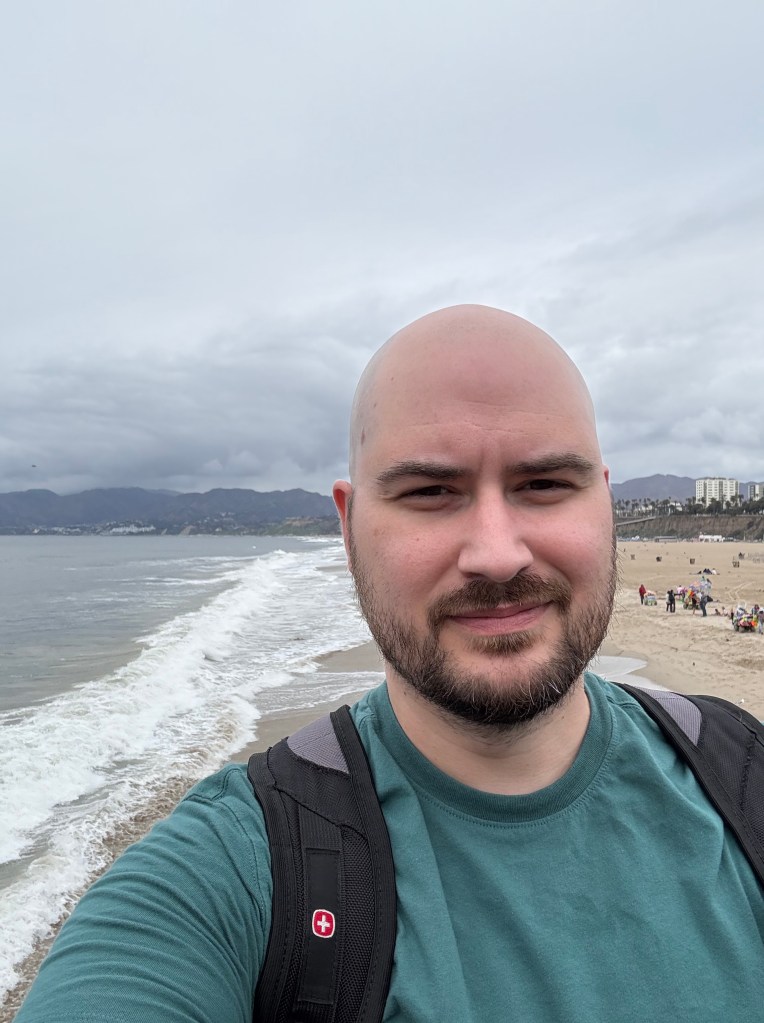
One thing that worked in my favor, specifically regarding the ability to talk to people uninterrupted, was that it was overcast and a little drizzly in the morning. That meant I only had to try a little to not bump into people as I walked on the Santa Monica pier. I talked with one of the employees there, because the tourists outnumber locals 99 to 1, and he said on nice day everyone on the boardwalk is shoulder to shoulder the whole way through.

From the pier I needed to head to Montana Avenue, which wasn’t too far away. This was, of course, after walking a fair amount to find the bus to Santa Monica and walking along and around the pier. I’d read up on the area online, but seeing it in person was incredibly beneficial. One, I didn’t realize how much foot traffic there’d be. I’m used to Grand Ave in St. Paul, where parking is a nightmare because nearly everyone drives there and so much of the walking is to and from vehicles. Not the case on Montana Ave.

As with the pier, nearly everyone was a tourist. The only locals I found were employees of the stores, old people sitting outside of coffee shops, and shoppers at Whole Foods. I made the rounds, stopping at a few specific locations that I plan on incorporating into the story, and got a much better idea of the pulse of those dozen or so blocks.

The most interesting thing I found wasn’t something described online at all. Approaching from the west, the shops spring up almost out of nowhere and look new and fancy. Approaching from the east is the same experience. But there’s a little section in a middle, only a few blocks long, where the buildings, though still nice, have a distinct ma and pa shop feel to them. I didn’t feel like they were tailored to the trendy elite of the area.

My exploration kept me going for a while. A long, long while. At one point I checked my steps and swore out loud when I saw it read 20000 steps. By the end of the day, I’d walked nearly fourteen miles.

Those who personally know me know I’m not in bad shape. But they also know I’m not in walk fourteen miles in one day out of nowhere shape. Oh man did I hurt afterward. But it was worth it. I got home, used my research to update my thesis, and dropped off the printed copies this past Monday. I may have killed a tree in the process of printing them, but it’s for a good cause.

Now I wait a month until my thesis defense. I’m not worried, but waiting that long for anything can be a bit much. So maybe I’ll take a mental break and write a short story. Horror sounds good…

Until next time.

Los Angeles: A Setting Conundrum

Last spring I decided to have a portion of my novel take place in Los Angeles. One chapter would be closer to downtown, and two chapters would be in Santa Monica. I’ve never been to LA, so I did a bunch of research, found some locations that worked well for theme and ambiance, and went to town.

Then I found out AWP would be in LA this year. Perfect! I’d extend my trip a day, and see my locations in person. I could talk to people, get a feel for the community and the culture and really lend some authenticity to these chapters. Then the fires happened.

I don’t feel I need to go into detail as to how the fires have impacted the LA area, and how terrible the situation is. Everyone sees the news and social media posts. It’s bad, I acknowledge that, and I know the problem I’m about to pose is nothing compared to what they’re dealing with in LA.

What I’m struggling with is how this will impact my story.

The way I look at it, and this can apply to any setting where a significant event has occurred, is I have three options on how to proceed. The first is the easiest: pretend it never/hasn’t happened. I write fiction, so I can take liberties with the when of a story, or even the very world. I could set this pre-fires, create an LA that until very recently is the LA that most people know. All that would take is incorporating my trip research as I’d already planned, and either defining a year of the story (summer 2024 and earlier), or just pretend my areas were never impacted by the fires.

Option two is probably the hardest: incorporate the fire, including community impact. Given my knowledge of LA is based solely on media and research, this is the most daunting. When I go there in March, I’ll see firsthand the impact of the fires in the communities, especially the locations I’ve chosen to be in my story. By talking to people, I’ll hopefully hear what Santa Monica used to be like, the struggles they’re facing as they rebuild, and how they (individually and collectively) are moving on. My character’s family has a business on Montana Ave, so this could present a good opportunity to show community involvement, as well as allow for any creative liberties with building size and placement.

As daunting as effectively portraying that community will be, another concern I have is that it might look like I’m exploiting the community for my narrative. A terrible thing has happened, why not shove it into a story for emotional appeal? Right. Obviously that’s not the goal, as I’d already decided to use Santa Monica well before the fires. But I can’t deny that including the fire aftermath would inherently create an emotional hook for some readers. As writers, creating emotional connections with readers is the goal, the concern is that it might look like I’m taking advantage of a bad situation.

The third option is to have it take place elsewhere. I’d chosen LA because I needed a large city that wasn’t New York (where a healthy chunk of the book takes place), and I was looking for a certain vibe of wealth (Ch. 1) and then a nearby trendy shopping area with a more laid back feel (Ch. 2-3). I’m sure that combination exists elsewhere, but picking somewhere else would be learning a new location, researching it, adapting the narrative to account for it, etc. Definitely more work than option one, probably less work than option two.

So that’s the conundrum. How do I deal with a real natural disaster in my writing? Do I take the easy way and ignore it? Do I remove my story from the location entirely so the disaster has no bearing whatsoever? Or do I try and incorporate it, risk sounding exploitative and try to put some real truth into a piece of fiction?

AWP is at the end of March, so I still have some time to decide, but I need a completed draft by late April. Whatever decision I make, I’ll have only a few weeks to incorporate it. Maybe talking with locals will help make that decision for me. Maybe talking with other writers can give me some insight. Right now, I’m leaning toward including the fires, to have a very real way to tie my character into the community, but we’ll see.