So, I officially hate Brent Weeks. Not actual hate where I wish him harm or anything, but more in the “man, you’ve made my life inconvenient” sort of way.


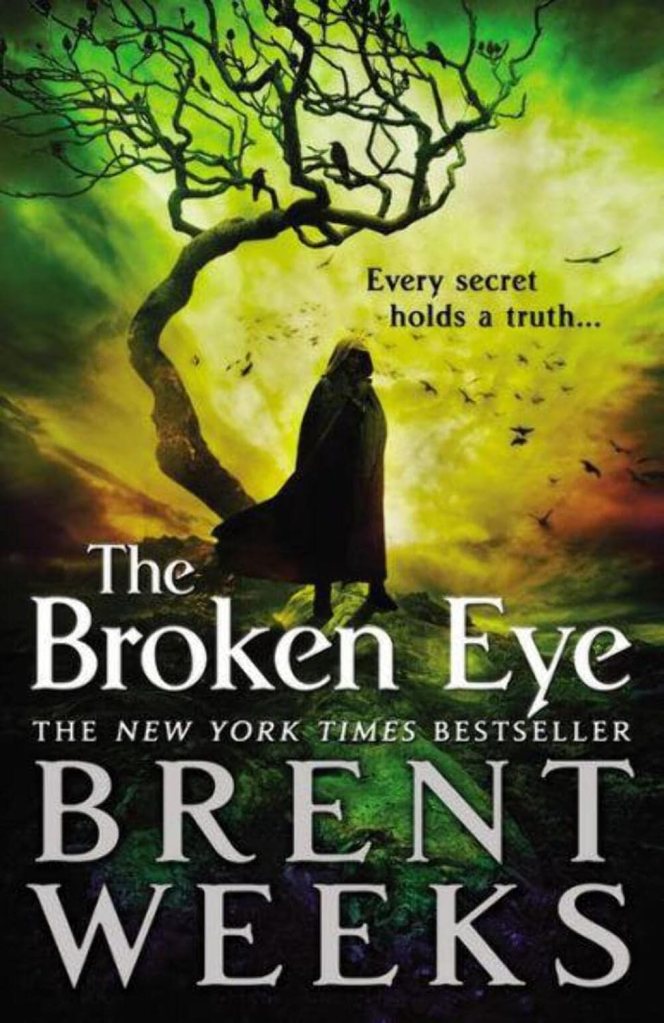

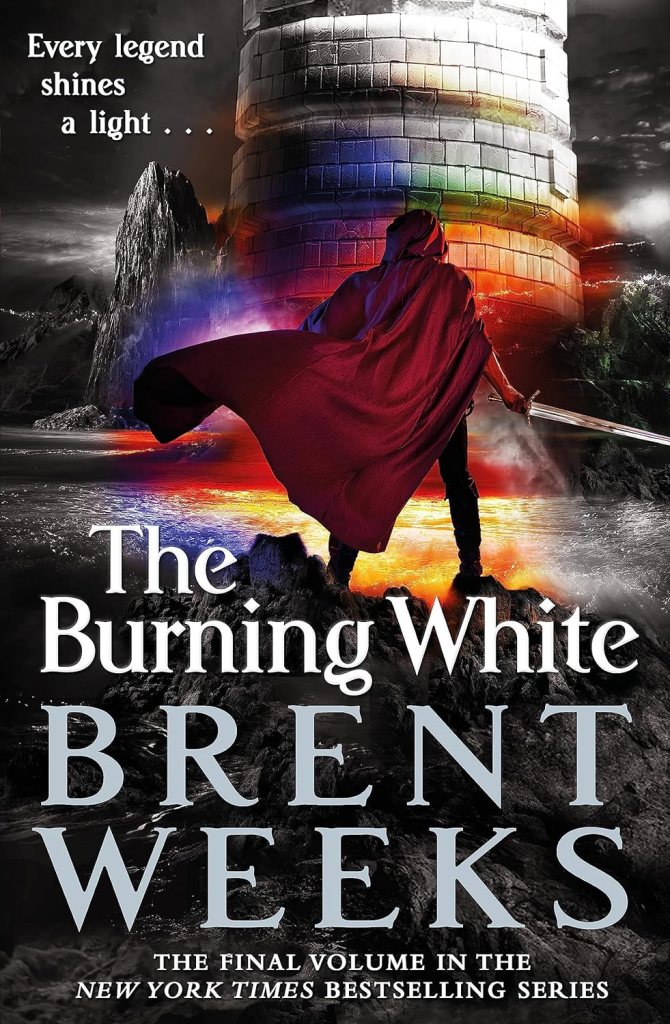
The Blinding Knife is the second in the Lightbringer series, following The Black Prism. My hatred stems from his magic system and world building. Eight years ago (I know, because I have my notes), I came up with this fun magic system involving the color spectrum, where people have different powers based on the color of light they’re exposed to. That’s super simplified, but the basic premise. I told my idea to Gavin, one of my fellow MFA students, and he was like, “Oh, like the Brent Weeks books.”
Say what? I’d never heard of Brent Weeks at that point, and the idea that someone had already published a magic system that was the same as the one I’d just spent a ton of time working on was disheartening. At the end of the semester that classmate gifted me a copy of The Black Prism so I could see what similarities existed. And because he really liked the book.
Flash forward to this past summer. I hadn’t read The Black Prism yet, not because I didn’t want to, but just because of its placement on the “to read” list. I was thinking about another story, and I mentioned to my wife that creating a base number system based on the story’s pantheon seemed super neat, especially when information could be interpreted different ways. I put some work into that, but mainly it was an idea to come back to.
Then I started reading The Black Prism in the fall. And yes, the magic was based on light. To my relief, that was where the similarity ended. How the magic functions and is tapped into is completely different, but any chromatic based magic system I use will still be seen as less novel because of The Black Prism’s existence.
Then I read The Blinding Knife these last couple of weeks. And guess what it introduced? A base number system based on the story’s pantheon. My jaw dropped as it was explained in-story. Are you kidding me, Brent Weeks?! A friend of my is now joking that I read the entire series in the past and have shut it out of my conscious memory. He’s waiting for my next idea and for it to be something from one of the next books. Sigh.
But, as much as I can joke that I hate Brent Weeks, I am thoroughly enjoying his books. So, let’s review The Blinding Knife (with minimal Black Prism spoilers).
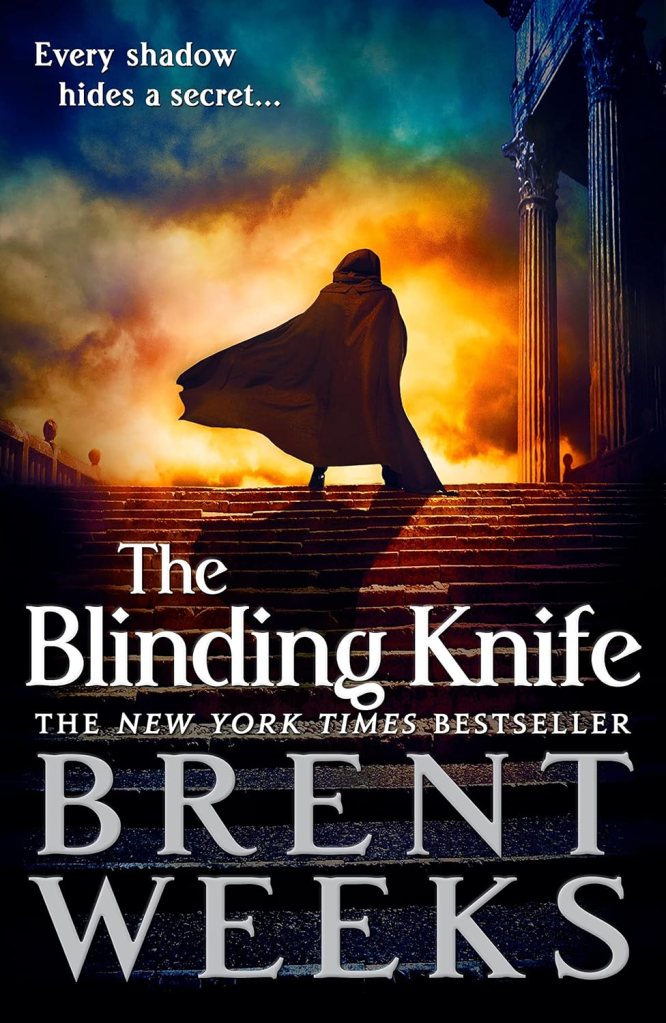
The Blinding Knife picks up immediately where The Black Prism left off. Kip, Gavin, Karris, and Liv each leave Garriston with their own revelations about themselves and their companions. Kip is struggling to find (and earn) his place in the Chromeria, while the shadow of his father looms over him. And he’s got that fancy knife. Gavin’s mortality clock has advanced and he still has most of his great purposes to fulfill. Karris knows, and boy is that conflicting. And Liv is seeing things in a new light *ahem* and needs to reconcile what that’ll cost.
A few new characters are also introduced as Kip learns how to use his magic, and those relationships are clearly setting up more drama in future books. The Colors are dragging their feet and Andross Guile is still a world-class douche. A card game is introduced that becomes important for multiple reasons.
One of the more interesting aspects of the second installment is how the magic system is able to expand without (usually) feeling like deus ex machina. Weeks uses a simple but effective tactic for this: everything we’ve learned is what the Chromeria has authorized. In other words, there are secrets to the magic that rebels, color wights, self-taught drafters, etc., can, in a narrative sense, spontaneously use, in a way that doesn’t feel like cheating on the author’s part.
We also dive a bit deeper into the religion of the world. In the first book, we heard Orholam’s name prayed to and cursed with all the time. Now we are introduced to the concept of the Old Gods. Religion becomes a central arc for one of the main supporting characters and drives much of the action in the story (as it does in the real world).
Another aspect that impressed me was the escalation of stakes. For example—and without giving spoilery details—there’s a romance between two characters. And it’s not working. Then, yay, it’s going to happen! Then, shit! Oh, it’s doomed. Then, yay, it is happening. Then, shit shit shit, there’s no way it’s happening now. I won’t say how it ends, but the escalations kept me on my toes and very concerned for the outcome of the characters.
I think the part I enjoyed the most about the book wasn’t something I was actively aware of while reading. And that’s the point, and the goal of fiction. I became so immersed in the story, in the world, that I was happily along for the ride. I didn’t stop to analyze or think about what was happening (that happened when I wasn’t reading), I was able to sit back and just read.
As with the first book, and as to be expected in epic fantasy, there are fight scenes galore. Most are small, some larger, and of course there’s always the climatic confrontation. These scenes didn’t exist merely to have physical conflict. There is a narrative and/or character purpose for each. And each does double duty to delve further into the magic system and the world the characters inhabit.
And that brings me to the craft topic of the review. I just said that fights are a staple, and being such, there’s the risk of a dime-a-dozen feel. That doesn’t happen here because of *drum roll* specificity.

Specificity is the cure for the common trope. It allows you to take any idea and make it your own, no matter how common or overly used. For example: You ever hear of Star Wars? Hunger Games? Interview with the Vampire? Wizard of Oz? What do they all have in common? They all follow the same story arc. Almost exactly the same. What makes them different? The details. Specificity.
I know that’s a very broad brush with which to talk about details making stories unique. Let me use another example, this time from The Blinding Knife itself. I’d mentioned the introduction of a card game in the world of the story. It’s called Nine Kings. As I was reading the story I was engaged with the cards and their descriptions, as well as the strategy Kip employed while playing. There are so many different cards that there can be different decks, and each deck is normally themed around a color (the colors of the Chromeria). I recall having the passing thought at one moment that it reminded me of Magic the Gathering, but then the story moved on and so did I.

Well, as it happens, Brent Weeks was introduced to Magic the Gathering after writing the first book, but before writing the second. He enjoyed the game so much, that he wrote his own version of it into the sequel. Now, for those who don’t know, I am very into Magic the Gathering. I’ve played since middle school and have two massive library card catalogs filled with cards. Even with my massive history and knowledge of the game, I only had the briefest of moments of recognition with Nine Kings. Why? Specificity.
Weeks was able to take a concept that I was very familiar with and tweak it, adding detail after detail after detail in order to make it unique and distinct. This can be done with anything, no matter the source material. Have a character with a physical ailment/limitation? That’s nothing new. But if you’re specific about it, it becomes part of the character, as opposed to a descriptor of the character. Tomorrow and Tomorrow and Tomorrow’s Gabrielle Zevin spent chapter after chapter on Sam’s ankle/foot injury, and we were given a character whose physical limitations impacted the story in unique and heartbreaking ways, different from any other character with a physical limitation.
Depending on your choices, you don’t need to spend chapter after chapter on those details, but you need enough to make whatever concept or decision you’ve come up with fully your own. I say that I hate Brent Weeks because of the similar ideas, but the key to making that not an issue is specificity. We can both have magic related to light, but the how, the why, the drawbacks and benefits, all the nuances a magic system needs are what will separate them and make my story stand apart. Specificity.
Now, time for the big reveal. What tools in The Author’s Arsenal does Brent Weeks wield in The Blinding Knife?

For exceptional storytelling/narrative, I award the Quill Pen. There are a lot of balls for Weeks to juggle, a lot of motivations playing against one another, and it all flows so smoothly that the complexities don’t bog down the reader.
For depth and richness of theme, I award the Inkwell. Colors. The Light Spectrum. Wavelengths. What seems like a limited concept has been integrated into the world so richly that we’re fully on board with this unique magic system and how it colors *cough* every aspect of life in that world. Each color means something, and the characters act and react appropriately based on those colors.
And for world-building and setting, I award the Scroll. It sort of overlaps with the theme award, but I can’t say enough about the fully realized world we’re given and all the minutia included to ground that world and make it real. Details. Specificity. It’s all there.
A Blinding Knife has been the most enjoyable book I’ve read all year. My jaw literally dropped, I couldn’t put it down, and my wife more than one time had to sit through me retelling her aspects of the plot she had not one iota of investment in. Good times.
And there you are. If you have a suggestion for a review, feel free to drop it in the comments or send a message.

 The Quill Pen. This will be awarded for exceptional storytelling or narrative.
 The Inkwell. For depth and richness of theme.
 The Parchment: For the quality of writing style and prose.
 The Seal. For character development.
 The Scroll. For world-building and setting.
 Eric Taveren