I want to start this review off with a disclaimer: I am in no way professing to be a Shakespeare expert. Am I smarter than the average bear regarding The Bard? Yes. Evidence: I subbed a high school English class a few months back and they were studying Romeo and Juliet. A couple of kids said they were shocked by the ending, and I was like, what? He literally told you it was going to happen. At the beginning. Like a bad movie trailer. Then I recited the prologue from memory.
While not an expert, after majoring in English and Theatre Arts, I’ve got a healthy bit of Shakespeare under my belt. And of all his plays, my favorite is The Tempest. I, for kicks and giggles, rewatched my Blu-ray copy of Helen Mirren’s Tempest a few weeks ago. I have a fairly detailed character work-up and world-building done for a Tempest retelling of my own I’d like to write. L. Jagi Lamplighter’s Prospero’s Daughter trilogy is on my shelf, patiently waiting its turn. So you can imagine my excitement when I heard about Jacqueline Carey’s Miranda and Caliban.

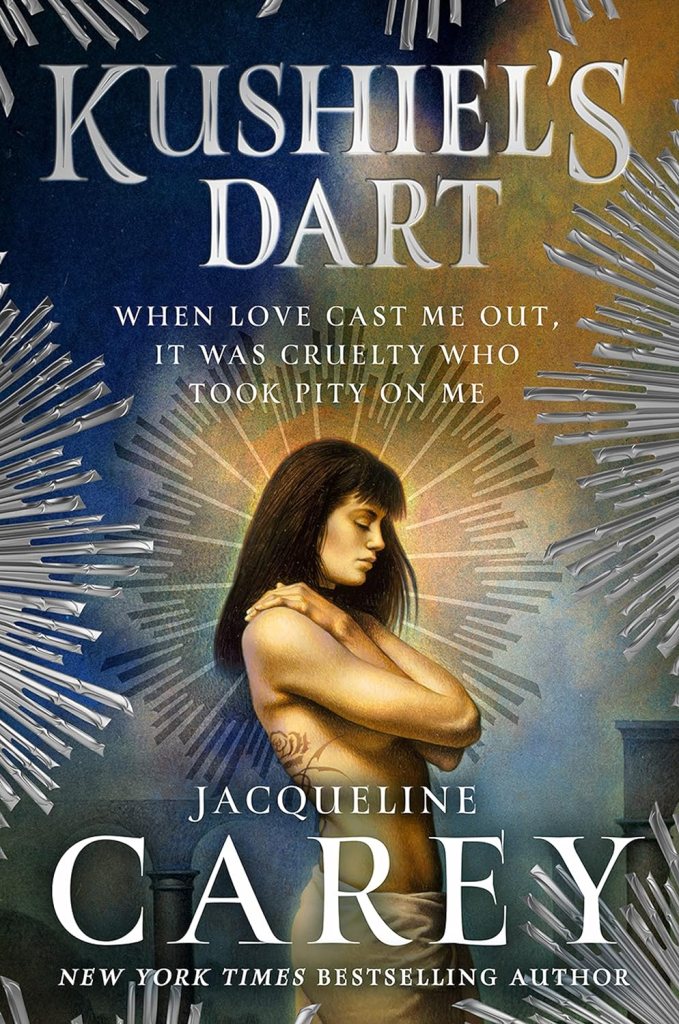
My first exposure to Jacqueline Carey came back in high school when Kushiel’s Dart was published. It’s an alternate history set in France, with fantasy elements. It was steamy. And BDSM-y. 2001 me definitely was not expecting what I’d stumbled across. Kushiel’s Dart was Romantasy before that was even a term. So when I picked up Miranda and Caliban and saw their physical closeness on the cover, you can imagine the expectations that bloomed in my mind.
Those expectations immediately ran into a brick wall. For those who haven’t read The Tempest, let me give you a very truncated version: Prospero, the rightful Duke of Milan, and his daughter Miranda are marooned on an island, having been nefariously exiled by his brother Antonio with the help of the King of Naples. On the island with them are Caliban, a monstrous-looking native, and Ariel, a powerful sprite, both of whom serve Prospero against their will.
With Ariel’s help, Prospero conjures a storm that shipwrecks his usurping brother, the King of Naples, and the King’s son Ferdinand. Prospero orchestrates events to lead Ferdinand to fall in love with Miranda. Meanwhile, he confronts the conspirators, leading them to repentance, avoids an assassination plot by Caliban, and ultimately forgives his enemies. He renounces his magical powers, frees Ariel, and prepares to return to Milan to reclaim his dukedom.
All’s well that ends well.
The problem I had at the get-go was this line from The Tempest:
Filth as thou art, with humane care, and lodged thee
In mine own cell, till thou didst seek to violate
The honor of my child.
Act 1, Scene 2, Lines 349-351
Basically, we learn that Caliban at one point tried to rape Miranda. And that he’s not sorry about it. So with this line in mind—with Miranda and Caliban being a love story—Ricky Ricardo started shouting in my head: “Carey, you got some ‘splainin’ to do!”
I never want to give spoilers, so I’ll just say what my expectation was for how this could work out. Prospero is the one who says Caliban tried to rape her, and Caliban (who is said to not have the greatest command of English) says he wishes it had happened. Miranda does not corroborate Prospero’s claim. The only way I could see this working was that they were in love and were just about to do the dirty, when Prospero walks in. He assumes it’s rape, when in actuality it was consensual.
That was my guess. I won’t say how it played out, except that Carey’s story makes sense regarding that line. There was another sticky part that I hadn’t thought about initially, though its problematic nature became very clear. Prospero and Miranda have been stranded on the island for twelve years. She was three when they arrived. That means she’s currently fifteen years old. Caliban was already there and living on his own, and he’s now nineteen years old. For them to have a relationship, especially a physical one… that’s a bit dicey.
With Carey’s retelling focusing on everything leading up to The Tempest, we’re able to see Miranda and Caliban’s relationship grow and bloom into something almost beautiful, contrasting well with the island and the demands of Prospero. What I enjoyed the most was the integration of magic into the story. In the play, Prospero does *hand wave* MAGIC. No explanation, nothing beyond the play telling us so. In this novel, we learn how the magic works, and what all the characters go through as a result of this magic.
It’s also fun to get internal monologues, character reactions, and thoughts to give deeper meaning to their relationships. Yes, actors can convey much on stage, but the text of Tempest, as with plays in general, is limiting. It’s the nature of the medium. But here, instead of actors conveying the story, Carey does so via the novel.
The only quibble I have with the novel is regarding the relationship logistics and my modern sensibilities. When they’re younger, we know there’s an age gap, but all their interactions are innocent. Friendly. As they get older, we learn the exact gap: four years. Of course, there can be the arguments of being historically accurate, or accurate based on the source material, but with adaptations, there’s always room for leeway. Creative liberties. Every reader’s sensibilities vary, but for me, the age gap might have been a good area to fudge.
And that brings us to the topic of the day: adaptations.
We’ve all seen direct adaptations of books: Harry Potter, Lord of the Rings, Gone Girl, etc. You’ve likely even seen direct adaptations of Shakespeare, like the Leonardo DiCaprio Romeo and Juliet, or the Keanu Reeves Much Ado about Nothing. I want to talk about adaptations that use the source material as a springboard as opposed to a script.



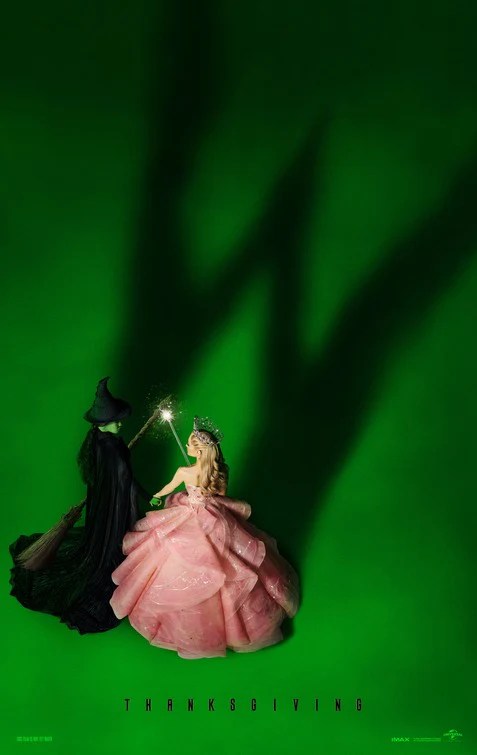
An interesting adaptation that comes to mind is Wicked. Gregory Maguire’s novel was adapted from the original Wizard of Oz novel. Specifically, the story of how Elphaba came to be the Wicked Witch of the West. Wicked was then adapted into a musical. That musical is now being adapted into film. But if we’re talking about Shakespeare, look at Lion King. Or 10 Things I Hate About You. Those are adaptations of Hamlet and Taming of the Shrew.
Or, if we want to look at novels, A Thousand Acres by Jane Smiley is King Lear. Fool by Christopher Moore is also King Lear. Moore’s protagonist also headlines two more Shakespearean adaptations, A Serpent of Venice and Shakespeare for Squirrels, the first being a combination of Merchant of Venice and Othello, the other A Midsummer Night’s Dream. Then there’s Shylock is My Name by Howard Jacobson, very clearly Merchant of Venice. And those are just the ones off the top of my head.

But what’s the point of adaptations? Why do we have them? It’s hard to speak on the motivations for others, but for me, it’s about the love of the story and characters. I doubt Christopher Moore woke up one morning saying, “Man, I hate that King Lear garbage. I should do it better. And raunchier.” More likely, given the sequels, he has a love for Shakespeare and wanted to share that love with an audience that may not have been as open to The Bard.
That’s another reason right there. Audience. This can work two ways. First, it can tap into a fan base that already exists. Had I picked up A Thousand Acres and read about a dying farmer and the drama revolving around what’d happen to his farmland, I’d have chucked that across the room and not looked back. But when I was given it and told it was King Lear, I was all, “Ooooh, interesting…”
The flip side is introducing readers to Shakespeare who have zero interest in him. You wouldn’t believe how much groaning and complaining I hear during the Romeo and Juliet sections in high school classes. But If I gave the kids who like dick jokes a copy of Fool, and the ones interested in modern fiction Shylock is My Name, all of a sudden you’ve got people invested in the stories of Shakespeare.
What makes an adaptation though? In Miranda and Caliban, Carey created a whole narrative to give context to the relationship between the titular characters, something portrayed in the original text as him lusting after her. Moore’s Fool takes us through the events of King Lear, but through the eyes of Pocket, and takes great liberties with the fool’s relationship with the other characters. Smiley’s A Thousand Acres’ setting is completely separate from King Lear’s, but runs through the same plot and character concerns. Each is an adaptation, and each is done differently.
As someone who has plans to write a Shakespearean adaptation, I can say that my goal is to introduce new readers. There’s not a ton of overlap with sci-fi and Shakespeare, so that could be a fun demographic to tap into. Also, as I said at the beginning, The Tempest is my favorite of his plays, so a love of the source material goes a long way.
So, with this broad understanding of the purpose of adaptations, how does Miranda and Caliban hold up? How does it fare with the Author’s Arsenal?
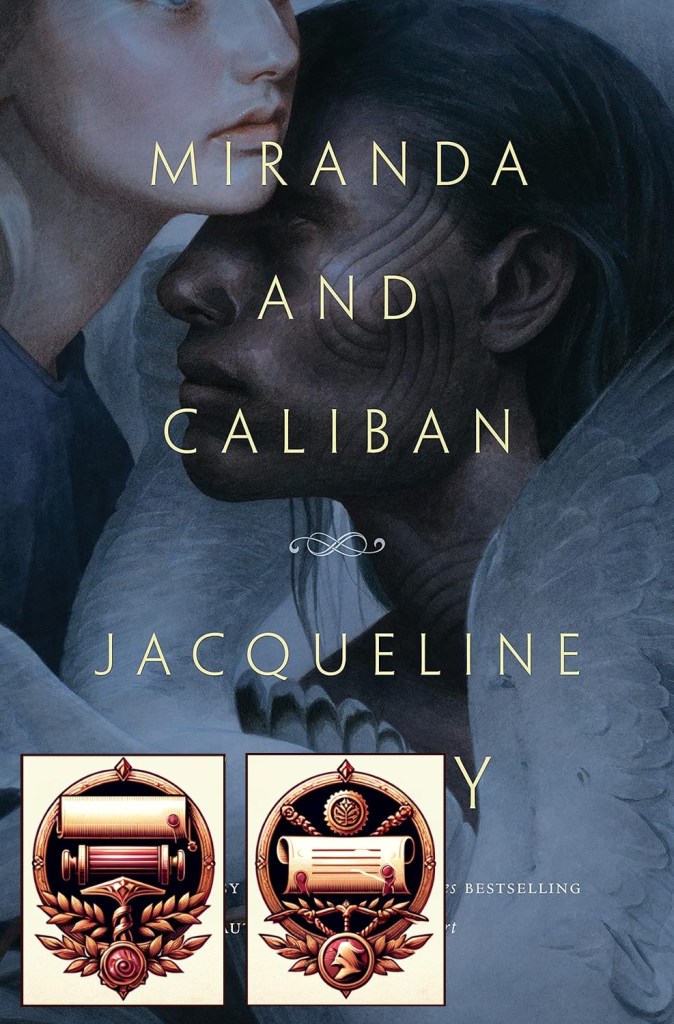
For exceptional character development, giving new depth to established characters, I award The Seal. For world-building and setting, giving life to an island and magic almost entirely unspecified in the play, I award The Scroll.
For non-Tempest readers, Miranda and Caliban is an engaging introduction to the world of the Tempest. For Tempest fans, it adds much more depth to the characters, Prospero and Ariel included. Jacqueline Carey has done a fantastic job of creating a narrative that will satisfy those familiar and unfamiliar with Shakespeare alike.
That’s all for now. As always, let me know if you have a book I should review.





 Eric Taveren