
I read a lot of books. A lot. Most of the time as I’m reading, I’m simply enjoying the words in front of me. Sometimes I’m slogging through them. Infrequently I’m blown away by what’s in my hands. When I read Olivie Blake’s The Atlas Six last year, I was blown away. Yes, as you’d expect, the writing was good. But what thoroughly engaged me was the breadth of knowledge across fields of study and the application and integration of that knowledge in the story.
I immediately burned through the second book, The Atlas Paradox. It built on much of what had been established in the first book, upped the stakes, contextualized and humanized some characters, and was a worthy successor to the first one. Then I was sad because I had to wait until the third one was published.
And so here we are now, The Atlas Complex is out, and I have thoughts. As always, I strive for spoiler free reviews, but I do want to note that the only way to talk about this book is to spoil parts of the first two. If you’ve read them, then you can proceed safely. If you haven’t, and the blending of the psychology and morality and philosophy of magic sounds interesting, then go get a copy of The Atlas Six. Right now. Like, stop reading, and do it.
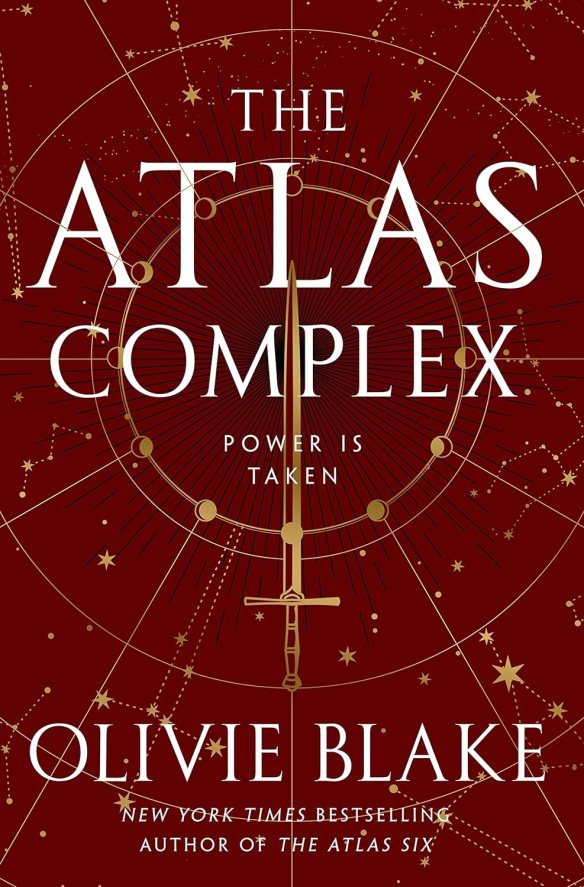
The Atlas Complex follows our favorite sextet (and their add-ons) as they try to make sense of their new (sort of) freedom. Libby is back from the past and a newly minted mass murderer, Parisa is shacking up with Dalton and scared of her own mortality, Reina and Callum are off playing God and trying to fix the world (good luck with that), Tristan’s trying to figure out where the hell Atlas went and how he’s supposed to handle the Archives, and Nico just wants everyone to be friends.
As with the first two books, the entire narrative focuses on the characters and their journeys. The plot is their relationships with each other. The story is their relationships with each other. The trouble is their relationships with each other. You get the idea.
Some of our questions from the prior books get answered. Libby and Nico: Will they or won’t they? Callum: Does he care about anything? All of them minus Libby: Who hates themselves the most?
One of the more interesting aspects of the third installment is how much more screen time side characters get. We get inside Dalton’s head (in a non-literal sense this time). We get to see how Gideon’s handling everything with his mom and Nico and Libby and a few other issues rearing their ugly heads. And, we get brief snippets from members of The Forum.
What does this mean? The driving force of the trilogy is the character work Blake presents us with. In the afterward of this book, she talks about how her goal was to write a story where the characters and their relationships became the plot and story. That strategy was what made the first book so novel (at least to me), and the second and third followed suit. The problem is that when something novel is done repeatedly, it starts to lose that novelty.
Ultimately, while the characters were still engaging and interesting, their stories alone weren’t enough to conclude a trilogy. Blake easily compels us to invest in her characters, but we end up lacking reason to invest in a greater conflict.
What is the greater conflict, you ask? That’s a very good question. I wondered that too as I read this. And that brings us to today’s topic: stakes.
Why does Frodo need to destroy the One Ring? To prevent Sauron from ruling Middle Earth. Why does Elizabeth need to get married? So the Bennett family won’t go bankrupt. Why does the Cat in the Hat need to clean up his mess? Because mother will be very angry when she gets home if it’s dirty.
Regardless of the perceived severity, stakes drive narratives and characters, and are the reason characters do what they do. There are several levels of stakes that can be at play: public, personal, and philosophical. If we look at the Elizabeth example, the public stake is her family’s wealth. Pretty straight forward. The personal stake is her own pride. She believes Mr. Darcy looks down on her family for being lower rank and accepting his proposal will wound her pride. The philosophical stake is losing her belief that society shouldn’t care so much about wealth and rank.
It’s not enough to have a world-ending catastrophe to avert. It’s also not enough to overcome personal demons. A good narrative will have multiple levels of stakes, often connected or reliant on each other. Elizabeth isn’t the only person with stakes in Pride and Prejudice. Each character needs something, some motivation and something that motivates them.
An easy way to to establish stakes, at least early on as you’re figuring out your story, is to take your character, figure out what makes them great or wonderful or happy, and then decide how to destroy those things. Doing bad things to protagonists inherently creates stakes. You can tweak them or think of new ones throughout the process, but attacking their comfort zones is a great place to start.
Based on what I’ve mentioned with The Atlas Complex, it shouldn’t be a surprise that it’s lacking in the stakes department, but how did it fare otherwise with the Author’s Arsenal?
For exceptional character development, The Atlas Complex is awarded The Seal. Character is what drives this whole series, and The Atlas Complex in particular relies on character to engage the reader and advance the story.
That about wraps this up. Happy reading, have a great weekend, and stay tuned for more. And as always, if you have a book you’d like reviewed, add a comment and I’ll try and fit it in.
 Eric Taveren