Book Review: The Tainted Cup

My MFA thesis starts up this fall and I’ve decided to write a fantasy mystery (Mystasy?), because those are two genres I don’t see paired up too often. And whereas I’ve had the idea for this book/series for quite a while, I haven’t had the time to devote to it. Once I made my decision, it begged the question, what is a fantasy mystery?

As luck would have it, I was walking out of my local library and a cover on the staff recommendation shelf jumped out at me. The gold on navy with green accents pulled my eye and I found myself hushing my kid so I could read the back. I needed to know what a fantasy mystery was. The back read “A Holmes and Watson-style detective duo take the stage in this fantasy with a mystery twist, from the Edgar-winning, multiple Hugo-nominated Robert Jackson Bennett.”

I was ready to ask the question “where have you been all my life?” to both the book and the staff recommender (thanks Mao), simply from holding it in my hand. I’d instantaneously set The Tainted Cup on a pedestal without even realizing it. And it didn’t disappoint.

The story starts with our main protagonist, Din, as he investigates his first murder. He’s partnered with brilliant eccentric recluse Ana, who never steps foot on the crime scene (or out of her house for that matter). This grisly and disturbing murder is only the beginning, because as with any mystery (and transformer), there’s more than meets the eye.

I never want to give away spoilers, so here’s my brief rundown of what I liked and why you should read it:

  1. The magic system is neat. Botanical and just vague enough to be mysterious in its own right.
  2. Din’s flaws make his resourcefulness impressive. Plus he’s not too shabby with a sword. 🙂
  3. Ana’s logic is never Deus Ex Machina. There’s never any logical leaps stemming from withheld information. Everything is presented, ready for you to figure it out.
  4. Also: kaiju. Because why not.

Obviously there’s more going for it than what’s listed, but no sense giving anything away. Oh, and did I mention it’s the first in a series? The Tainted Cup just came out this year, so we’ll have some waiting to do (2025 according to google), but with the character, world, and story setup that happens in these pages, we’ll before too long be able to return to this world and continue sleuthing with Din and Ana.

One surprising aspect for me was the amount of violence in the book. And by that, I mean there was much less than I expected. Most fantasy has crazy action scenes with swords and magic and mythical beasts. Mysteries often have chases and, of course, murders. You’d think that crossing the two genres would ratchet that up a bit. Not really. And that’s not a bad thing. It wasn’t even until after I’d finished that I’d had this realization. Personal preference: I’d have loved some more fights. But it worked just fine without them.

I very much appreciated how the information was doled out to the reader. Sometimes we got the info and made the connection along with the characters. Sometimes the detail was mentioned chapters earlier and only became relevant at a later time and it was on us to remember it. And other times we were given hints at known information that wasn’t pertinent in the moment, but became a promise of a meaningful reveal later.

But how, as a writer, do you determine what information to give and when? That’s a good question, and one that applies to more than just mysteries. You might have guessed it, our craft subject of the day is:

Information Rationing.

Let’s start with characters who have information. When it comes to non-perspective characters, information rationing isn’t too difficult. People lie. Or they’re ignorant. Or they tell half-truths, intentional or not. You can pick any number of reasons why a non-perspective character will omit information, assuming it works with the story and their character of course. Bilbo doesn’t tell Frodo the details of his ring. The Dursleys tell Harry his parents died in a car crash. The International Fleet doesn’t tell Ender those aren’t just games. They’ve got reasons, and those reasons make sense for the characters and the plot.

Perspective characters are trickier. When Katniss has that flashback about Peeta giving her bread, we learn something about the both of them that impacts the story later on. That memory is triggered and she conveys that information to us. But what if we she withheld that memory? The characters’ connection later on wouldn’t make as much sense.

Even more to the point, take when Penelope is truly shocked about something Lady Whistledown said. It doesn’t make any sense. She is Lady Whistledown. The character’s knowledge of her secret role is hidden, even in her POV. Unless there’s a Fight Club situation going on, she would reasonably have thought once or twice about the fact that she is the one writing gossip.

An effective way around this is for the character to be cognizant of the fact that they have information, and then move on. Everyone has secrets, but let’s say we’re in your head, and your secret comes up. You’re not going to not think about it. That’s silly. And unrealistic. And it loses the reader’s trust.

In The Tainted Cup, there’s a situation just like that. Din (and this isn’t really a spoiler since he thinks about it right away in chapter one) has somewhat regular thoughts about not wanting Ana to find out what he did, or what his limitations are. We eventually learn the truth, and all his actions make perfect sense because of it. But we don’t feel cheated as the reader, because Din was honest with us about what he knew, and we knew why he wasn’t going into specifics.

And beyond character information, there’s story information. One way story information is distributed is via the plot. For the longest time, those two terms were synonymous in my head. The way I like to think about it now is the story is what happens. The plot is the order in which we see it happen. In Edward P. Jones’ The Known World, we see the story of this fictional county through the lives of its many inhabitants. The stories are given to us in bits and pieces, from character to character and back again. If all those characters’ stories were told chronologically, one at a time, we’d still get the whole story, but we’d lose so much context and interconnection as we experienced each one. The rationing of information, the order in which the story is told, is was makes that story great. One of the many reasons, actually.

And of course we have to talk about mysteries. Finding clues, finding information, is what those books are all about. There are probably a ton of different ways to go about it, but I like to look at a mystery’s disbursement of information like a family tree. A likely incestuous family tree, but you get the idea. At the bottom is, for the sake of the analogy, you, the inciting incident, the moment that kicks the story off. From there we branch up to the parents, the clues we find. Some people only have one parent, some have two or four or even more. And those parents don’t exist in a vacuum. They have parents and cousins and aunts and uncles and secret lovers and all that.

But how do you know just how many parents your story needs? How many different people is your grandpa going to make kids with? For that, I start at the other end of the family tree. Your great great great great grandparent, for example. The bad guy. I need to figure out what they did, who they did it with, and why they did it. Each of those is one of their kids. Each of those kids will have their own motivations and actions and relationships, making kids of their own. Sometimes those kids will meet, sometimes they’ll get a little incestuous. But before long there’ll be this massive family tree of plot, all leading to the bad guy. You just need to find one of the bottom descendants and start your story there.
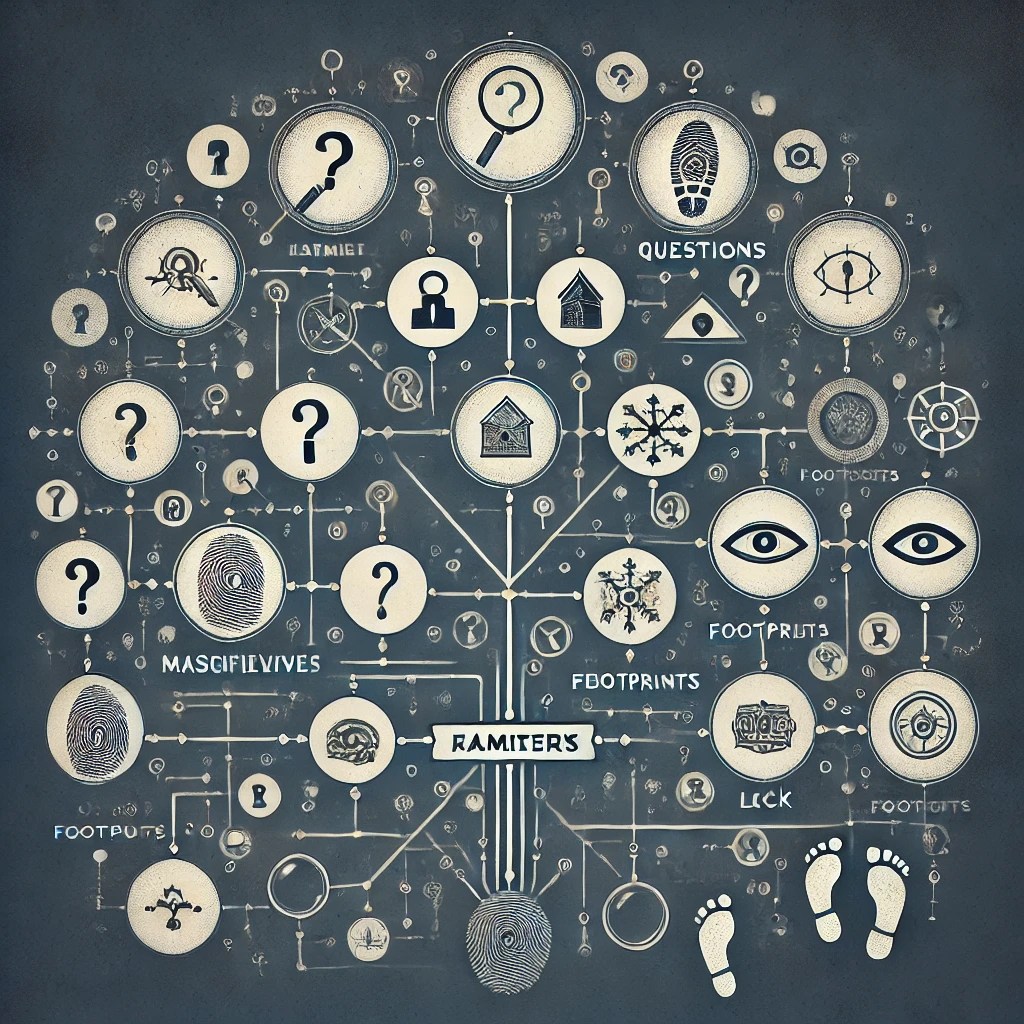
As with any incestuous relationship, the goal of the participants is to keep it hidden. Your protagonist needs to figure out which cousins did which cousins, and why. Surely it wasn’t just because of a pair of big brown eyes. Right? Right? Treat each step of the family tree as a new secret. Some won’t be hidden, they’ll just need to be traced. “Ohhhh, that’s who my great-grandma was.” Others will definitely be hidden and will take a bit more work. “Aunt Peggy did what?!” But once all the tree has been revealed, each clue, each relationship, will make sense and support the structure of the entire tree.

Wow. I had not planned on that analogy, especially not as much lover from the same mother. But I think it works. And you know what else works? The Tainted Cup. Without further ado, here’s how The Tainted Cup fares with The Author’s Arsenal.

For excellent character creation and portrayal, I award The Seal. Ana definitely is set up to be a big player in future books, but Din especially shines. For phenomenal world-building, I award The Scroll. The ecology of the world alone is astounding, but add in the politics and history and classism… very nice. And for brilliant storytelling, I award The Quill Pen. In order for a mystery to work, the storytelling has to be on point. And it very much is.

If you you’re a fan of either fantasy or mystery, and especially if you’re both, I highly recommend picking up The Tainted Cup. I don’t think I’ve read anything quite like it, and I’m certainly glad I did.

As always, feel free to let me know if there’s a book you want reviewed.

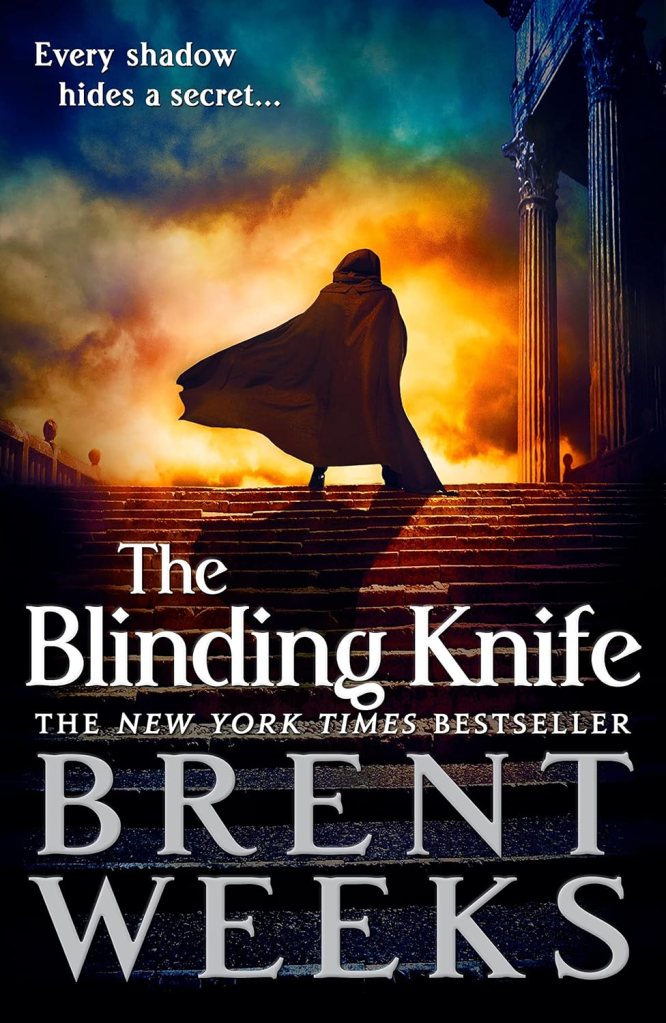
Book Review: The Blinding Knife

So, I officially hate Brent Weeks. Not actual hate where I wish him harm or anything, but more in the “man, you’ve made my life inconvenient” sort of way.

The Blinding Knife is the second in the Lightbringer series, following The Black Prism. My hatred stems from his magic system and world building. Eight years ago (I know, because I have my notes), I came up with this fun magic system involving the color spectrum, where people have different powers based on the color of light they’re exposed to. That’s super simplified, but the basic premise. I told my idea to Gavin, one of my fellow MFA students, and he was like, “Oh, like the Brent Weeks books.”

Say what? I’d never heard of Brent Weeks at that point, and the idea that someone had already published a magic system that was the same as the one I’d just spent a ton of time working on was disheartening. At the end of the semester that classmate gifted me a copy of The Black Prism so I could see what similarities existed. And because he really liked the book.

Flash forward to this past summer. I hadn’t read The Black Prism yet, not because I didn’t want to, but just because of its placement on the “to read” list. I was thinking about another story, and I mentioned to my wife that creating a base number system based on the story’s pantheon seemed super neat, especially when information could be interpreted different ways. I put some work into that, but mainly it was an idea to come back to.

Then I started reading The Black Prism in the fall. And yes, the magic was based on light. To my relief, that was where the similarity ended. How the magic functions and is tapped into is completely different, but any chromatic based magic system I use will still be seen as less novel because of The Black Prism’s existence.

Then I read The Blinding Knife these last couple of weeks. And guess what it introduced? A base number system based on the story’s pantheon. My jaw dropped as it was explained in-story. Are you kidding me, Brent Weeks?! A friend of my is now joking that I read the entire series in the past and have shut it out of my conscious memory. He’s waiting for my next idea and for it to be something from one of the next books. Sigh.

But, as much as I can joke that I hate Brent Weeks, I am thoroughly enjoying his books. So, let’s review The Blinding Knife (with minimal Black Prism spoilers).

The Blinding Knife picks up immediately where The Black Prism left off. Kip, Gavin, Karris, and Liv each leave Garriston with their own revelations about themselves and their companions. Kip is struggling to find (and earn) his place in the Chromeria, while the shadow of his father looms over him. And he’s got that fancy knife. Gavin’s mortality clock has advanced and he still has most of his great purposes to fulfill. Karris knows, and boy is that conflicting. And Liv is seeing things in a new light *ahem* and needs to reconcile what that’ll cost.

A few new characters are also introduced as Kip learns how to use his magic, and those relationships are clearly setting up more drama in future books. The Colors are dragging their feet and Andross Guile is still a world-class douche. A card game is introduced that becomes important for multiple reasons.

One of the more interesting aspects of the second installment is how the magic system is able to expand without (usually) feeling like deus ex machina. Weeks uses a simple but effective tactic for this: everything we’ve learned is what the Chromeria has authorized. In other words, there are secrets to the magic that rebels, color wights, self-taught drafters, etc., can, in a narrative sense, spontaneously use, in a way that doesn’t feel like cheating on the author’s part.

We also dive a bit deeper into the religion of the world. In the first book, we heard Orholam’s name prayed to and cursed with all the time. Now we are introduced to the concept of the Old Gods. Religion becomes a central arc for one of the main supporting characters and drives much of the action in the story (as it does in the real world).

Another aspect that impressed me was the escalation of stakes. For example—and without giving spoilery details—there’s a romance between two characters. And it’s not working. Then, yay, it’s going to happen! Then, shit! Oh, it’s doomed. Then, yay, it is happening. Then, shit shit shit, there’s no way it’s happening now. I won’t say how it ends, but the escalations kept me on my toes and very concerned for the outcome of the characters.

I think the part I enjoyed the most about the book wasn’t something I was actively aware of while reading. And that’s the point, and the goal of fiction. I became so immersed in the story, in the world, that I was happily along for the ride. I didn’t stop to analyze or think about what was happening (that happened when I wasn’t reading), I was able to sit back and just read.

As with the first book, and as to be expected in epic fantasy, there are fight scenes galore. Most are small, some larger, and of course there’s always the climatic confrontation. These scenes didn’t exist merely to have physical conflict. There is a narrative and/or character purpose for each. And each does double duty to delve further into the magic system and the world the characters inhabit.

And that brings me to the craft topic of the review. I just said that fights are a staple, and being such, there’s the risk of a dime-a-dozen feel. That doesn’t happen here because of *drum roll* specificity.

Specificity is the cure for the common trope. It allows you to take any idea and make it your own, no matter how common or overly used. For example: You ever hear of Star Wars? Hunger Games? Interview with the Vampire? Wizard of Oz? What do they all have in common? They all follow the same story arc. Almost exactly the same. What makes them different? The details. Specificity.

I know that’s a very broad brush with which to talk about details making stories unique. Let me use another example, this time from The Blinding Knife itself. I’d mentioned the introduction of a card game in the world of the story. It’s called Nine Kings. As I was reading the story I was engaged with the cards and their descriptions, as well as the strategy Kip employed while playing. There are so many different cards that there can be different decks, and each deck is normally themed around a color (the colors of the Chromeria). I recall having the passing thought at one moment that it reminded me of Magic the Gathering, but then the story moved on and so did I.

Well, as it happens, Brent Weeks was introduced to Magic the Gathering after writing the first book, but before writing the second. He enjoyed the game so much, that he wrote his own version of it into the sequel. Now, for those who don’t know, I am very into Magic the Gathering. I’ve played since middle school and have two massive library card catalogs filled with cards. Even with my massive history and knowledge of the game, I only had the briefest of moments of recognition with Nine Kings. Why? Specificity.

Weeks was able to take a concept that I was very familiar with and tweak it, adding detail after detail after detail in order to make it unique and distinct. This can be done with anything, no matter the source material. Have a character with a physical ailment/limitation? That’s nothing new. But if you’re specific about it, it becomes part of the character, as opposed to a descriptor of the character. Tomorrow and Tomorrow and Tomorrow’s Gabrielle Zevin spent chapter after chapter on Sam’s ankle/foot injury, and we were given a character whose physical limitations impacted the story in unique and heartbreaking ways, different from any other character with a physical limitation.

Depending on your choices, you don’t need to spend chapter after chapter on those details, but you need enough to make whatever concept or decision you’ve come up with fully your own. I say that I hate Brent Weeks because of the similar ideas, but the key to making that not an issue is specificity. We can both have magic related to light, but the how, the why, the drawbacks and benefits, all the nuances a magic system needs are what will separate them and make my story stand apart. Specificity.

Now, time for the big reveal. What tools in The Author’s Arsenal does Brent Weeks wield in The Blinding Knife?

For exceptional storytelling/narrative, I award the Quill Pen. There are a lot of balls for Weeks to juggle, a lot of motivations playing against one another, and it all flows so smoothly that the complexities don’t bog down the reader.

For depth and richness of theme, I award the Inkwell. Colors. The Light Spectrum. Wavelengths. What seems like a limited concept has been integrated into the world so richly that we’re fully on board with this unique magic system and how it colors *cough* every aspect of life in that world. Each color means something, and the characters act and react appropriately based on those colors.

And for world-building and setting, I award the Scroll. It sort of overlaps with the theme award, but I can’t say enough about the fully realized world we’re given and all the minutia included to ground that world and make it real. Details. Specificity. It’s all there.

A Blinding Knife has been the most enjoyable book I’ve read all year. My jaw literally dropped, I couldn’t put it down, and my wife more than one time had to sit through me retelling her aspects of the plot she had not one iota of investment in. Good times.

And there you are. If you have a suggestion for a review, feel free to drop it in the comments or send a message.