Two weeks ago I flew to LA to attend this year’s AWP Conference and Bookfair. AWP itself was about the same as usual: some good panels (yay Juan Carlos Reyes), some not-so-good panels (I’m too nice to name names), and too many books finding their way into my backpack (who’s excited for Gods?!).
A few AWP firsts:
Someone asked if I’d be interested is doing a reading next year 🙂
One of the people I split a hotel with head-butt me in their sleep 😦
I wrote and submitted a piece while at the conference 🙂
I took an extra day strictly for research 🙂
I mentioned in an earlier post that I had a conundrum with my current project. It takes place in LA and I started writing the pieces before last year’s fires. I had no idea how I should address them in-story. So I took the opportunity to talk with locals and get see what the fire was like for them, how it affected the areas I was writing about, and from there I had to make my decision.
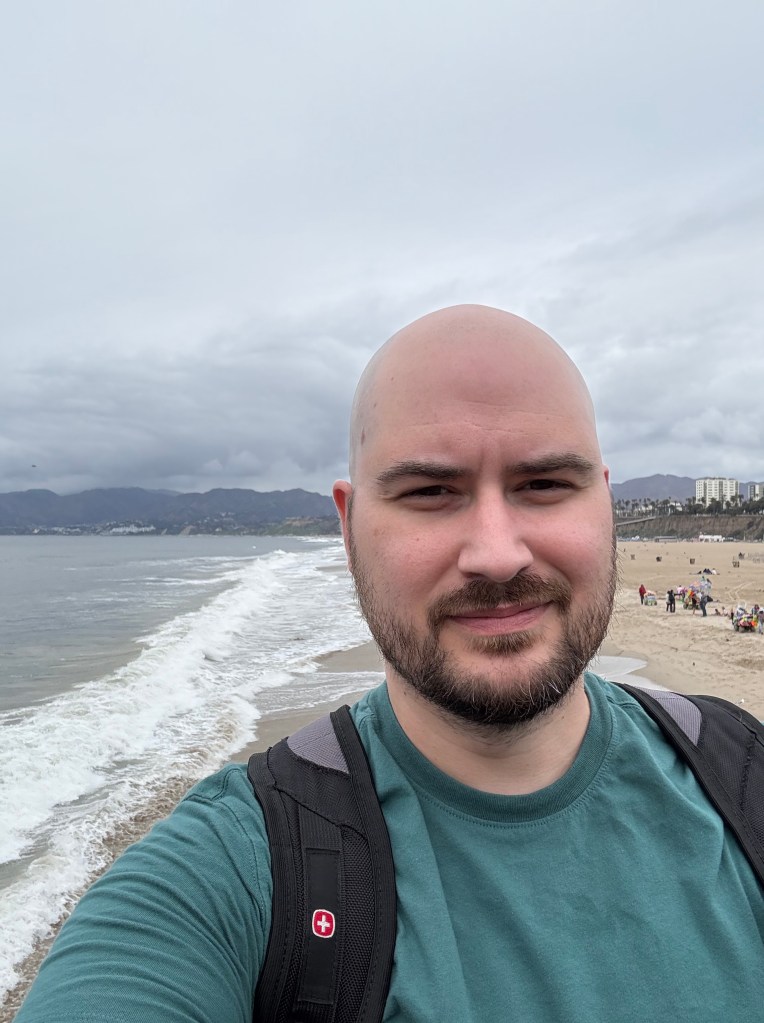
One thing that worked in my favor, specifically regarding the ability to talk to people uninterrupted, was that it was overcast and a little drizzly in the morning. That meant I only had to try a little to not bump into people as I walked on the Santa Monica pier. I talked with one of the employees there, because the tourists outnumber locals 99 to 1, and he said on nice day everyone on the boardwalk is shoulder to shoulder the whole way through.
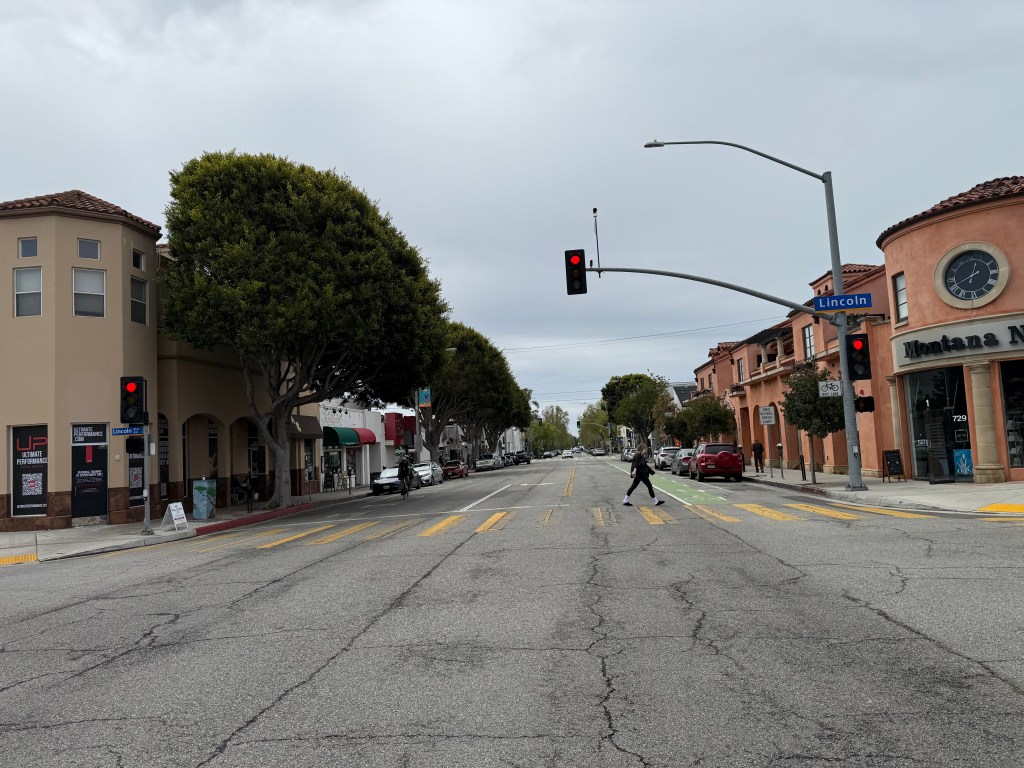
From the pier I needed to head to Montana Avenue, which wasn’t too far away. This was, of course, after walking a fair amount to find the bus to Santa Monica and walking along and around the pier. I’d read up on the area online, but seeing it in person was incredibly beneficial. One, I didn’t realize how much foot traffic there’d be. I’m used to Grand Ave in St. Paul, where parking is a nightmare because nearly everyone drives there and so much of the walking is to and from vehicles. Not the case on Montana Ave.
As with the pier, nearly everyone was a tourist. The only locals I found were employees of the stores, old people sitting outside of coffee shops, and shoppers at Whole Foods. I made the rounds, stopping at a few specific locations that I plan on incorporating into the story, and got a much better idea of the pulse of those dozen or so blocks.
The most interesting thing I found wasn’t something described online at all. Approaching from the west, the shops spring up almost out of nowhere and look new and fancy. Approaching from the east is the same experience. But there’s a little section in a middle, only a few blocks long, where the buildings, though still nice, have a distinct ma and pa shop feel to them. I didn’t feel like they were tailored to the trendy elite of the area.
My exploration kept me going for a while. A long, long while. At one point I checked my steps and swore out loud when I saw it read 20000 steps. By the end of the day, I’d walked nearly fourteen miles.
Those who personally know me know I’m not in bad shape. But they also know I’m not in walk fourteen miles in one day out of nowhere shape. Oh man did I hurt afterward. But it was worth it. I got home, used my research to update my thesis, and dropped off the printed copies this past Monday. I may have killed a tree in the process of printing them, but it’s for a good cause.
Now I wait a month until my thesis defense. I’m not worried, but waiting that long for anything can be a bit much. So maybe I’ll take a mental break and write a short story. Horror sounds good…
Last year I went to my first AWP Conference in Seattle. Half hour to the airport, hour of security, three and a half hour flight, forty-five minute tram ride to Seattle, and a twenty minute walk to my hotel. Just over six hours from point A to B.
This year, AWP is in Kansas CIty. From Minneapolis, that’s a six and a half hour drive. About the same as last year, and cheaper too. 🙂 Bring on the Mtn. Dew and licorice (road trip staples for as long as I can remember).
Luckily, I won’t have to do the drive alone. Traveling and splitting a hotel room with writing friends makes AWP much more affordable. Plus, you all know how writers are. When they meet someone new, they either won’t say more than two words, or they won’t stop talking even as you’re walking away. Rarely any middle ground. This way I know I have reliable conversationalists.
As exciting as road trips are, the main event here is AWP. Last year I filled up my schedule, planned everything out, and realized once I was there I’d have zero time to experience the book fair. Luckily, sort of, some of my sessions filled up before I arrived, so I had a few session’s worth of time with which to visit the fair. And boy, did I need it.
If you haven’t been to the fair, it is massive. Like, two sessions might be enough time to take a cursory glance at everything. Might. If you want to make connections and actually look at what the booths have to offer, you need to devote at least three sessions. With that in mind, I kept a few sessions open this time, and if you’re going I suggest you do too.
As you’d expect for conferences, there are some sessions that are super cool, and some less so. Of course, those will depend on your preferences, and it’s a crap shoot as to how they’re allocated throughout the time blocks. Some blocks have nothing I want, others have four I really want to attend.
Barring capacity issues, the sessions I’m looking forward to the most are (and I’m only listing one per block):
Beyond the Debut: Publisher One-Night Stands vs. Long Term Relationships
Artificial Intelligence & Real Creativity: AI in the CW Classroom
What We Don’t Talk About When We Talk About (or To) Agents
Pathways to Success: Practical and Personal Tips for Getting Published
The Book Was Better… or Was It? Adapting Your Novel into a Screenplay or Play
What Authors Need to Know about Generative AI and Copyright
Crafting Unforgettable Characters—a Writer’s Guide to Storytelling
Beating the Numbers Game: Submissions Strategies
Becoming a Debut Novelist: The Journey From Book Submission to Book Launch
Down to the Wire: The Nuts and Bolts of Editing a Manuscript to Publication
From the First Idea to “It’s Finally Here!”: The Life Cycle of Publishing a Book
You can see a few themes here. I’ve a couple of manuscripts now nearing the end of their ready-to-query journey. These’ll be my first attempts, so it’s great that there are resources to lay out expectations and help me feel knowledgeable about the next phase.
I’ve also got a few AI sessions on there. Whereas I agree that AI shouldn’t be used to generate content, I don’t find it a wholly evil tool. It is just that: a tool. It’s the user that is in control of its use. I like it for research purposes. It can aggregate data and create lists far faster than I can google.
One of my favorite examples is that, for reasons, I needed a list of Shakespeare’s plays, but in order of how many people die in them. I remember trying to looked that up before AI and that I gave up because of how cumbersome it was, and set the project aside. I asked AI to do it and within seconds I had that list. Amazing.
There are a couple of one off sessions as well, but that’s the gist of my focus this year. Beyond the sessions, I’m hoping to make good contacts, perhaps future friends. I know a few writer friends going this year so hopefully between us we can find the right places and people to network.
I’ll do a post-AWP spiel this weekend, throw in a few tidbits that stood out. And I’ll probably be tweeting (is it still called tweeting if it’s not Twitter?) throughout.
As always, feel free to reach out with questions, comments, or just to say hello.
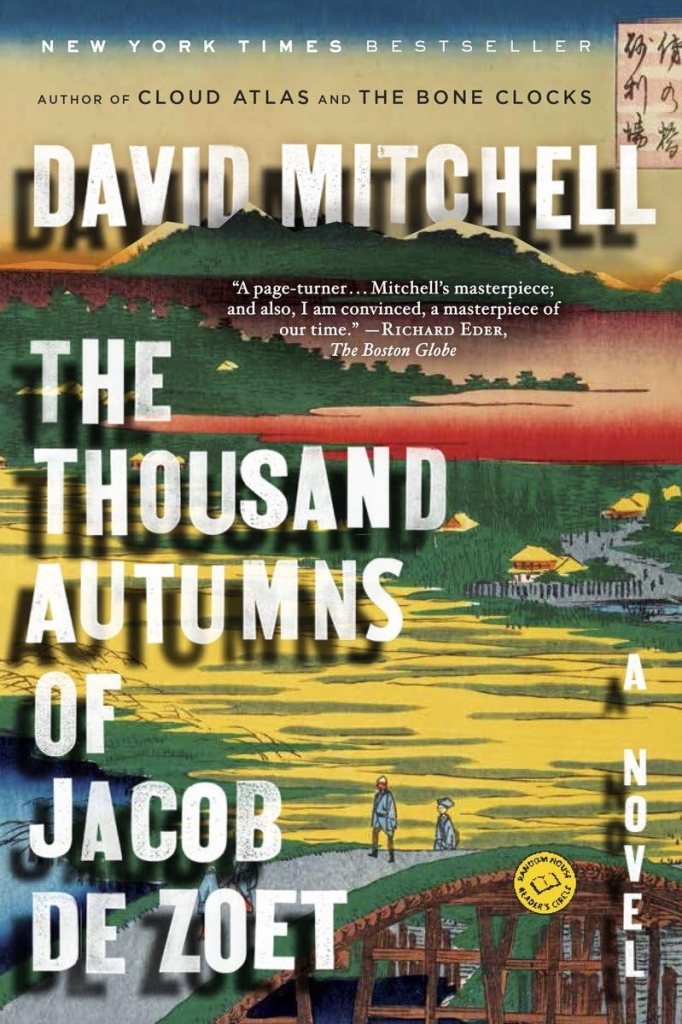
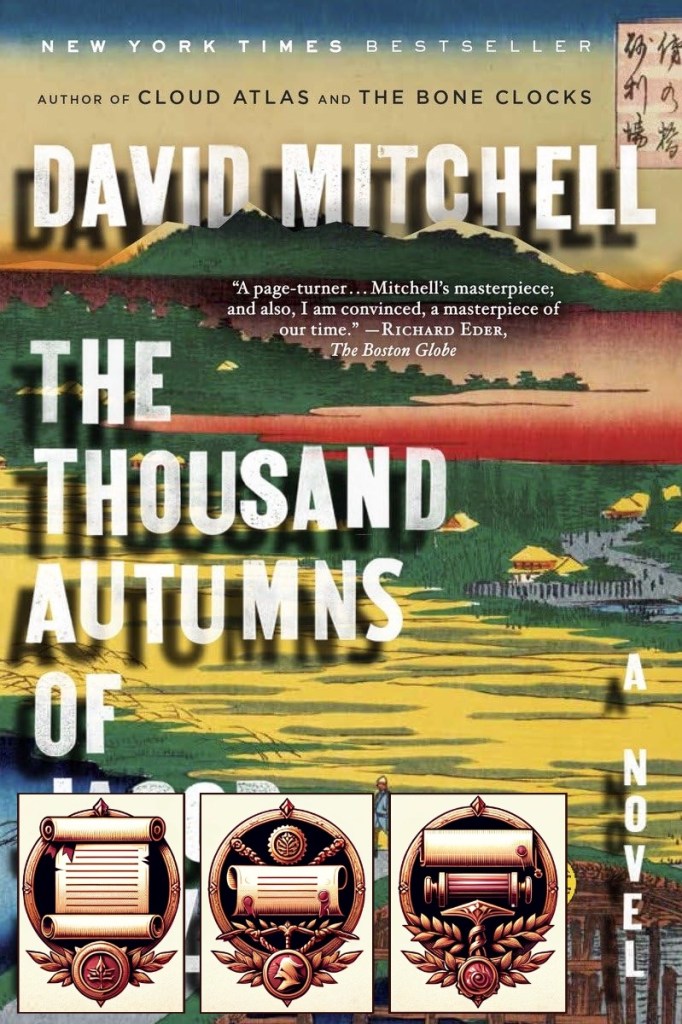
Welcome back for another book review. I want to preface this with an admission of the chance for bias. David Mitchell is one of my favorite authors, perhaps even my favorite, though it’s really hard to choose. One of my short pieces I plan to shop around once I think it’s good enough is actually about him. With favorites, there’s a tendency to overlook faults or take strengths for granted. I’ll try to do neither.
You may wonder why, if Mitchell is one of my favorites, I have not yet read The Thousand Autumns of Jacob de Zoet until now, when it’s been out for well over a decade. Circumstance and poor luck. Shortly after it came out and I acquired it, I moved. It went into one of many boxes, and most of those didn’t get unpacked for a while. By the time they did, I found a box had disappeared in the move, along with half my Mitchell books. I assumed they’d show up and then I’d finish reading it, but eventually I gave up hope and just now reacquired it.
That out of the way, let’s get to it. A spoiler-free review of The Thousand Autumns of Jacob de Zoet, by David Mitchell.
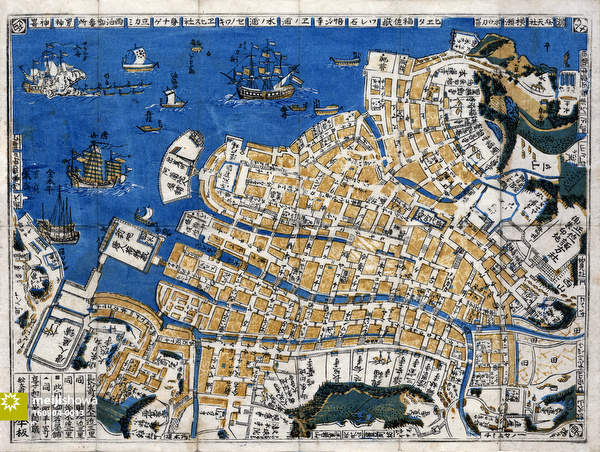
The Thousand Autumns (I’ll refer to the novel thusly to save space and prevent finger strain) follows three primary characters: titular clerk Jacob de Zoet, unlikely medical student Orito Aibagawa, and Japanese-Dutch interpreter Uzaemon Ogawa (I’ll order Japanese given and family names as we’re used to in Western culture to prevent confusion). Set in Dejima, a trading enclave in Nagasaki, Jacob is trying to make money so he can marry his betrothed back in the Netherlands. He meets Orito by chance, and Uzaemon for need of an interpreter.
Map of Nagasaki from 1801 (Kyouwa 1, 享和元年). Dejima (also: Deshima) is clearly visible in the harbor.
Printed by Yamatoya (大和屋板).
What starts off with the makings of a love story morphs into a story with ever expanding scope and the mysticism/magic you’ve come to expect in a Mitchell novel. Things are never as they seem, nor are people. More so of course than is expected anyway, as that sentiment can be applied to nearly every person or character.
Throughout the story, all the characters are faced with trials of morality and ethics. None as much as Jacob, Orito, and Uzaemon. Sometimes strong ethics serve a person well, other times they hurt. The ramifications of those choices drive the narrative as well as the whole Nagasaki region.
A few aspects I want to highlight in particular are setting, prose, and character. Let’s start with setting.
When I was in school, the foreign language I studied was Japanese. My wife also studied it, though she lived in Japan and focused more on the culture and history than I did. She read this book and said she found the setting boring because she already knew about the era and life of the Japanese and their policies regarding trade and foreigners and all the details were old news for her. What that tells me is that Mitchell has done his homework.
As a fan, I know that Mitchell has spent time in Japan as well and speaks Japanese, so it’s no surprise his knowledge of the language, culture, and history are so accurate. As someone who focused more on the language and less on the other aspects, I found the portrayal to be enlightening, the dynamics of Japan’s isolationism 200 years ago tremendously interesting and mind boggling at the same time.
There are true events woven into the story, like the attack of the British in Nagasaki, what I assume to be the Great Kaga Earthquake, and of course the warring European nations. These moments ground the reader in the reality of the world which serves to both strengthen the impact of Mitchell’s story and also highlight his unique book-to-book connections.
Moving on to prose, Mitchell was aided in that he was able to draw on Japanese symbology and propriety to help order rich, authentic words such that the sentences seemed foreign and familiar all at once. I noticed in particular a tactic of interspersing descriptions of setting between spoken words and actions that I don’t recall in his other writing, and that’s having just read Utopia Avenue a few months ago.
I haven’t the audacity, nor experience, to try and accurately portray another living culture’s mannerisms speech patterns, and when Mitchell does so in The Thousand Autumns, I never felt for once that he was stereotyping or using unusual vocal patterns as an interesting crutch, relying on the foreign sounds or diction to engage the reader. When Orito or Uzaemon spoke, their words read authentic and true, which is no small task. That holds true with their thoughts as well.
Lastly, before I go into craft, I want to mention a brief thought on my reactions to character. Talk to anyone who knows me, and they’ll tell you I’m not outwardly emotional, perhaps bordering on sociopathic. That’s a bit of an exaggeration, but the point I’m trying to make is that I’m rarely emotionally responsive. For me to react emotionally to a book says something about its efficacy. (Unless we’re talking about rage quitting. Non-effective storytelling there. I’m looking at you Ready Player One)
There’s a moment, and I’m being vague to avoid spoilers, where Jacob has to say goodbye to someone. I got choked up. Like, tight throat, sniffles, the whole shebang. The moment wasn’t an overly dramatic profession of love, or a heart wrenching death of a beloved character, but a simple goodbye. The reaction this moment elicited could only have been achieved through solid portrayal, and thus investment from me, of the character Jacob.
Okay, on to craft talk. Today’s topic: Research.
I touched on this earlier in setting, but wanted to expand beyond the scope of The Thousand Autumns. I can think of few exceptions where research would not be necessary for a novel. I’m sure Neil Gaiman had to dig through tons of myths and religions when he wrote American Gods. Or Cherie Priest had to find maps and records of 1880s Seattle for her Boneshaker books. Research lends credibility to a story, but it also grounds the reader in the world.
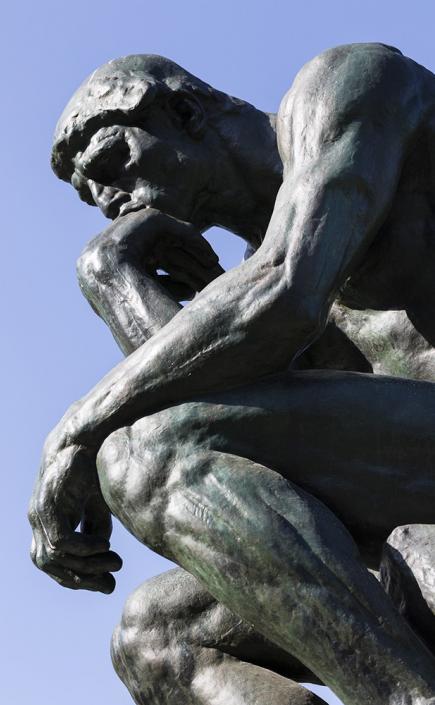
Imagine you’ve picked up DaVinci Code and you’re following Robert Langdon through the Louvre and Dan Brown throws in something about racing past Rodin’s The Thinker on his way to the Mona Lisa. Dan Brown is pretty sure The Thinker is in Paris, and the Louvre has all the cool stuff, so it’s probably there. Spoiler: It’s not. It is in Paris, but it’s at Museé Rodin, not the Louvre.
The magic of DaVinci Code is all the research that makes the story, the interconnected bits of history, engaging the reader with history. Every place Langdon visits is real. I actually have an annotated copy of the book complete with photos and illustrations of the sites and pieces of art. Few people will know every art and history reference in the book, but having that information there raised the reading experience to a whole new level.
Research gives validity to the world of your story. And it doesn’t matter if your world is Earth or Mars or Xanth or something I’ve never heard of. Sometimes research it just finding the proper details. I’m working on a story where the protagonist is a carpenter and I had to learn how to build a chair with medieval era tools. I already knew how to with modern tools, but I can’t exactly have my character whip out a cordless drill. Or there was the story of mine just published in Space Brides. Exactly how bright is Jupiter if you’re standing on Europa? How far does that elevator ride through the ice need to be? Research.
I know sometimes research may seem like a slog, that every page you get to poses a new question that interrupts your flow. One trick is to throw a placeholder in so you can keep writing and do the research later. For months I had “HE BUILDS A CHAIR” followed by the rest of the scene. Another is simply read a ton about what your character knows or experiences before you write and you can just go with it. Or, if you’re David Mitchell, go live in Japan for a decade. To each their own. 🙂
I can’t really give advice as to how to best do research. That depends on you and your story. But I can’t stress enough the importance of it. We’ve all heard of the seven basic plots that all stories follow. What separates those stories from one another are the details. We get those details from research. Details enrich the reading experience and color your worlds. Find those details. Do the research.
Now, time to break out the Author’s Arsenal and throw some accolades at The Thousand Autumns of Jacob de Zoet.
For accurate linguistic depictions and line to line pacing, I award The Parchment. For making me emotional and balancing culture with agenda, I award The Seal. And for the research, for bringing an accurate (of course accounting for factionalized elements) world of turn of the 19th century Japan to his readers, I award The Scroll.
For those who have not read David Mitchell, these awards should not be surprising. His novels are regularly long and short listed for awards, and the varied settings and times they take place in always present something new. My first exposure to him was Cloud Atlas. It is my favorite book of all time. Just phenomenal. But, if you’re thinking about reading The Thousand Autumns of Jacob de Zoet, don’t. At least, not first.
I needed to put in here somewhere that most of his novels are loosely (some not so loosely) connected. You technically could read them in any order, but I think what makes the most sense (and my google search confirms my thoughts) is that you should read them in order of publication. That would mean Ghostwritten, number9dream, Cloud Atlas, Black Swan Green, The Thousand Autumns of Jacob de Zoet, The Bone Clocks, Slade House, and Utopia Avenue. For me, the weak link was Black Swan Green, but I know those who really enjoyed it.
Hopefully this review will have made a new Mitchell fan or two. Until next time, happy reading, and if you have any books you’d like me to read and review, let me know.
I write this at 1:37 PM and so greet you all with a good afternoon, and not in the Will Ferrell/Ryan Reynolds way (unless you deserve it). As of yesterday I finished the last of my research for revising my novel and it’s time to hold myself accountable and report in.
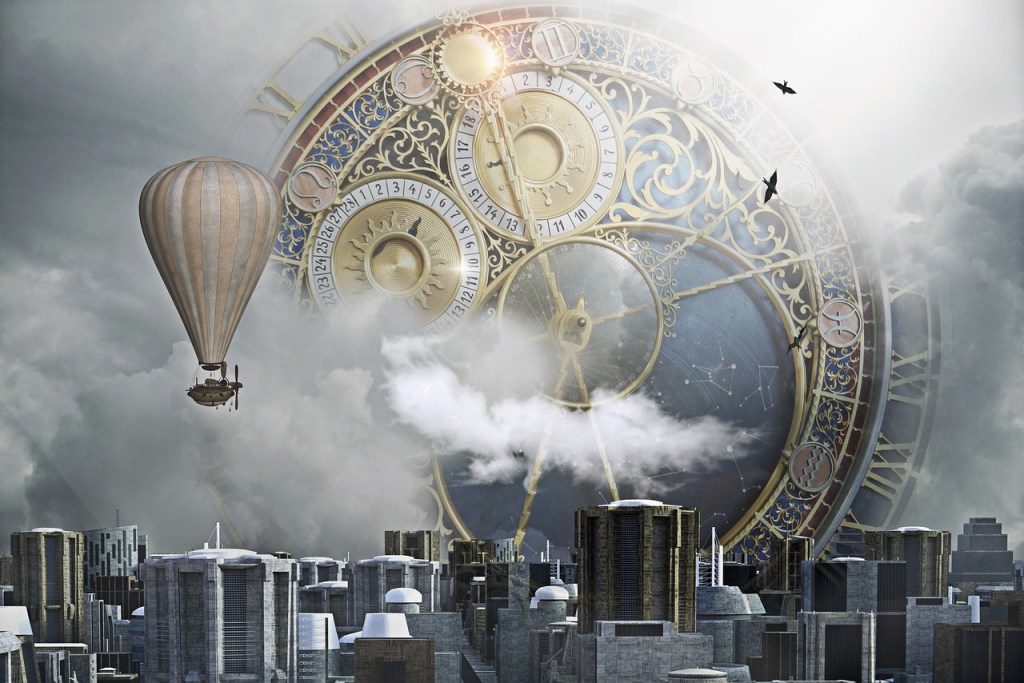
Previously I mentioned three things that stood out in steampunk: Transportation, Science/Magic, and Weirdness. The five books I’ve read since then reinforce those observations with the addition of one more: History.
It just so happened that the books I previously read weren’t indicative of the Victorian locales commonly found in the genre. Of the five I just finished, all but Boneshaker were based in London. For me, this won’t play too much into the writing as my story takes place in a completelyfictitious world, but I do still want to talk about the setting and the history of it.
As a Theatre Arts and English major, I had plenty of exposure to British writers, and of course Britain played a major role in global politics (I’m using that term very loosely as I don’t want to fall down the rabbit hole of colonialism). With that, there is a lot of opportunity in period pieces for authors to embrace or tweak history and historical figures for the sake of the narrative and the world they’re inventing/adapting.
I particularly enjoyed how this played out in The Anubis Gates. The protagonist is a literary scholar who is an expert in Coleridge. It’s a time travel book and I’m not ruining anything by saying those characters meet. But that’s not where the literary and historical connections end. Many real-life persons are introduced and historical events help shape the narrative journey. I found myself wondering how much of what I was reading was factual (I knew some parts definitely were) and how much was invented. The fact that there were parts I was unsure of made it that much more engaging.
The Difference Engine was much more liberal with its treatment of historical figures and events, enough that I could lump it into the alternate history genre. But in staying true with the setting and technological advancements it solidly fits with the rest of the steampunk I’ve shoved into my brain the last couple of months. Boneshaker too did this, though in Seattle instead of London. As someone who grew up just south of Seattle I found that personally engaging as well. The author made a point at the end of the book to acknowledge what liberties she took with historical accuracy, giving a look into the massive amount of research that goes into period pieces.
As I pivot from reading to re-writing (and starting up grad school again on Monday), I’ve got not only a stronger idea of the genre that I’m piggybacking off of, but a much better handle of genre expectations, both to adhere to and to subvert. Whereas I was initially really trying to scientifically explain how the technology works in my story, I’ve learned that a lot of that can be hand waved away. Brandon Sanderson used an iceberg metaphor regarding world building that I think can be co-opted for this. He (paraphrasing) said that if you have enough surface level complexity, the reader will assume the unspoken parts of the world are known to the author and also have legitimate explanations/reasons. That works with the technology of steampunk. It’s basically magic, but as long as it’s explained in part, the rest is assumed to work as well.
That’s all I have for today. I try not to make these too long, though if you ask my wife I could go on about these books at some length. I’m starting a class focusing on point of view on Monday, so between that and rewrites my brain is going to be working overtime for the foreseeable future. Enjoy the weekend and I’ll try to have another post soon.
Reading research progress: Four books down in just over a week.
To get ready for my first round of edits on my novel, which I’ve been describing as steampunk adjacent in regards to genre, I felt I should read a bunch of steampunk books both to find pitfalls to avoid as well as potentially gain inspiration for new/revised content. Since my last post just over a week ago I finished The Lost Metal, The Brothers War, The Steampunk Trilogy, and The Aeronaut’s Windlass. The last two are proper steampunk. The first has qualities for sure, and the second was more of a filler book while I waited for the actual ones to arrive from the library. It too though had steampunk facets to it. Now, what was gained from over 1000 pages of genre-focused reading?
Observation 1: Transportation
Most readers know about the stereotypical airship trope in steampunk. Both The Lost Metal and Aeronaut’s Windlass had them, though the importance of each was drastically different. The Steampunk Trilogy had a nuclear powered train (for a page and a half), and even The Brothers War had flying ships of a sort.
Now I know transportation is integral to movement for most characters in most stories, but steampunk really integrates it into the story and the world itself. With such fantastical devices for their era, steampunk’s modes of transportation are a wonder and a backbone of the genre. And the fantastical thing about them? That’s observation 2.
Observation 2: Science! Or, magic. Or something…
I’m only four books in, so we’ll see how long this holds up, but it seems like in steampunk when you want something cool to exist/happen, just make up a reason for its existence. The Brothers War had powerstones and The Aeronaut’s Windlass had crystals. Both provided power and were essentially batteries in a world that didn’t have power otherwise. The Lost Metal, not strictly steampunk, used magic for their airships, and the most ridiculous of all, in the third story in the Steampunk Trilogy, a seeress’ lactation was used to transport a ship to purgatory (it’s a little more complication than that, but still very weird).
Excluding the trilogy, the science/magic/something that powered their technology was also intrinsically entwined in the culture and the world of the story. If a random thing just existed for the sake of coolness, it would seem like a cheat, but for these stories there is a function that not only allows the coolness to exist, but also colors the actions of the characters and the society.
My initial thought when starting my first draft was that I wanted to make everything theoretically possible. That somewhat went out the window in the prologue, but about halfway through I really pivoted from our reality to the reality of the world I was creating. These stories have definitely shown me how much that diversion is useful and needed in the genre.
Observation 3: Weirdness
The winner here for weirdness is The Steampunk Trilogy. When I was first looking up books to read the warning for this one was that it was weird. It is. So very, very weird. But it wasn’t the only one. Lost Metal has shapeshifting immortals. Brothers War has extradimensional techno-demons. Aeronaut’s Windlass has talking cats and hippo-sized spider-things. Weird.
While they were all weird, they were all enjoyable too. It seems that weird is just part of the genre. In my story I don’t have anything like that. At least not yet. Knowing the precedent is there allows for some creative storytelling. Or not. It’s not like these are exact standards to be followed.
Conclusion:
Of the books, I felt the strongest were The Lost Metal and The Aeronaut’s Windlass. These not only had much better characterizations, but their technologies were integrated into their world in a grander and more seamless way. They presented not only compelling stories, something I believe to be paramount no matter the genre, but a world wholly unique and engaging.
My main takeaways from the readings revolved around technology integration as well as being able to distance myself from the realistic function of that technology. Of course there should still be rules for the technology, but those rules don’t have to obey the same laws of physics that we do. Already I’ve ideas for expanding current concepts as well as a few new ones.







 Eric Taveren